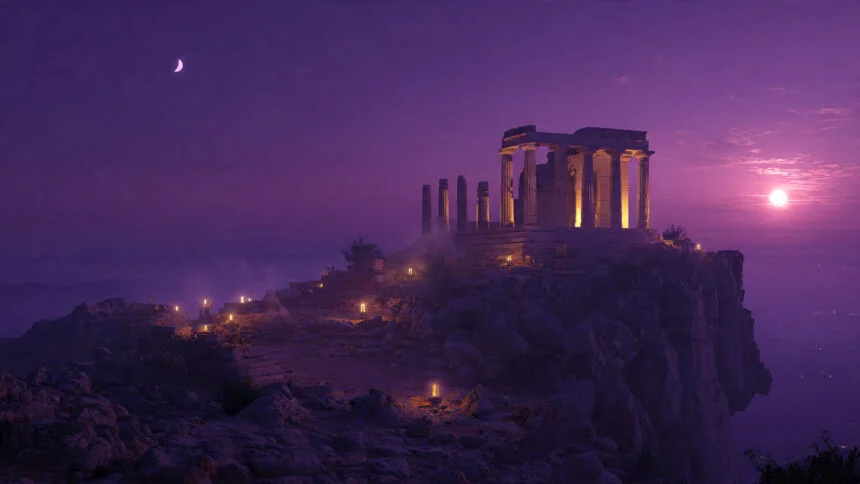





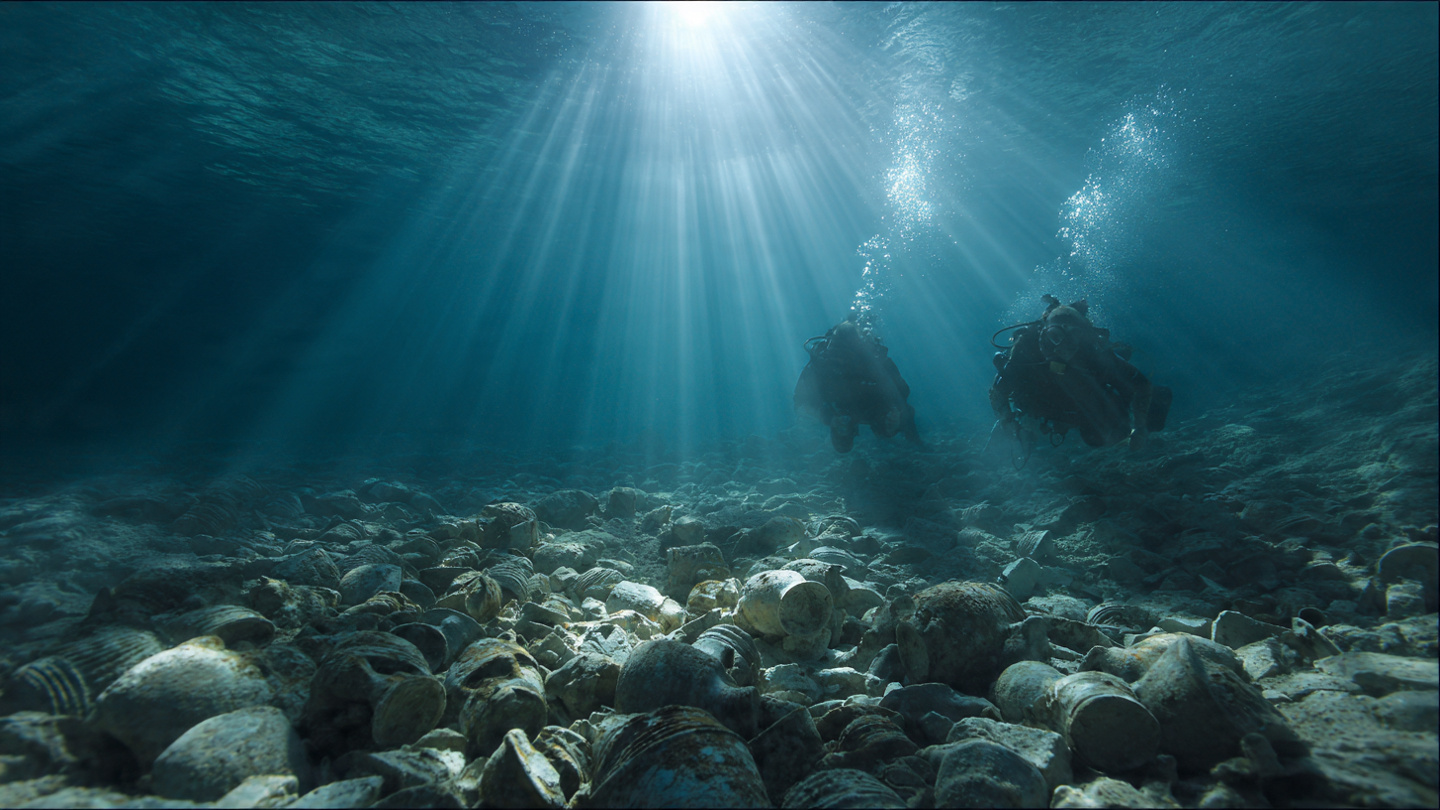
Exploring Greece has always meant stepping into the past—but now, discerning travelers are literally diving into it. A profound new trend is transforming the way visitors engage with the ancient world, seamlessly blending archaeology, marine conservation, and ethical adventure travel into one spellbinding, holistic experience: responsible shipwreck and submerged ruins tourism.
This movement represents a shimmering threshold between myth and verifiable history, illustrating how Greece is strategically opening its vast underwater heritage to the world while meticulously protecting the fragile, silent stories resting on its seafloor.
A New Wave of Cultural Travel in Greece
Across the world, interest in underwater archaeology is skyrocketing, but nowhere is this movement more naturally at home than in Greece. This is a country where an astonishing array of shipwrecks, marble temples, amphorae fields, and ancient harbor ruins lie perfectly preserved under remarkably translucent water.
What makes this wave unique isn’t just where travelers are going, but how they go. The emphasis has fundamentally shifted to ethical exploration, marine stewardship, and guided educational tourism. This approach ensures that the submerged treasures of the Aegean and Ionian Seas endure far into the future. Travelers aren’t chasing superficial selfies; they’re seeking historical context, a deep cultural connection, and the rare sensation of respectfully touching the past without disturbing its centuries-old slumber.
Why Greece Leads the World in Underwater Heritage
A Coastline Steeped in Myth and History
Greece boasts more than 6,000 islands and islets, forming a vast, complex labyrinth of coastlines where maritime stories evolved into the very backbone of Western civilization. Due to its central position and its role as the birthplace of navigation, the Aegean seafloor serves as a massive, untouched museum. Here lie thousands of wrecks spanning millennia:
- Classical-era merchant ships carrying wine and oil.
- Roman cargo wrecks laden with statues and marble.
- Byzantine trading routes scattered with religious artifacts.
- Ancient port towns lost entirely to shifting tides and seismic activity.
This wealth makes Greece the perfect destination for anyone drawn to the intersection of myth, exploration, and scientific discovery.
Pristine Waters and Exceptional Visibility
A crucial factor enabling this new tourism model is the sheer quality of the marine environment. The Aegean Sea and Ionian Seas offer exceptional water visibility, often reaching 20–30 metres (65–100 feet). These conditions are ideal for underwater viewing, allowing visitors to clearly spot fragmented columns, carved stones, clustered amphorae, and the silent outlines of ships that time has organically transformed into complex, living reefs.
The Ethics Behind Responsible Underwater Tourism

With great beauty comes great responsibility. Greece’s pioneering approach to this tourism emphasizes preservation over short-term profit, guided by a set of strict core principles designed to protect its marine heritage.



1. Look, Don’t Touch
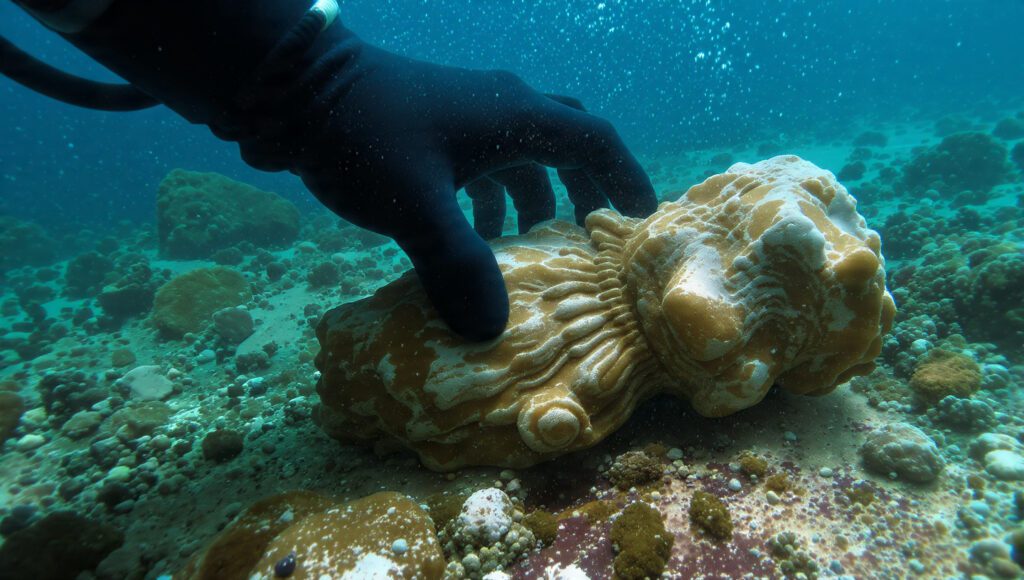
The most fundamental rule of ethical diving is strict non-contact. Even the smallest disturbance—a brush of a hand or a slight change in the current caused by poor buoyancy—can irretrievably destroy centuries-old archaeological context. Every piece of pottery and every carved stone is part of a larger historical narrative that must be left exactly where it lies.
2. Supervised Access Only
These sensitive sites are made accessible exclusively through licensed Greek operators. This regulatory structure ensures that every visitor is provided comprehensive training and is fully briefed on the necessary conduct to respect both the underwater ruins and the delicate marine environment. This ensures quality control and accountability.
3. Conservation Over Exploitation
The model is structured so that tourism revenue is directly channelled back into preservation projects, marine research, and local community education initiatives. This powerful shift toward regenerative tourism turns visitors into active protectors of the past, helping to reverse centuries of damage caused by looting, erosion, and neglect.
Archaeological Snorkeling: A Greek Innovation

Not all extraordinary underwater heritage requires a full diving certification. Greece has innovatively pioneered archaeological snorkeling, where visitors swim over shallow submerged ruins accompanied by trained marine archaeologists.
These immersive experiences are groundbreaking because they allow travelers to:
- Observe the clear underwater foundations of ancient coastal cities.
- Follow original street grids still visible just beneath the surface.
- Glide above broken columns, pottery shards, and harbor structures.
- Learn how historical shoreline shifts and rising sea levels submerged entire settlements, transforming them into aquatic history lessons.
It is immersive storytelling at the water level, making submerged ruins accessible to almost everyone.
The Best Places to Experience Greece’s Underwater Antiquity

Greece is home to several designated sites, each offering a unique window into different historical periods.
The Peristera Shipwreck, Alonissos
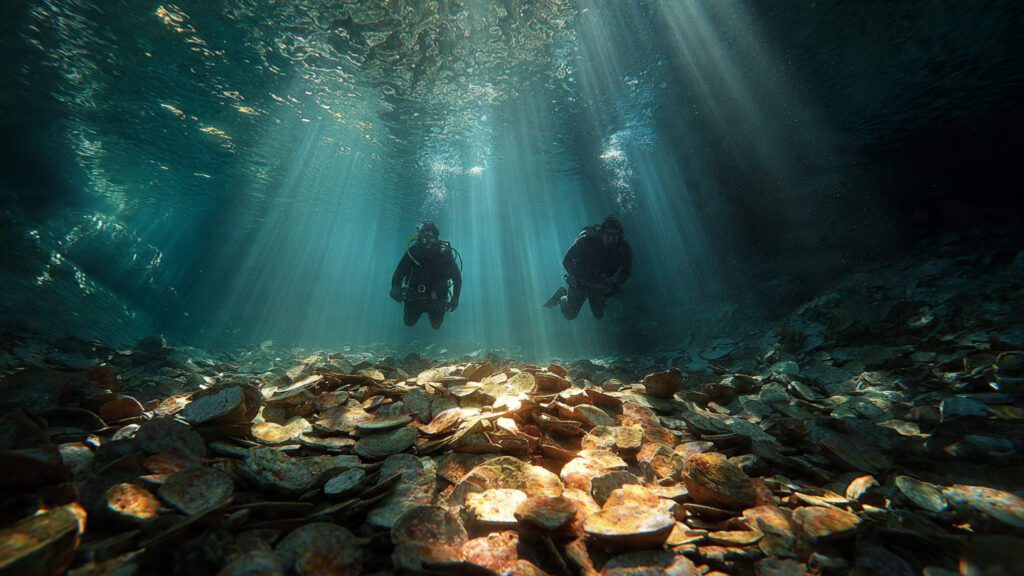
Often hailed as the “Parthenon of Shipwrecks,” this is one of the world’s most impressive accessible dive sites. This Classical-era wreck features a massive field of amphorae dating to the 5th century BCE. The Peristera Shipwreck has been transformed into one of the world’s first underwater museums, officially setting global standards for safe and responsible diving Greece.
Pavlopetri, Laconia
Nestled near the southern tip of the Peloponnese, Pavlopetri holds the distinction of being one of the world’s oldest known submerged cities.
- Its streets, courtyards, and house foundations are clearly visible by snorkeling.
- It offers a haunting, dreamlike encounter with Bronze Age urban planning.
- Strict preservation rules ensure zero contact and carefully controlled visitor flow.
Ancient Epidaurus Sunken Harbor
Near the world-famous Little Theatre of Epidaurus, travelers can enjoy a relaxed snorkel above an ancient breakwater and the clear foundations of harbor structures. This experience offers a perfect blend of amphitheater culture and coastal exploration, allowing travelers to visualize the bustling port that served the nearby sanctuary.
The HMS Perseus Submarine, Kefalonia
For advanced divers, this World War II wreck offers a profound emotional window into modern history. The HMS Perseus Submarine is in a state of extraordinary preservation, and guided deep dives with historical storytelling ensure the site is treated with the respect due to a war grave.
Traveling with Purpose: Choosing Expert, Ethical Operators
For truly responsible underwater tourism, the operator you choose matters as much as the destination. The selection criteria should reflect an appreciation for ethical practices and scientific rigour.
Look for tour programs that:
- Collaborate directly with Greek Ephorates of Underwater Antiquities.
- Employ credentialed marine archaeologists and conservation experts as guides.
- Offer mandatory, in-depth briefings on site protection and marine conservation.
- Strictly limit group sizes to minimise environmental impact.
- Utilize eco-friendly boats and gear.
By supporting these high-standard guides, travelers help ensure that these ancient sites remain untouched and available for future generations of historians and tourists alike.
The Future of Underwater Heritage Travel in Greece
Greece is quietly and steadily shaping the future of ethical underwater cultural tourism. This is not a static project; it is a forward-thinking initiative. The next decade may bring:
- More designated underwater archaeological parks and marine sanctuaries.
- VR-enhanced briefings for context-rich, pre-dive educational experiences.
- Expanded “citizen science” opportunities, engaging travellers in data collection.
- Community-based conservation programs that make local populations the primary stewards of their coastline.
What remains constant is Greece’s mission: to make the submerged past accessible and educational without ever harming the sea or the silent stories it so carefully keeps. Every dive becomes a conscious pilgrimage, a descent into what time preserved, and what humanity must now protect.