
There is a tree on the island of Chios that weeps.
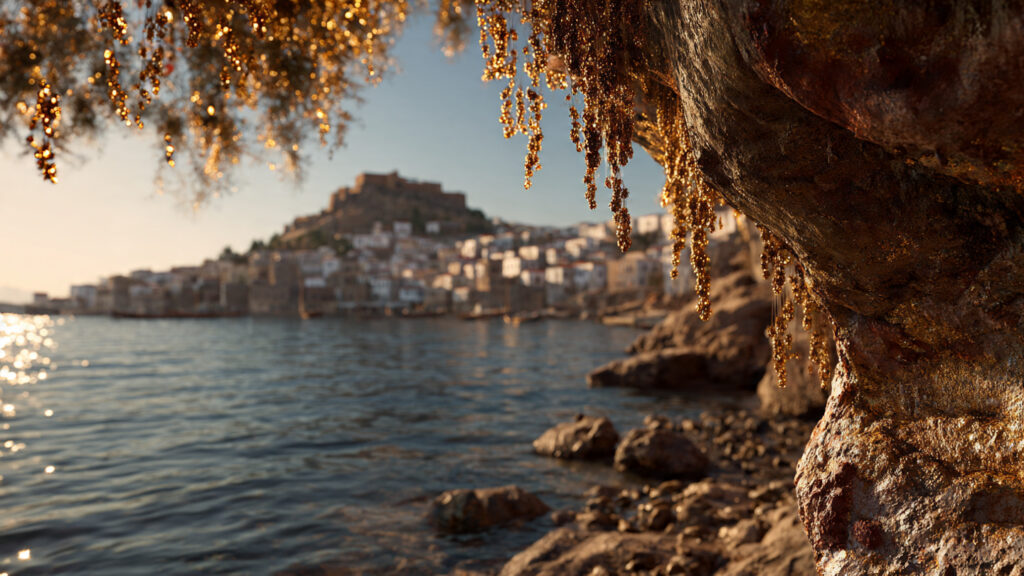
Not metaphorically. When a farmer makes small incisions in the bark of a mastic tree in early summer, the tree responds by producing a resin that seeps from the wounds, catches the Aegean light as it hardens in the air, and falls to the white kaolin earth beneath the branches in small crystalline drops that look, in the afternoon sun, exactly like tears.
The Greeks have called them that for three thousand years. The tears of Chios. Dakrya. Drops of something that the tree produces under the pressure of a wound, that hardens into something entirely different from what it was when it left the bark, and that carries in its pale amber body a complexity of flavour, fragrance, and biological activity that scientists are still working to fully catalogue.
The mastic tree, Pistacia lentiscus var. Chia, grows throughout the Mediterranean. You can find it in Morocco, in Spain, in Turkey, in the hills above Athens. In every location where it grows, it produces a small, unremarkable shrub with aromatic leaves that the botanists document and move on from. Only on Chios, on the southern slopes of that island in the northern Aegean, does the tree weep its resin. Plant a Chios mastic tree in any other soil, in any other microclimate, on any other Greek island, and it will grow. It will not bleed mastiha.
Nobody Has Fully Explained Why
This botanical mystery is the foundation of everything that follows: one of the most consequential monopolies in Mediterranean history, a trade that shaped the politics of Byzantium and the Ottoman Empire with equal force, villages built like fortresses specifically to protect a resin, and a substance so valued by the civilisations that possessed it that it was, at various points in its history, weighed against silver, administered to sultans as medicine, carried by caravan to the courts of India, and today validated by clinical research as one of the most bioactive natural substances known to European medicine.
It is also, in case you have never tasted it, one of the most distinctive flavours in Greek cuisine: resinous, pine-adjacent, slightly sweet, slightly bitter, with a brightness that no other ingredient in the Mediterranean pantry replicates.
This is the story of what mastiha is, what it has done to history, and why a small island in the Aegean still holds a monopoly on a substance that the rest of the world has spent three thousand years trying and failing to replicate.
What Mastiha Actually Is
Before the history, the thing itself deserves a proper introduction, because most people who encounter mastiha outside Greece encounter it in diluted or processed forms that do not adequately represent what the original substance is.
The mastic tree is a low, evergreen shrub that in the right conditions can grow to several metres tall. Its leaves are aromatic in the way of all the Pistacia family: a dry, resinous warmth that you notice when you brush against the branches on a hot day. In the villages of southern Chios, these trees are not wild. They are cultivated, maintained, known individually by the farmers who tend them, some trees older than any living person on the island.
The harvesting process, the kentos, begins in late June or early July. Farmers first clean the ground beneath each tree, spreading white kaolin clay so that the falling resin can be gathered without contamination. They then score the bark and main branches with small metal tools, making dozens of fine incisions that do not damage the tree but encourage it to produce resin at the wound sites.
Over the following days, the resin seeps out. Initially transparent, it catches the air and begins to solidify into teardrop shapes that hang from the scored bark, glistening, before falling to the white earth below. After fifteen to twenty days the first crystals have hardened sufficiently to be collected. The process continues through September, with farmers making new incisions every four or five days to maintain the flow.
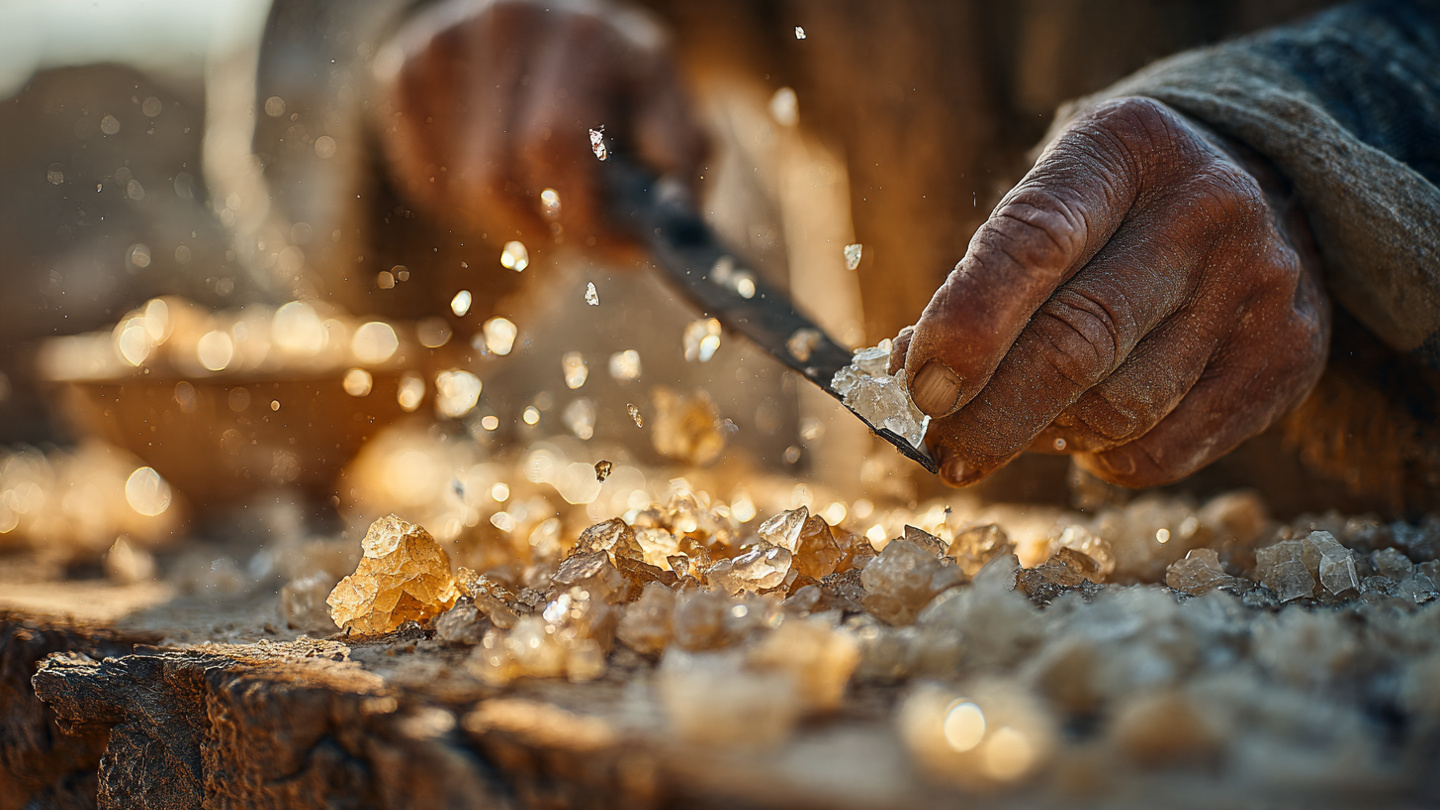
What is collected is cleaned by hand through the winter months, a labour-intensive process of separating the crystalline tears from sand, bark, and organic matter. The finished mastiha is small, irregular crystals ranging from pale translucent white to a warm amber, with a fragrance that is immediately distinctive: clean and resinous, with a pine quality that is not sharp but rounded, botanical rather than medicinal.
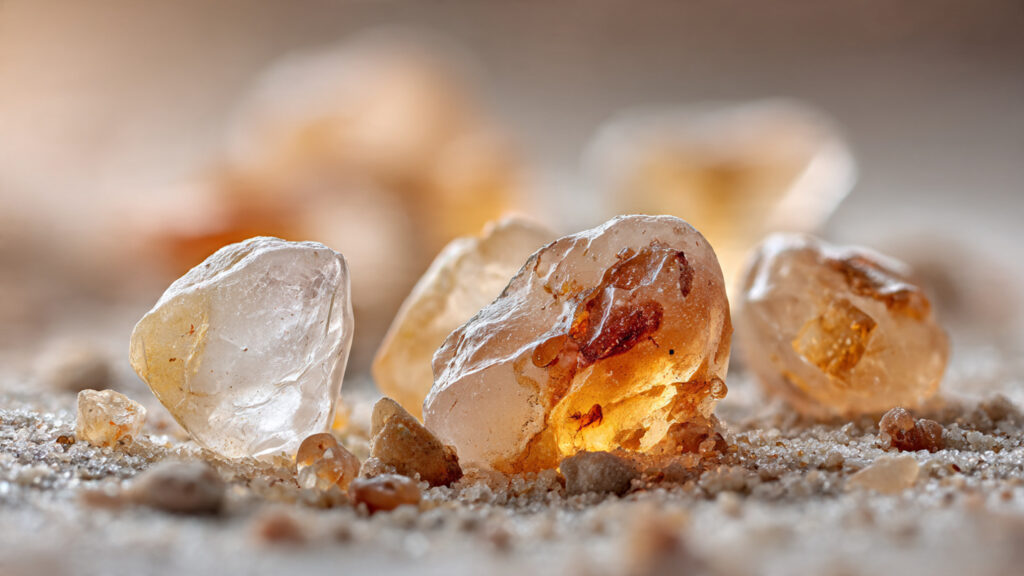
When you chew mastiha, it softens in the mouth and turns white. The initial flavour is bitter and slightly austere. Then something shifts, and it releases a freshness that is genuinely unlike anything else in the world of flavour: cool and resinous and clean, with a brightness that the Greeks understood, from the first time someone chewed it, as something beyond pleasure.
It was medicine. It was flavour. It was, in ways the ancient world intuited before the modern world could measure, both simultaneously.
Hippocrates Knew
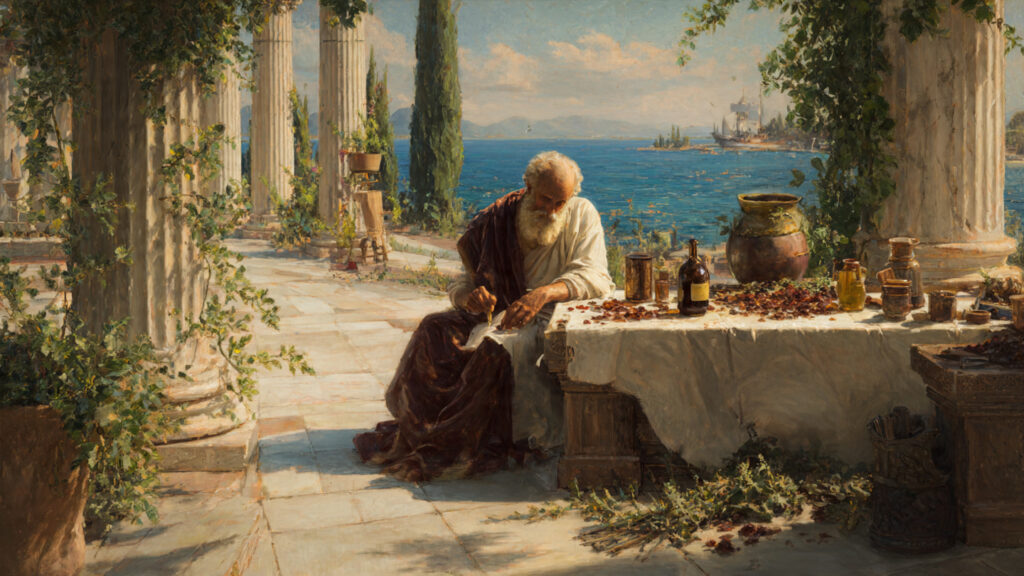
The first written reference to mastiha as a therapeutic substance appears in Herodotus, who in the fifth century BCE described the trees of southern Chios and the practice of collecting their resin. But it is Hippocrates, the father of medicine, who established mastiha in the pharmacological tradition that would carry it through twenty-five centuries of continuous use.
Hippocrates prescribed mastiha for gastrointestinal disorders, as a breath freshener, for the prevention of colds, and for the treatment of digestive problems. His student Dioscorides, whose De Materia Medica became the foundational text of European pharmacy for fifteen centuries, documented mastiha’s uses in detail: as a treatment for stomach ailments, as an ingredient in dental preparations, as a preservative for wine, as a base for varnishes and adhesives.
What Hippocrates had identified by observation and clinical practice, modern pharmacology has now confirmed by mechanism. Mastiha contains a complex mixture of bioactive compounds, including triterpenoids, polymers unique to the Pistacia species, and antioxidant polyphenols, that give it the properties the ancient physicians recorded: anti-inflammatory, antimicrobial, antifungal, and gastroprotective. The European Medicines Agency has formally approved powdered mastiha as a traditional herbal medicinal product for two indications: treatment of mild dyspeptic disorders in adults and symptomatic treatment of minor skin inflammations.
The stomach ulcer research is the most dramatic modern validation. Studies published in peer-reviewed journals have demonstrated that mastiha at relatively small doses, as little as one gram per day, can eradicate Helicobacter pylori, the bacterium responsible for the majority of peptic ulcers. This finding, which emerged in the late 1990s, generated considerable scientific attention because it suggested that a substance the Greeks had been chewing for gastrointestinal complaints for three thousand years was effective not just symptomatically but at the microbiological level.
Hippocrates did not know about H. pylori. He knew that mastiha helped with stomach problems. He was right.
How an Island Became an Empire’s Treasury
The political history of mastiha is the history of every power that has ever controlled the Mediterranean understanding, sooner or later, that Chios was not simply an island but an economic resource of the first order.
Under the Byzantine Empire, the mastic trade became an imperial monopoly. The emperors understood with precision what they held: a substance that grew nowhere else in the world, that was in demand across the known world for medicine, perfumery, food preservation, and flavouring, and that could not be replicated or substituted. Emperor Constantine IX Monomachos, in the eleventh century, formalised the relationship between the Byzantine state and the mastic trade by granting the monastery of Nea Moni on Chios rights over mastic plantations, embedding the resin into the empire’s political and spiritual architecture simultaneously.
The Genoese, who took control of the island in 1346 through the trading company known as the Maona, understood immediately what they had acquired. They reorganised the mastic villages of southern Chios with the purpose of maximising and protecting production. The villages they built or expanded, Pyrgi, Mesta, Olympi, Kalamoti and the others, were not built like villages. They were built like fortresses.
The architecture of the mastic villages is unlike anything else in Greece and possibly unlike anything else in Europe. Houses were constructed with shared exterior walls that formed continuous defensive perimeters, with no windows at street level and only a single controlled entrance. Streets were designed as deliberate labyrinths, narrow and turning, to confuse attackers who managed to penetrate the outer wall. The most vulnerable approaches were reinforced with towers. Entry to some villages was via retractable ladders rather than fixed doors, so that the ladder could simply be withdrawn when the alarm was raised.
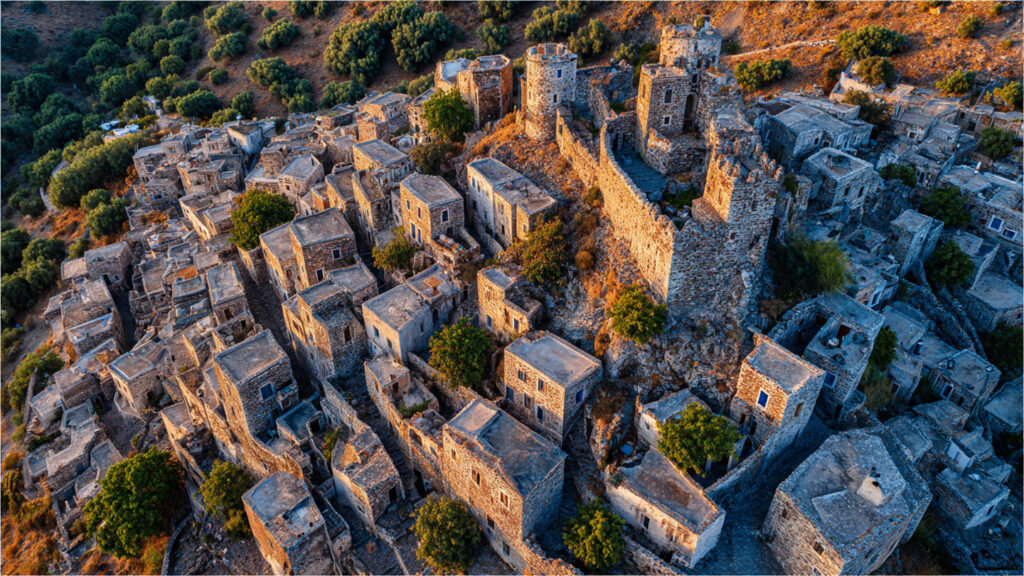
This was not architectural eccentricity. This was the calculated defensive logic of a community that understood that what it grew was worth attacking. Pirates, Arab raiders, rivals of the Genoese, local competitors: all had reason to want the mastic, and the villages were built on the assumption that wanting it badly enough would lead to force.
The Genoese created a mastic monopoly that enriched their coffers and shaped the economic geography of the eastern Mediterranean. European apothecaries and spice markets received Chios mastic as a premium commodity. The islanders, under foreign rule but building their lives around the resin, prospered relative to other Greek communities under Latin domination.
Christopher Columbus lived on Chios in the 1470s, before his Atlantic voyages, during the final decades of Genoese control. What he encountered was an island whose entire identity was organised around a single agricultural product of extraordinary commercial value. The lessons of the mastic monopoly, the economic logic of controlling an irreplaceable commodity that the world needed and that only one place could supply, are not irrelevant to the later history of colonial trade.
The Ottoman Sultan’s Most Valued Possession
In 1566, the Ottoman fleet under Kapudan Pasha Piyale Pasha took Chios from the Genoese. The island joined an empire that already controlled most of the Aegean. What happened next is one of the most unusual stories in Ottoman administrative history.
The Sultan did not destroy what the Genoese had built. He protected it.
The mastic villages retained their special status under Ottoman rule, granted privileges that no other Greek community in the empire enjoyed. They were exempt from certain taxes. They were permitted to maintain their own dress and customs when other communities were required to conform to Ottoman standards. Their village councils retained a degree of self-governance that was effectively unique in Ottoman-controlled Greece.
The reason for this extraordinary accommodation was simple and entirely consistent with the logic that had driven every previous Mediterranean power to value Chios above other islands: the mastic was irreplaceable, and the farmers who grew it were therefore irreplaceable, and destroying their community or their motivation to produce would have been an act of spectacular economic self-harm.
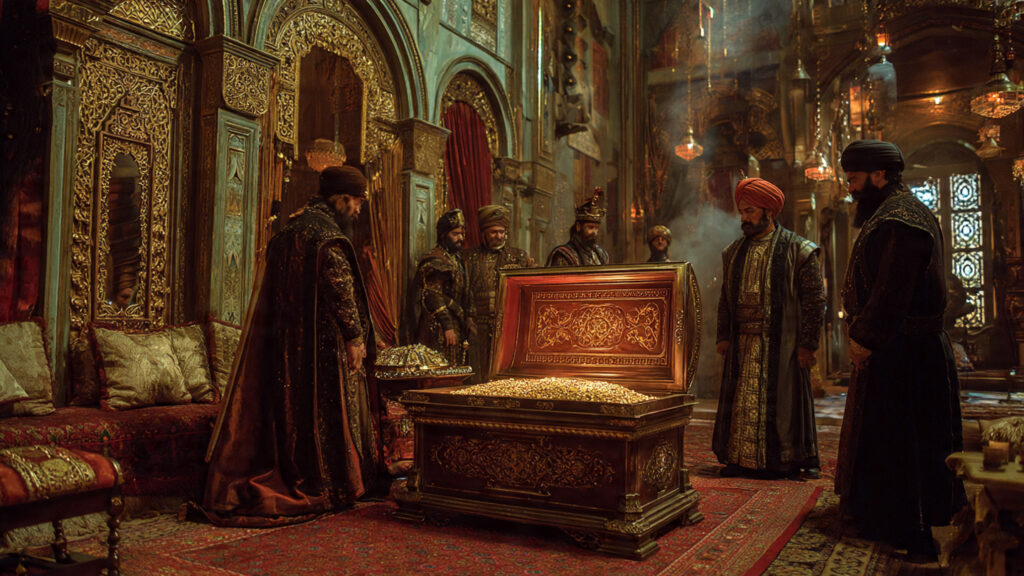
The Ottoman Sultan gathered the finest mastic crop each year for his personal use and for the harem. The Turks renamed the island Sakız Adası, Island of Gum, a name that required no further elaboration: every Ottoman subject who heard it understood immediately what the island was and why it mattered. European travellers of the seventeenth century wrote that mastic from Chios was worth its weight in gold, and the market price at times rivalled precious spices and silk. The resin travelled in carved wooden chests from Chios to Constantinople, to Cairo, to Venice, and by caravan to India, carried as a treasured commodity by merchants who understood its value in every market they served.
The Ottoman mastic monopoly lasted until the Tanzimat reforms of 1840 imposed universal taxation and deregulated the market. For nearly three centuries, a single island in the Aegean supplied the courts, pharmacies, and kitchens of an empire that stretched from the Balkans to Baghdad, and the terms of that supply were determined largely by the Sultan’s understanding that the farmers who made small incisions in the bark of trees in southern Chios were, in a very real sense, the most economically critical agricultural workers in his empire.
The Massacre and the Protected Villages
In March 1822, the Greek War of Independence reached Chios in the most catastrophic possible way.
Armed fighters from the neighbouring island of Samos landed on Chios, proclaimed the revolution, and launched attacks against Ottoman forces. The island’s leaders had been reluctant to join the uprising specifically because they feared what was coming: the loss of the extraordinary privileges that the mastic had secured for generations. Their fear was well-founded.
The Ottoman response was devastating. A large force landed, put down the uprising, and conducted a massacre that killed or enslaved tens of thousands of Chiots. Whole villages were destroyed. The island that had been, in the Ottoman understanding, one of the most valued provinces of the empire was torn apart in a matter of weeks.
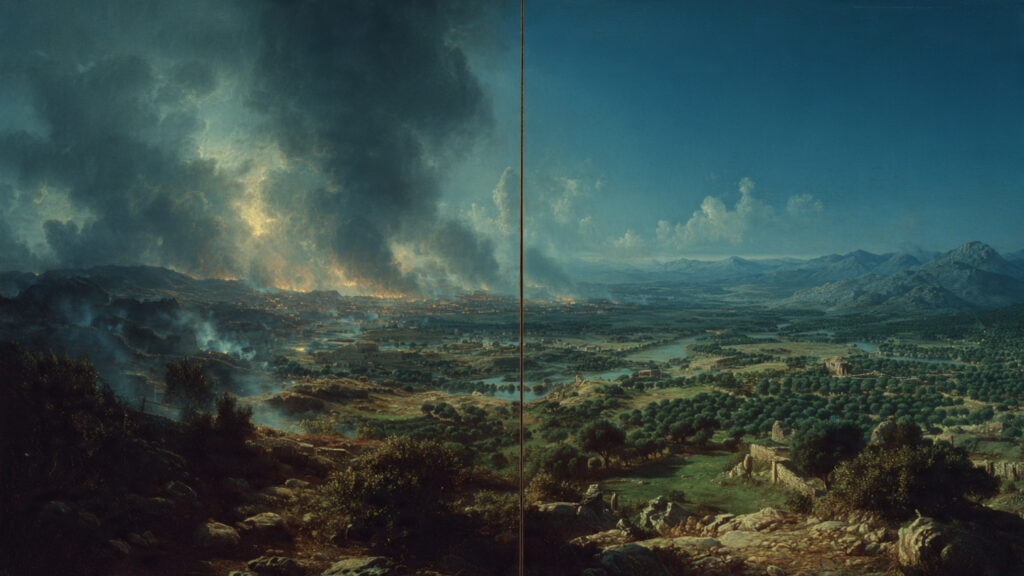
The mastic villages were protected.
Even in the full fury of the massacre, with Ottoman forces moving through the island systematically, the Sultan issued orders that the mastic-producing villages of the south were to be spared so that production could resume. The logic was cold, economically precise, and in its own terrible way, a final testament to what mastiha had meant to the empire that was destroying the island: the resin mattered more than the politics, and the farmers who grew it were protected assets even when everyone around them was not.
The painter Eugène Delacroix saw the aftermath of the Chios massacre and painted it in 1824, producing one of the defining works of French Romanticism: The Massacre at Chios, which hangs today in the Louvre. Most visitors to that painting know the history of the atrocity. Very few know that some of the people depicted in its landscape of grief were, in the south of the same island, continuing to score the bark of their mastic trees under Ottoman protection, because the empire that had just destroyed their community still needed what the trees produced.
What Mastiha Tastes Like | A Geography of Flavour
This is the section for those who have heard of mastiha but not yet met it in its fullest form.
Mastiha in Greek cooking is not a single flavour but a presence: a resinous brightness that can lift and transform whatever it enters without overwhelming it, used with the restraint that Greek cooking applies to its most powerful ingredients.
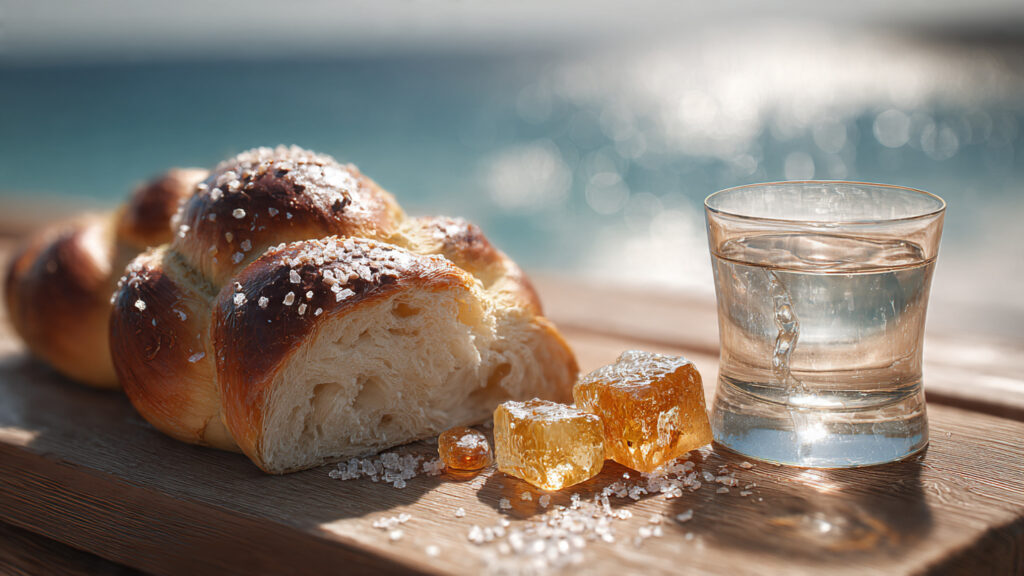
In bread, it gives a subtle complexity to the dough, a faint resinous warmth that you notice as a quality of the bread rather than as a taste. Greek Easter bread, the tsoureki, almost always contains mastiha, and the fragrance of a freshly baked tsoureki, mastic and mahlab together in the warm dough, is one of the defining sensory experiences of the Greek spring.
In loukoumi, the Greek version of Turkish delight, mastiha flavouring produces a confection that is cooler and more botanical than the rose water version, with a clarity that makes it feel less sweet than it is.
In ice cream, which Chios produces in a form unique to the island, mastiha gives a texture as much as a flavour: the resin’s polymers interact with the cream in a way that produces a slight chewiness, a slight resistance, that makes the ice cream feel substantial and particular in a way that is immediately recognisable to anyone who has eaten it.
In liqueur, the mastiha spirit produced on Chios is the most direct encounter with the resin’s flavour: resinous, cool, pine-forward, digestive in the most physical sense. It clears the palate. It belongs after a meal in the way that grappa or calvados belong after a meal: not sweet, not aggressive, but settling.
The Romans used mastiha in a spiced wine called conditum paradoxum, a preparation of wine, honey, pepper, and mastic that was served at feasts. The word mastic entered English and French through the cooking traditions of medieval Europe, where the resin was used in pastry, in preserved meats, and in the white sauce preparations that would later influence the French culinary tradition. The word we use in English for the act of chewing, masticate, derives from the Greek mastikhan, which derives from mastiha: the ancient chewing gum that preceded every other chewing gum in the Western world.
The Living Tradition
Mastiha today is simultaneously an ancient practice and an expanding modern industry, and the tension between those two identities is managed with considerable care by the Chios Gum Mastic Growers Association, founded in 1938 and still the body that oversees every aspect of mastiha’s production, quality control, and marketing.
The Association represents the farmers of all twenty-four mastic villages. It controls what enters the market under the mastiha name, holding the Protected Designation of Origin certification that ensures only genuine Chios mastiha can be sold as such in the European Union. It coordinates research with academic and pharmaceutical institutions, negotiating the transition between ancient use and modern scientific validation.
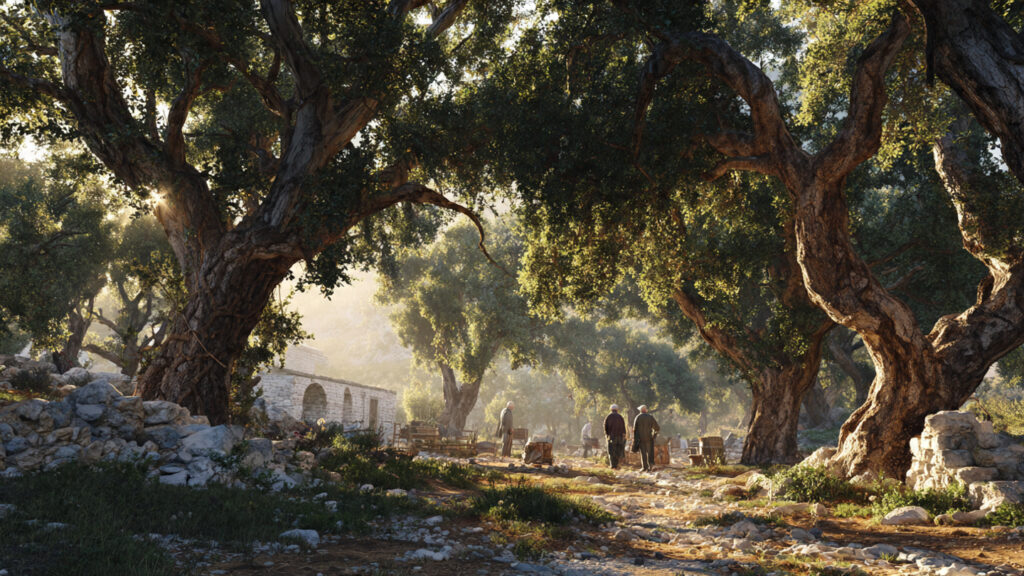
In 2014, UNESCO inscribed the cultivation knowledge of Chios mastiha on its Representative List of Intangible Cultural Heritage of Humanity: a formal recognition that what the mastic farmers of southern Chios do each summer, scoring the bark of trees in the same way their great-grandparents scored it and their great-grandparents before them, is a form of human knowledge worth protecting from the same perspective as languages and traditional music and ancient craftsmanship.
The mastic villages themselves are now among the most architecturally remarkable sites in Greece, drawing visitors who come specifically to understand the fortress logic of their design and the history it encodes. Pyrgi, with its extraordinary geometric xysta decorations, grey and white geometric patterns applied to the exteriors of every building in the village, is unlike any other settlement in Europe. Mesta, the most complete surviving fortified mastic village, still has its labyrinthine interior, its covered alleys, its single ancient gateway through which the whole community once entered and which was sealed each night against whatever the sea might deliver.
The trees in the groves outside these villages are the same variety of tree, growing in the same limestone soil, watered by the same Aegean microclimate, that produced the tears collected by farmers in the time of Hippocrates. The wounds made each summer are made by hands that have learned the technique from hands that learned it from hands going back further than any written record confirms. The crystals that fall to the white earth beneath the scored branches are chemically identical to the crystals that sweetened Byzantine imperial desserts and preserved Ottoman sultans’ teeth and traded at spice market prices across the medieval world.
Nothing essential has changed. Which is, in the story of mastiha, exactly the point.
Three Thousand Years of Chios
There is something the mastic tree teaches, if you are willing to learn from a plant.
It produces its most valuable substance in response to a wound. Not despite the wound but because of it. The incision in the bark is the necessary condition of the tear. Without the cut, the tree is simply a shrub. With it, the tree becomes a source.
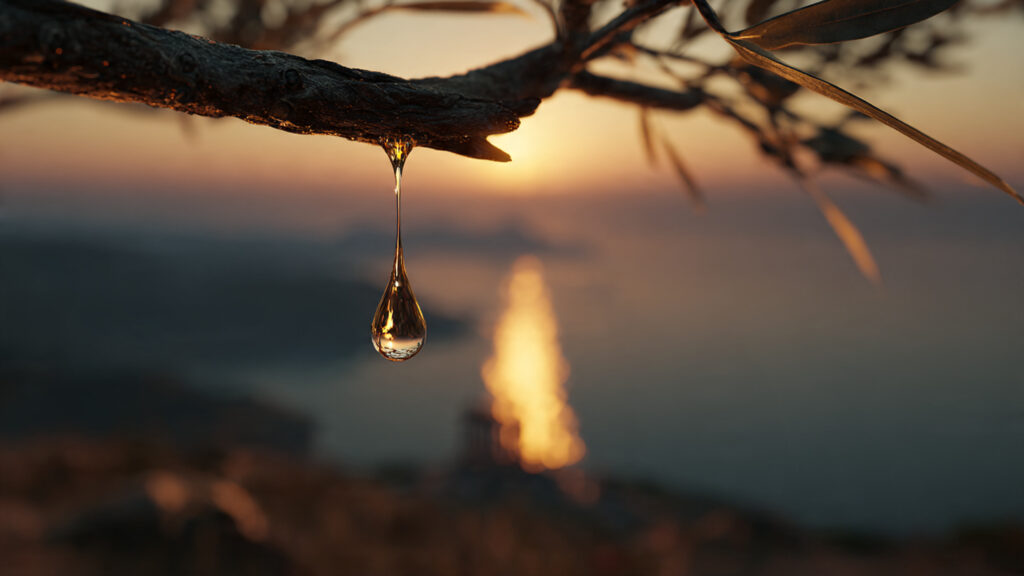
The Greeks who first noticed this, who understood that the bright drops hanging from the scored bark were something worth collecting, worth studying, worth building an economy and eventually an empire around, were observing a principle that runs through their mythology and their philosophy with equal force: that the most significant things often require a rupture to begin.
Athena’s grief became guardianship. Demeter’s loss became the seasons. The mastic tree’s wounds become the tears that healed Hippocrates’ patients and flavoured Byzantine courts and sustained Ottoman sultans and now sit in the pharmacopoeia of the European Medicines Agency alongside compounds that took centuries of pharmaceutical research to produce.
Three thousand years of continuous production from a single island. A single variety of a single tree. A substance that grows nowhere else and has been irreplaceable for the entirety of recorded Mediterranean history.
This is mastiha: the oldest continuously produced agricultural product in the Greek world, the first chewing gum in human history, the substance that turned an Aegean island into the most economically valuable province of two successive empires, and the flavour that arrives in your mouth when you bite into an Easter tsoureki and wonder, briefly, what that particular warmth is.
It is three thousand years of Chios, condensed into a crystal the size of a teardrop.
Where to Stay in Chios
Explore Chios with this interactive map of nearby stays, from medieval-village guesthouses to quiet coastal retreats, and anchor your journey on an island shaped by mastic, myth, and deep Aegean memory.
At Olympus Estate, Food and Seasonal Life traces the culinary traditions of the Greek world from the ancient harvest through the Byzantine kitchen to the contemporary table. The mastic tree grows throughout the Mediterranean. Only on Chios, on the southern slopes of the island in the northern Aegean, does it weep its resin. The Greeks have called the crystalline drops dakrya for three thousand years. Dioscorides catalogued mastiha’s medicinal properties in the first century. The Ottoman sultans controlled it for four centuries. The EU granted it Protected Designation of Origin status. The tree on Chios is still weeping, still producing under the pressure of the wound something entirely different from what it was when it left the bark.