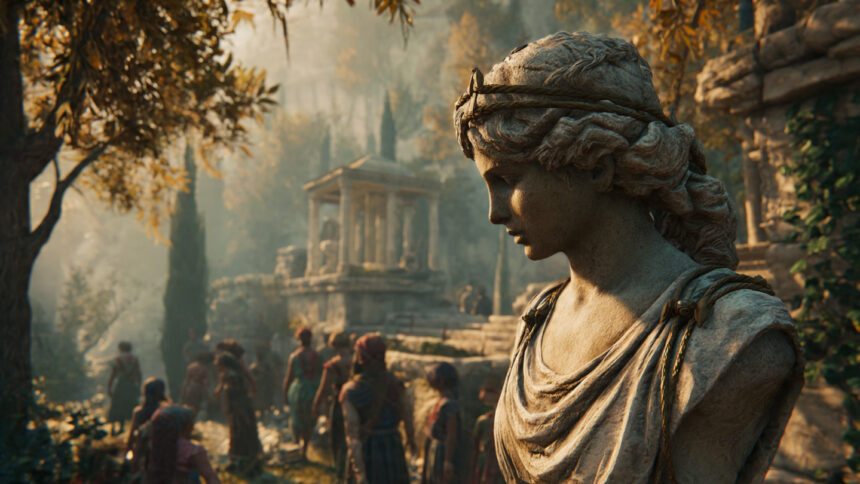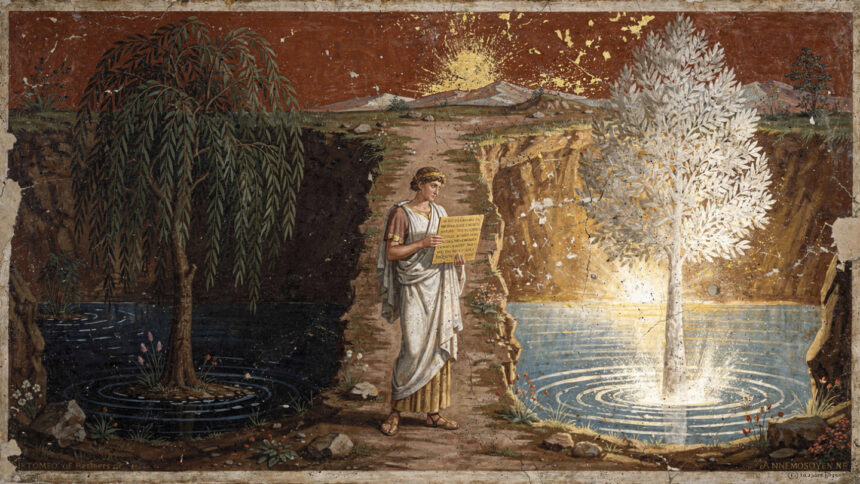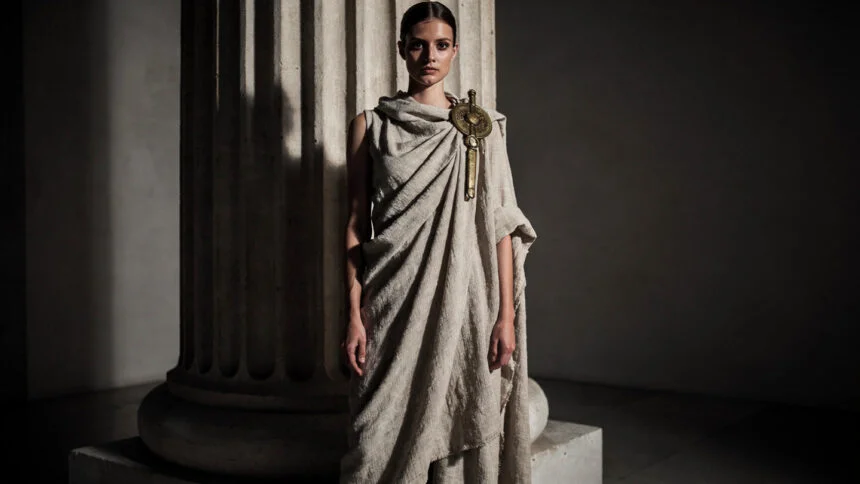





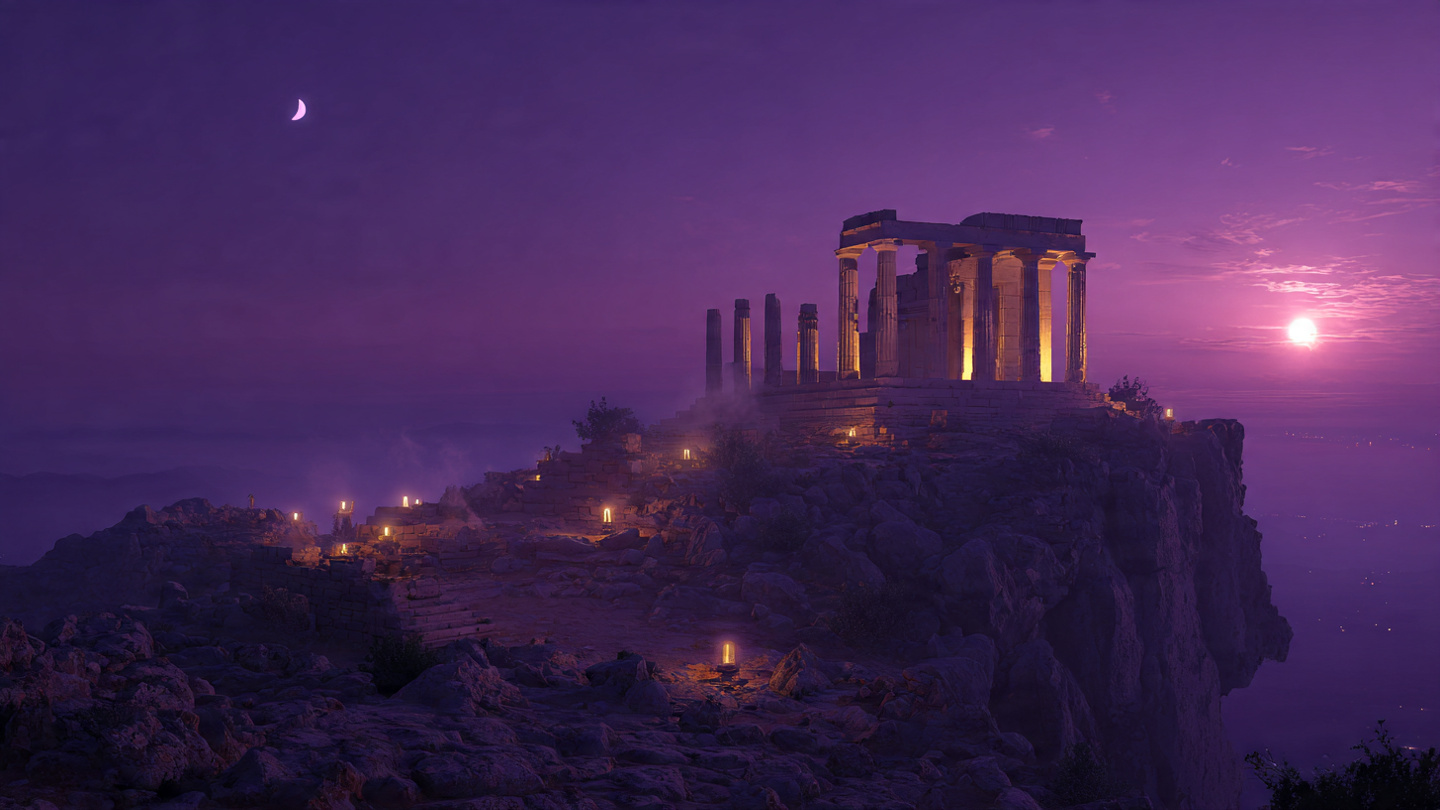
The Aphrodite the West inherited is a selection from a much wider range.
The goddess of the Botticelli shell, the Praxitelean marble, the Homeric laughter, the golden apple of the Judgment of Paris: this is the Aphrodite the Renaissance lifted from the ancient world and turned into the standard image of the goddess for every later artist and writer who drew on Greek sources. Beautiful. Laughing. Dangerous in the way any being is dangerous whose beauty can disrupt an ordered life. The existing Aphrodite article in this collection develops this force of attraction through the Platonic distinction between Ourania and Pandemos, through the Judgment of Paris as proof that eros outranks sovereignty, wisdom, and military excellence, and through the Pygmalion myth as the purest available image of a love that seeks not the convenient object but the quality beauty represents at its highest.
This is correct as far as it goes. It does not go far enough.
The regional sanctuaries scattered across the Greek world preserved understandings of what Aphrodite was that the standard beautiful, laughing, dangerous goddess cannot accommodate. These are not alternative readings of one figure. They are genuinely distinct theologies, different enough from the Homeric Aphrodite that sharing her name looks almost accidental: the armored goddess of Laconia, the Black One of Corinth, the conical stone at Paphos that predated every human-shaped image of the goddess by centuries and stayed the primary object of her most sacred sanctuary long after sculptors had given her a face everywhere else, and the Anadyomene, the rising one, whose emergence from the sea Hesiod named as her origin and whose most celebrated ancient image the painter Apelles created.

These are the faces the standard telling forgot. Each one carries a different understanding of the force the name Aphrodite covered. Taken together, they give the goddess her full range: from the armored to the consuming, from the faceless stone to the rising figure, from the goddess of the martial bond to the goddess of the night’s transformation to the goddess who existed before she had a face at all to the goddess whose emergence from the water was the emergence of beauty itself from the chaos that came before the ordered world.
Aphrodite Areia | The Armored Goddess of Laconia
In Laconia, Aphrodite was worshipped with weapons.
Aphrodite Areia, the warlike Aphrodite, belonged to the region the ancient world most consistently associated with the discipline of the martial life: Sparta, whose entire society the ancient sources describe as organized around the demands of collective military excellence. Her cult there defined what love meant inside a community built on exactly those demands.
The Laconian cult statue of Aphrodite Areia was armed. The goddess carried weapons, and this was not a regional sculptor’s private eccentricity. It was a theological claim, one the Homeric goddess of laughter and gold could never make: that love, in the Spartan setting, meant the loyalty of the phalanx carried into the household, the bond between warriors who stood together in the shield wall extended to the bond between husband and wife, two people formed by the same discipline and bound by a commitment the conditions of Spartan life demanded be tested and proven, not simply assumed.
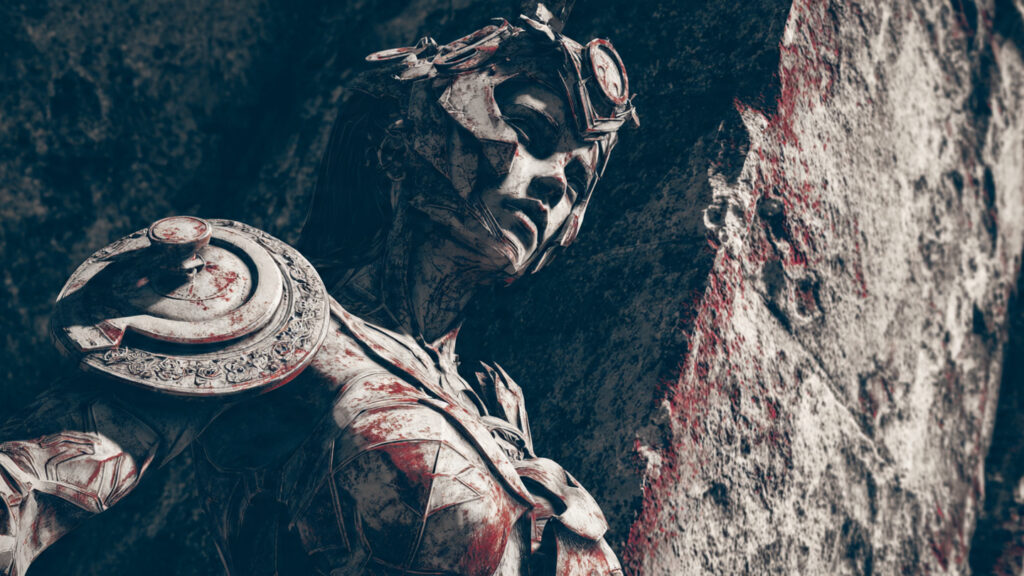
The armor said this plainly: attraction, here, was not the soft, yielding pull the Homeric goddess embodied but a hard, enduring force, a bond forged under shared hardship and tested by exactly the pressures Spartan life reliably produced. A bond that functioned as a shield. A love that was a weapon in the sense of a thing that protects, not a thing built to destroy.
The union of Aphrodite and Ares, the affair Demodocus sings of in the Odyssey as the great scandal of the divine world, the two lovers caught in Hephaestus’s bronze net before the assembled gods, reads differently from inside the Laconian cult. There it was no scandal at all but a theological truth: the force of attraction and the force of martial excellence were not opposites awkwardly forced together but two expressions of the same underlying commitment, the kind of bond whose strength only shows itself under the conditions that actually test whether a bond holds.
Aphrodite Melainis | The Black One of Corinth and Thespiae
In Corinth and in Thespiae, Aphrodite was the Black One.
Aphrodite Melainis, the goddess of the night, governed what desire meant in its consuming, transformative register: not the desire that beautifies and elevates, the kind that drives the Platonic ascent toward the permanent beauty of the good, but the desire that dissolves an existing self in the encounter with another person and produces, out of that dissolution, whatever transformed self the encounter has made possible.
The epithet’s blackness was the blackness of night itself, the darkness in which this kind of transformation happens. Corinth, the city of two seas, hosted a cult of Aphrodite on the Acrocorinth that ancient writers, above all Strabo, describe as remarkably wealthy, supported in part by the temple’s sacred prostitutes. Modern historians treat Strabo’s specific figures and his picture of the practice with real caution, since the evidence for organized sacred prostitution on the scale he describes is thin and the account may exaggerate or misread what was actually happening at the sanctuary. What is not in dispute is that the cult carried a strong association with initiation into desire’s more consuming, transformative side, the side that belonged to the goddess of the night.
Melainis gave concrete cultic form to what Plato’s distinction between Ourania and Pandemos named in purely philosophical terms: that the force Aphrodite embodied had two available directions, one that elevated and one that consumed, one producing the ascent toward the permanent beauty of the good and the other producing a descent into the night’s consuming desire. Melainis named that descent directly, on its own terms, rather than defining it only as the lesser twin of the elevated ascent.
This is Greek religious thought at its most theologically honest: the force that beautifies and the force that consumes were both Aphrodite, carried under different epithets at different sanctuaries and honored with different rites in different regions, but understood as two expressions of one force whose range ran from the celestial to the chthonic, a range that required both Ourania and Melainis to describe it accurately.
The Conical Stone of Paphos | Before the Goddess Had a Face
The oldest available form of the Aphrodite cult was not a goddess at all.
At Paphos in Cyprus, the sanctuary ancient writers consistently named as the most sacred site of Aphrodite’s cult, the primary cult object was a conical stone. Not a statue. Not a human female form in marble or bronze. A stone: black, of volcanic origin, conical, its precise history uncertain, predating by centuries the anthropomorphic sculpture that would eventually become the standard way of representing Greek gods.
That stone remained the sanctuary’s central object well into the Roman period, long after the sculptural tradition descending from Pheidias had given Aphrodite her familiar human shape everywhere else in the Greek and Roman world. A pilgrim who traveled to Paphos, the most sacred site of the goddess’s own cult, met not a beautiful female figure but a stone. The stone was still there when sculptors had given her a face everywhere else.

Its persistence is itself the clearest evidence of what the Paphian cult actually believed: that the force the goddess embodied did not need a human face to be present in the stone. The stone was her presence in the only form Paphos had ever recognized as correct, not a beautiful female figure but the raw material beauty itself had once emerged from.
Hesiod’s origin myth for Aphrodite, which the existing Aphrodite article on this site develops, has her rise from the sea foam that gathered around the severed remains of Ouranos. The Paphian stone encodes, in material form, exactly what that myth encodes in narrative form: a goddess who emerged from primordial violence, whose origin was raw matter itself, present before any organizing principle had yet imposed the shapes the ordered world would later maintain. The conical stone was that emergence before the face, the goddess as she existed before the human form the wider tradition would eventually insist every god must wear.
Cyprus itself carries an uncertain history. Ancient and modern scholars disagree over where the island’s own name comes from, with theories pointing toward the cypress tree, the henna plant, or a lost Eteocypriot word. What is certain runs the other direction: Cyprus was one of antiquity’s great copper-producing regions, and the Latin word for the metal, cuprum, and the English copper that descends from it, both come from the island’s own name, aes Cyprium, the metal of Cyprus, rather than the reverse. Whatever the truth of Cyprus’s own name, the island’s volcanic geology, the same geology that produced its copper deposits, is the most direct material source for the black stone that fell to earth and became a goddess’s oldest home.
Aphrodite Anadyomene | The Rising
The fourth face is the one the ancient world knew best and the one the West has absorbed most completely without understanding what it actually encoded.
Anadyomene means the rising one. Its most celebrated ancient expression was a painting by Apelles, a work the ancient sources describe as the single most admired image in the ancient world: the goddess rising from the water, wringing the sea from her hair, caught at the exact first instant of her emergence from the foam Hesiod names as her origin.

This image was never simply a beautiful woman stepping from her bath. It pictured a primordial emergence: beauty and attraction rising out of the chaos of the primordial sea at the exact moment they first entered the ordered world, the instant a force that would go on to move planets in their orbits, lovers toward one another, craftsmen toward beautiful objects, and philosophers toward the permanent beauty of the good, first became present in the world as something distinct and nameable.
Before Aphrodite rose from the foam, the ordered world had no force binding its elements to one another. After she rose, it had the one principle that made every later attraction possible.
Botticelli’s Venus, rising on her shell, is the most familiar modern descendant of this image, and also its most domesticated version: a beautiful young woman rising decorously from the sea, her nudity softened by her hair, her hand, and the attendant figures offering a cloak. The ancient Anadyomene was something more radical than that: the arrival of beauty itself in a world that had not yet been organized by beauty’s presence, the moment the world changed because beauty had entered it for the first time.
What the Four Faces Together Reveal
The armored goddess of Laconia shows what love is when it must be a bond that holds under exactly the conditions that reveal whether bonds hold.
The Black One of Corinth and Thespiae shows what desire is when it dissolves an existing self in the encounter with another and produces, from that dissolution, whatever transformed self the encounter makes possible.
The conical stone of Paphos shows what the goddess was before she was given the face later Greek religion would insist every divine being must wear: the primordial emergence, before the form.
The Anadyomene shows what beauty’s own arrival in the world actually was: not the arrival of one individual goddess, but the arrival of the principle that made every later attraction possible.
The existing Aphrodite article on this site develops the Platonic distinction between Ourania and Pandemos as the two available expressions of the same force at different levels of elevation and consummation. The four faces gathered here extend that same distinction across its full range: the armored bond, the consuming night, the faceless stone, and the primordial rising.
Together they restore the theological range the standard story left out. The beautiful, laughing, dangerous goddess of Homer was one face among several. Add Ourania and Pandemos to the four faces gathered here, and the goddess had at least six.
At Olympus Estate, Mythic Essays moves through the deeper currents of the Greek tradition. The West inherited a specific selection from a much wider range. Aphrodite Areia was worshipped with weapons in Laconia: a bond that functioned as a shield, a love that held under the conditions that revealed whether bonds held. Aphrodite Melainis was the Black One of Corinth, the consuming desire of the night that dissolved an existing self and produced the transformed self the encounter made possible. The primary cult object at Paphos, Aphrodite’s most sacred sanctuary, was a conical volcanic stone, not a statue, and it was still there when sculptors had given the goddess a face everywhere else. Aphrodite Anadyomene was the primordial rising: not a beautiful woman from the bath but the arrival of the principle of attraction in the world for the first time. The beautiful, laughing, dangerous goddess was one face. In full, she had at least six.