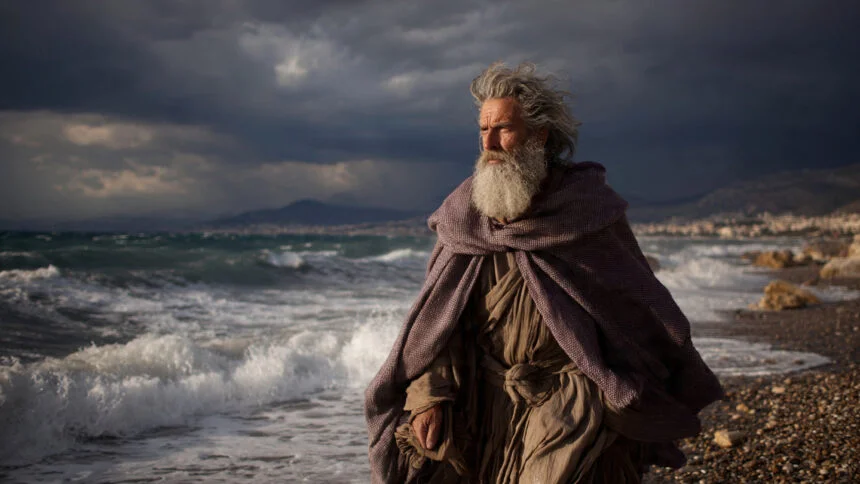




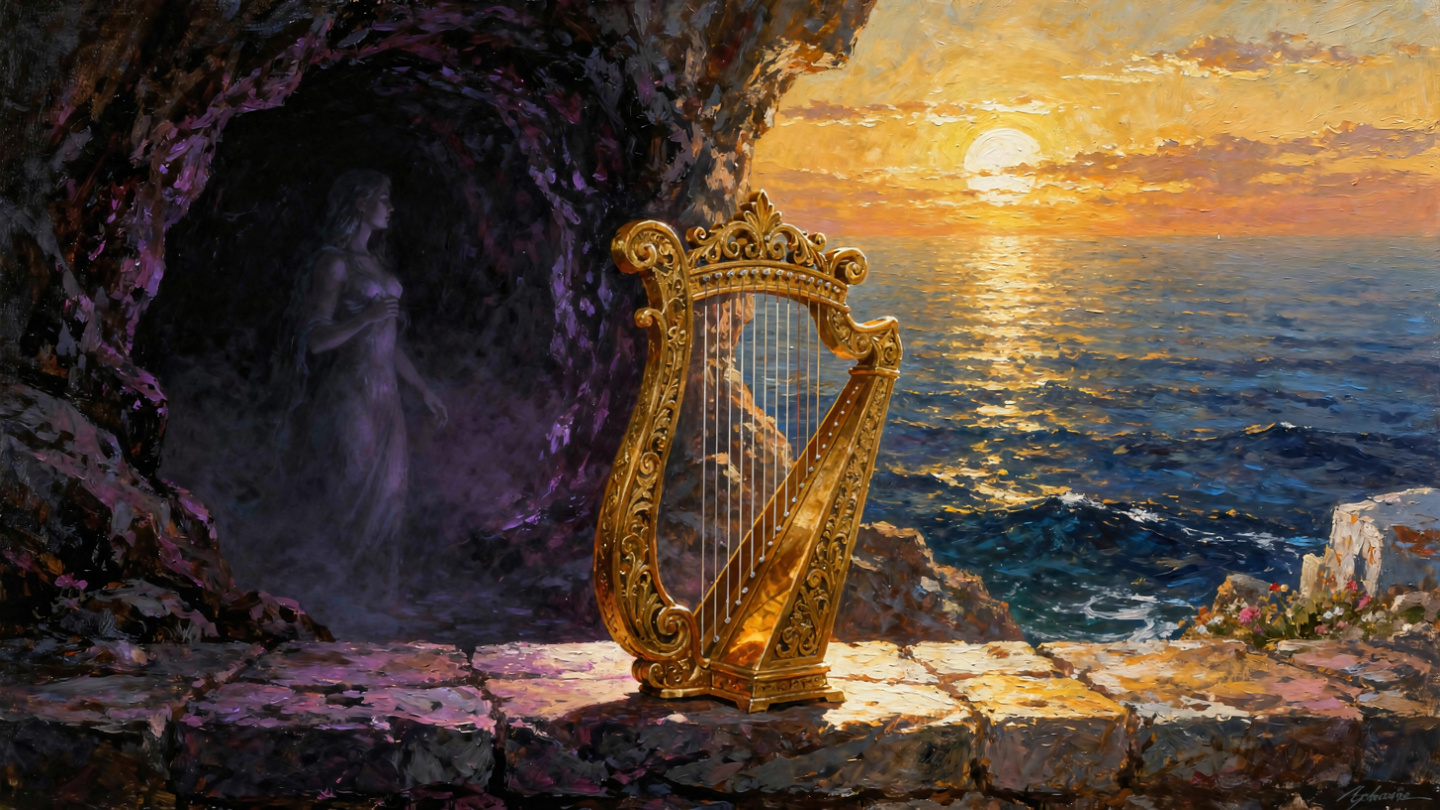
His name, according to one reading of its ancient roots, means the bereft one.
This is not a minor etymological detail. It is the myth’s founding condition, placed in the name of its protagonist before the first event has occurred, before the marriage, before the snake, before the descent. Pindar called him aoidan pater, the father of songs. The father of songs is also, in his name’s deepest meaning, the one defined by loss. The two things were not in tension for the heritage that created him. They were the same thing.
Orpheus is the Greek world’s most precise myth about the relationship between music and grief, and it has been misread for two thousand years as a story about a man who failed to follow a simple instruction. He did not fail. He did what the situation required of him, what every person who has loved someone irretrievably lost eventually does, and the heritage that built this myth understood why.
What the Song Did
Before the descent, before Eurydice, the myth establishes what Orpheus’s music was capable of and why the capability mattered.
His lyre, given to him by Apollo or made for him by Apollo depending on the version, produced a quality of sound that the Greek tradition associated with the power of music to reorganise the emotional and attentional state of everything that heard it. Trees moved toward the sound. Rivers altered their courses. Animals gathered at his feet. Stones, which have no capacity for response of any kind, responded.
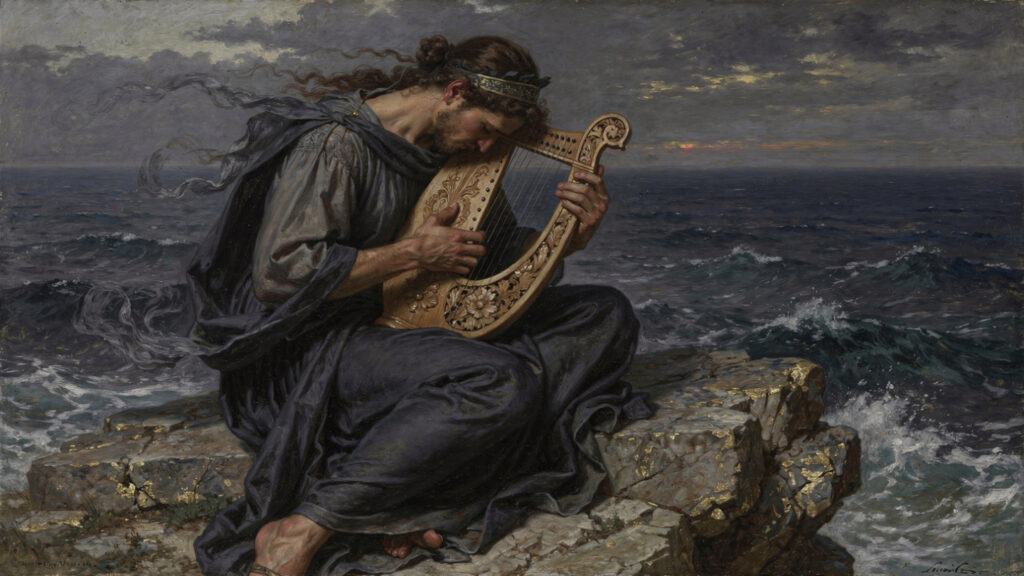
This is not decorative mythology. It is the Greek tradition’s most complete account of what music actually does at its most powerful: it reorganises the relationship between the listener and the present moment, creating a state of arrested attention in which the listener’s ordinary defences against feeling are suspended and the sound can operate on whatever the defences were protecting. The trees that moved toward Orpheus’s music were not reacting to a pleasant sound. They were reacting to a sound that made the ordinary conditions of being a tree temporarily irrelevant.
The same principle applied to the Underworld. Orpheus descended through the entrance at Taenarum in the southern Peloponnese, the same entrance that Heracles had used, and played his lyre as he went. Charon the ferryman, who transported souls across the Styx and was notoriously resistant to any appeal from the living, was moved by the music and allowed him to cross. Cerberus, the three-headed hound whose real task was to stop the dead from leaving, stopped and listened. The Furies, whose entire purpose was the implementation of divine justice without mercy or exception, wept.
The quality of Orpheus’s playing in the Underworld is described by Ovid with extraordinary precision: he sang of love, of the brief span of mortal life, and of the right of the living to reclaim what death had taken too soon. He did not appeal to the gods of the dead through prayer or sacrifice. He made them feel what he felt. The Furies, who had never wept before, wept because the music produced in them the quality of response that grief produces in beings who have encountered it honestly and without the protection of emotional distance.
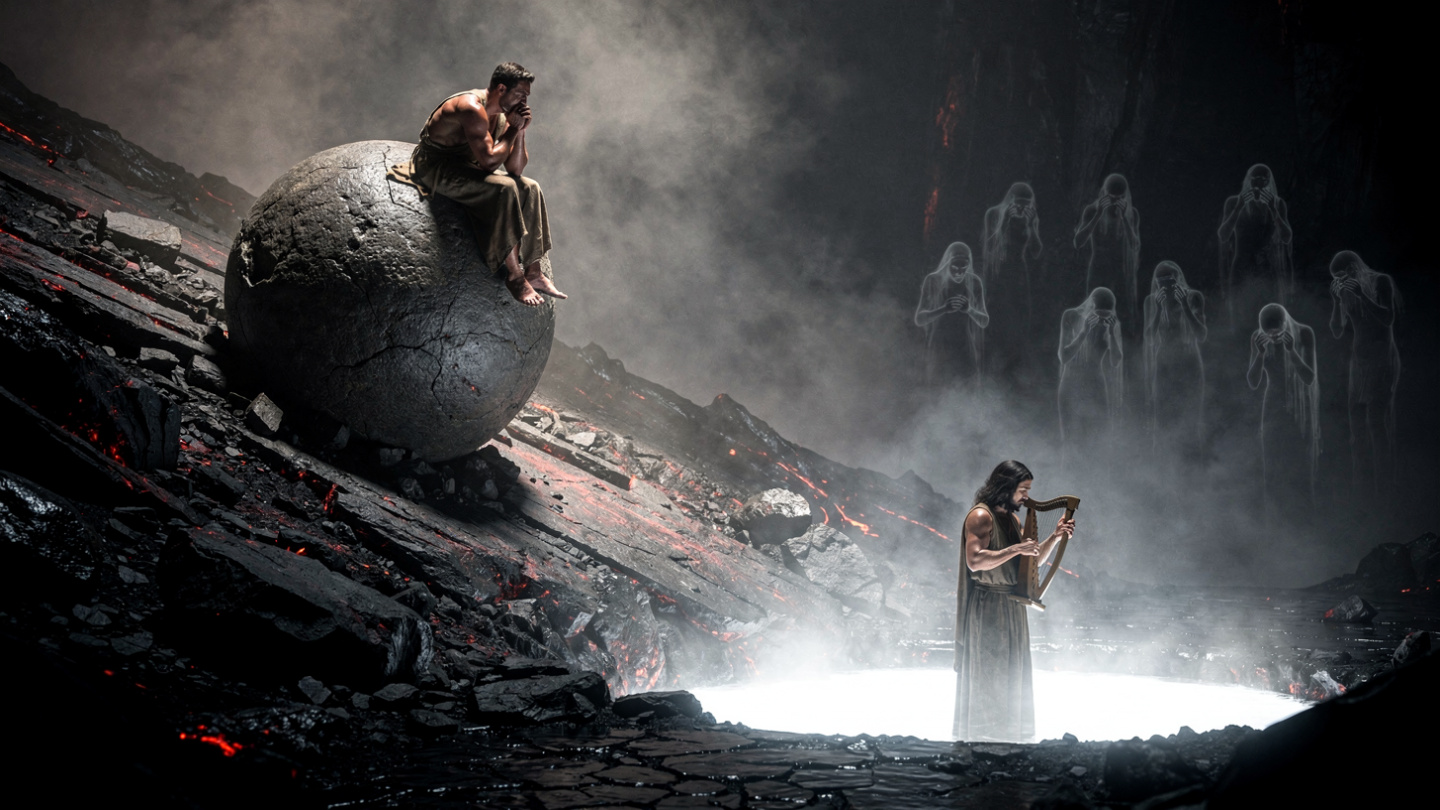
Orpheus played his lyre and the whole court of the dead listened, and even Sisyphus sat upon his rock. The boulder that perpetual labour had never allowed to rest, rested. The punishment of Sisyphus was suspended by the quality of the sound, because even the mechanics of eternal punishment could not maintain their operational logic in the presence of music that addressed what lay beneath every form of suffering.
Hades granted the condition. Eurydice could return to the living world, but only if Orpheus led her out without looking back until they reached the light.
The Condition and What It Was
The condition has been read as a test, as a cruel requirement, as evidence of divine bad faith. Eurydice was given back and the condition ensured she would be taken again. This reading assumes that the condition was set with the expectation that it would be broken.

A different reading is available and more interesting: the condition was set because it was the only possible condition, the one that specified, in contractual form, the precise thing that the situation required. Orpheus had to lead Eurydice out of the Underworld without looking back. He had to move forward, in the direction of the living world, with the quality of trust and forward-orientation that the return from the dead required.
This is not a simple instruction. It is the description of an internal state translated into a physical constraint. To walk through the Underworld toward the living world without turning back was to maintain the orientation of the living: forward, toward what is ahead, toward the light that represents continuation. To turn back was to reorient toward the dead, to bring the posture of mourning, the backward-facing quality of grief that lives in what has been lost, into the passage between the dead and the living worlds.
The condition was, at this level, not about Hades’s authority. It was about the nature of the return from grief. You cannot carry someone back from the dead while simultaneously mourning them. The mourning and the returning require incompatible orientations. Orpheus had to move toward the living world as if he were certain Eurydice was behind him, as if the certainty of love were sufficient ground for forward movement without verification. The moment he needed to verify, the moment the uncertainty of her presence became stronger than the certainty of his love, he had already, in some sense that the myth understands as prior to the physical act of turning, turned.
Why He Turned Back
According to Britannica, Orpheus, seeing the sun again, turned back to share his delight with Eurydice.
This detail, in Virgil’s version, is the one that changes the entire meaning of the turn. He did not turn from doubt or from fear. He turned from joy. He reached the surface, saw the sun for the first time since the descent, and turned to share it with her. The turn was an act of love rather than a failure of trust: the impulse to share a moment of beauty with the person you love, the instinct that the beauty of the sunlight was incomplete without her seeing it too.
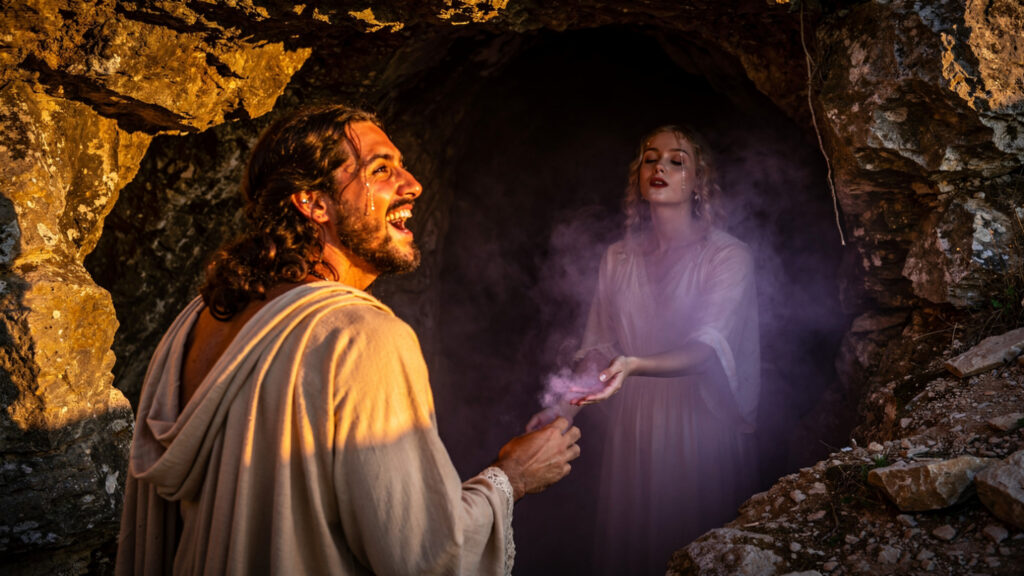
This is the quality of the myth’s tragedy that the moralising tradition, which reads the turn as weakness or impatience or the inability to follow instructions, entirely misses. The instruction he was given required him to walk forward without the impulse to share what he was experiencing with her. The instruction required him to suppress the very quality of connection that the music had demonstrated: the capacity to share a state of feeling across the boundary between the living and the dead. He was being asked to walk toward the sun while keeping to himself the experience of walking toward the sun.
He kept it until the sun was visible. Then he turned to show her.
The myth is not a moral lesson about obedience. It is a precise description of what grief asks and what love makes impossible. Grief asks you to keep moving forward without verification, without the ordinary reciprocity of shared experience, without turning back to confirm that what you are walking toward is still following you. Love makes the turning back the natural expression of what you feel: the turning toward rather than away, the sharing of the present moment with the person whose presence makes the present moment worth being in.
Ovid’s Eurydice, as she disappears for the second time, does not reproach him. Her final words are a whisper, expressing only that she was taken away again. She does not say he failed. She says she was taken. The distinction is everything.
The Orphic Mysteries and What the Descent Meant
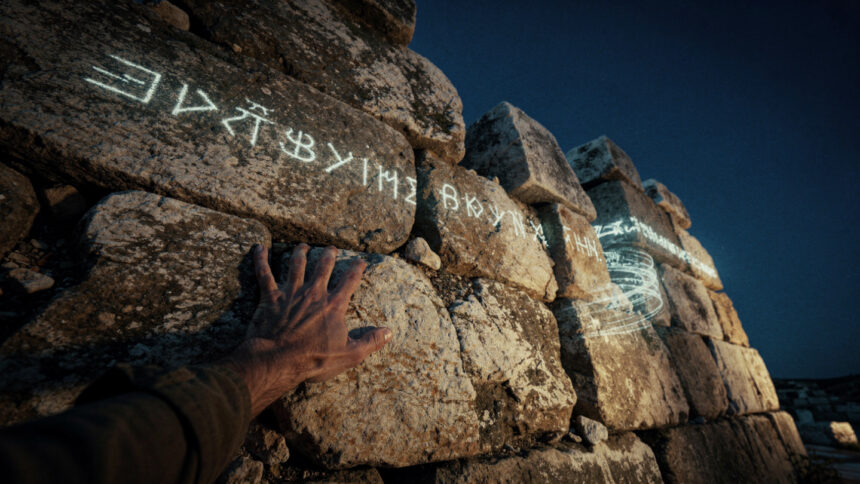
The Orphic descent was told in the first person: I told you what I saw and perceived when I went down the dark road of Taenarum into Hades, trusting in our lyre, out of love for my wife.
The Orphic religious tradition that developed in the Greek world from at least the sixth century BCE used the descent of Orpheus as its founding narrative and its central theological document. The Orphic mysteries, which influenced Pythagoras and the Pythagorean tradition and which Plato engaged with seriously in his accounts of the soul’s afterlife, were built around the proposition that the descent into the Underworld and the return from it constituted the transformative experience that the soul required for its purification and eventual liberation from the cycle of reincarnation.
The katabasis, the descent and return, was not simply the narrative of a man retrieving his wife. It was the account of the soul’s journey through the realm of the dead and back, a journey that required the qualities of music, of orientation toward the living, and of the capacity to move through the darkness while maintaining connection to what lay above it. The Orphic gold tablets, thin sheets of gold inscribed with instructions for the soul’s journey after death, which have been found in graves across the Greek world from southern Italy to northern Greece, draw directly on the Orphic descent narrative: they describe what the soul will encounter in the Underworld and how it should navigate toward the sources of memory and liberation.
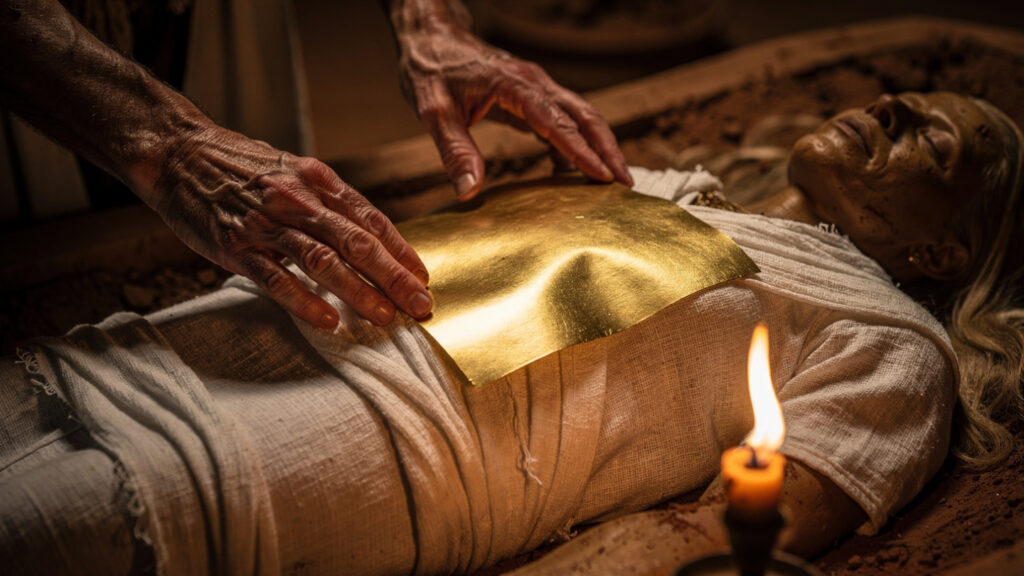
Orpheus’s descent gave the Orphic tradition its map. The musician who had been there while alive, who had moved through the geography of the dead and returned with the knowledge of its structure, was the authority for the instructions that the dead needed. The mystery cult built on his journey was a preparation for the journey that everyone would eventually make, taught by the only being who had made it voluntarily, while living, and come back to describe it.
According to Apollodorus, it was after his second loss of Eurydice that Orpheus founded the mysteries of Dionysus. The grief that could not be resolved by the return became the theological foundation of an entire religious tradition. What he could not recover through love, he encoded in ritual.
The Death and the Lyre That Kept Singing
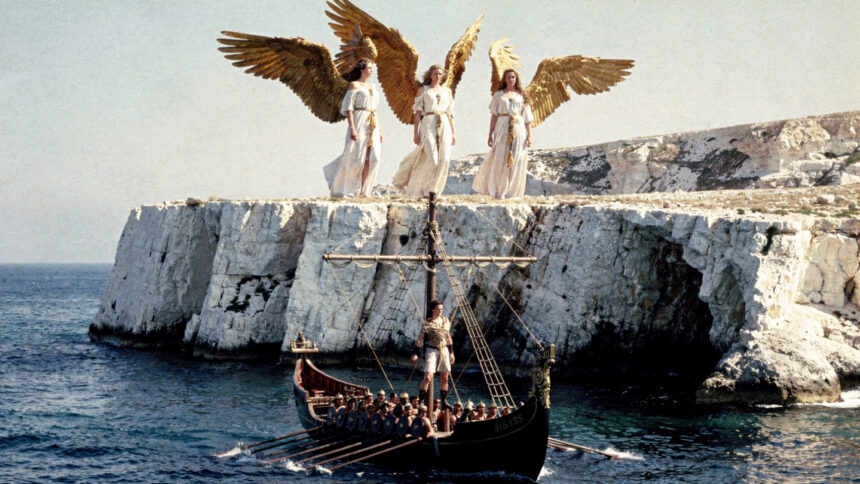
The earliest known account of Orpheus’s death, from Aeschylus, says that the Maenads were urged by Dionysus to tear him to pieces because Orpheus preferred the worship of the rival god Apollo.
The theological dimension of his death is the dimension that the popular tradition has consistently underemphasised. Orpheus died not because of his grief or his failure or the anger of women he had refused since Eurydice’s second death. He died in a conflict between two divine principles: Apollo, the god of light, reason, order, and the kind of beauty that music produces when it is organised and directed by intelligence, and Dionysus, the god of ecstatic dissolution, of the loss of individual identity in collective frenzy, of the kind of music that does not order feeling but unleashes it.
Orpheus belonged to Apollo. His music was the kind that moved rivers and rocks through its specific, organised quality: the beauty that arose from proportion and mastery rather than from the abandonment of proportion and mastery. The Maenads who tore him apart were the women who belonged to Dionysus’s opposite principle. The conflict between these two modes of musical and spiritual experience, between the organised and the ecstatic, between the beauty that comes from control and the beauty that comes from its surrender, was expressed in the myth’s ending as violence between their respective human representatives.
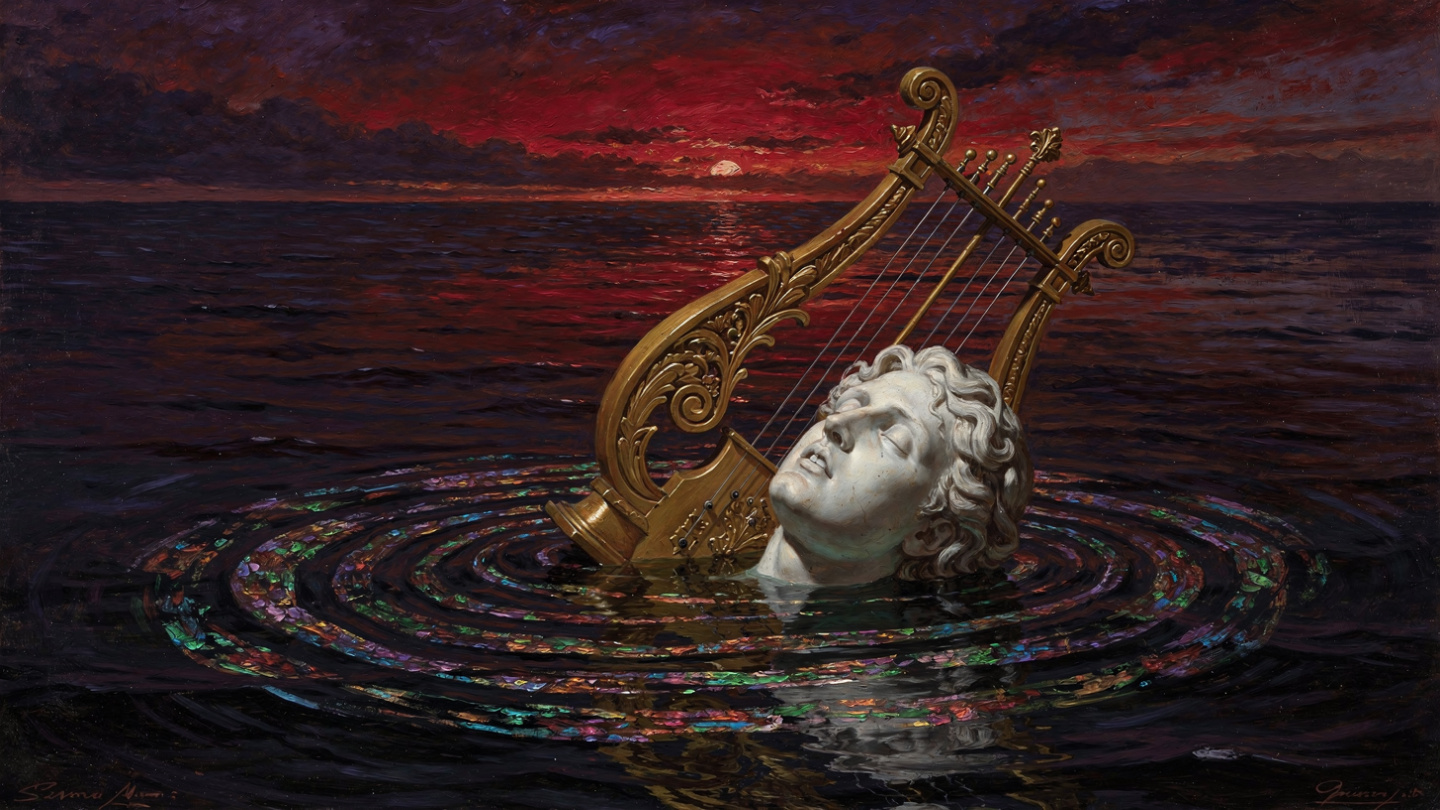
After the Maenads dismembered him, his head and his lyre floated down the river Hebrus and out to sea, and as they floated, the head kept singing. It washed up on the island of Lesbos, the island that would later produce Sappho and the lyric tradition of ancient Greece, and was enshrined there as an oracle. The lyre was placed among the stars as the constellation Lyra. The musician whose body the Maenads had scattered across Thrace left behind two things: a singing head and a constellation. The music did not stop when the musician was killed. It continued in a form that the killing could not reach.
What Two Thousand Years Heard in the Story
The tradition that received the Orpheus myth heard in it, across two millennia of retelling, the same fundamental argument in different vocabularies.
Virgil, whose account in the Georgics is the most emotionally devastating version of the myth in the Latin tradition, placed the story within a larger meditation on agriculture, on the relationship between human effort and natural loss, on the quality of grief that attends the destruction of what we have cultivated. The bees of Aristaeus, whose death triggers the events that lead to Eurydice’s death and then to Orpheus’s descent, are reborn at the end of the poem in the ritual of bugonia, the generation of bees from a slaughtered bull. The loss is real and the return is possible and the mechanism is agricultural and ritual rather than miraculous. Virgil’s Orpheus fails to recover Eurydice and succeeds in demonstrating what music is capable of, and both of these things are part of the same argument about what human love and human art can and cannot do in the face of death.
Monteverdi’s L’Orfeo, composed in 1607 and considered the first great opera in the Western tradition, built the entire form of opera from this myth: the proposition that music could be powerful enough to suspend the ordinary conditions of reality, that singing rather than speaking was the appropriate vehicle for the most extreme human emotional states. Every opera that has been composed since L’Orfeo is built on this premise, and the premise comes from the myth.
Rilke’s Sonnets to Orpheus, written in 1922, produced the most philosophically radical reading of the turn: in Rilke’s understanding, the turn was not a failure but the completion of the myth’s deepest argument. Orpheus was the being who moved between the living and the dead, between presence and absence, and the turn toward Eurydice at the threshold was the turn of a being who understood that the boundary between the worlds was his natural habitation. He was not retrieving her. He was returning to her, briefly, before continuing in both directions simultaneously, the condition of the artist who is always moving between what is present and what has been lost.
The father of songs. The bereft one. The musician whose name encoded the loss before the loss arrived. He turned back to share the sunlight with her and she was gone and the lyre kept singing.
It is still singing.
At Olympus Estate, Tales from Olympus reads the figures of Greek mythology at the depth their traditions require. This article follows Orpheus from his Thracian origins through the descent into the underworld and the turn that ended everything, arguing that the myth’s central question is not why he turned back but what the turn reveals about the nature of art, grief, and the one condition under which love cannot sustain its own object. The lyre kept singing because the myth was never about retrieval.