




Athens has been one of Europe’s most closely watched property stories for the past five years, and the attention is entirely justified.
A city that lost more than forty percent of its property value during the decade-long economic crisis has been recovering with a consistency that has surprised even optimistic analysts: citywide prices have risen for twenty-seven consecutive quarters, the overall market has appreciated more than thirty percent since 2018, and the international buyers who arrived early in the recovery have, in most cases, done considerably better than they planned to.
But here is what the headline figures obscure: Athens is not one market. It is twenty distinct neighbourhoods at twenty different points on a curve that runs from barely discovered to fully saturated, from pre-renovation to over-touristed, from emerging cultural identity to established investment category. The buyers who have done best in Athens over the past five years are not the ones who bought in Athens. They are the ones who understood which neighbourhood they were buying in and what stage of the cycle it occupied.
This article is about where the genuinely interesting positions are in 2026: the neighbourhoods that combine cultural depth with investment logic, where the heritage is real and the upward trajectory is documented rather than speculative, and where the window between now and the point of obvious saturation is still meaningfully open.
There is also a regulatory moment to understand. Capital gains tax on property sales in Greece has been suspended until December 31, 2026. For buyers who can complete a purchase and establish their position before that date, the tax environment is as favourable as it has been in recent memory. This is the context within which all neighbourhood-level decisions in Athens are currently being made.
How Athens Moves | Understanding the Cycle
Before the neighbourhood analysis, the mechanism deserves a clear description, because Athens gentrification follows a pattern recognisable from other European cities but with local characteristics that matter for investment timing.
The cycle begins with artists and creatives. They arrive in neighbourhoods where rents are low, buildings are neglected, and the character of the place, however rough, carries some quality of spatial interest: a neoclassical building stock from the nineteenth century, a street grid that generates shade and human scale, proximity to the centre that the price has not yet recognised. They renovate selectively, open studios and small cafes, and produce the early evidence of neighbourhood transformation that the next wave requires.
The second wave is young professionals and foreign buyers. They follow the early evidence, arrive with more capital, renovate more completely, push prices upward at a pace that the first wave did not anticipate, and establish the neighbourhood in the city’s residential imagination.
The third wave is institutional: boutique hotels, short-term rental portfolios, restaurant investment. By this stage the neighbourhood is fully discovered, prices reflect the transformation that has occurred, and the yield compression that always follows full discovery has begun.
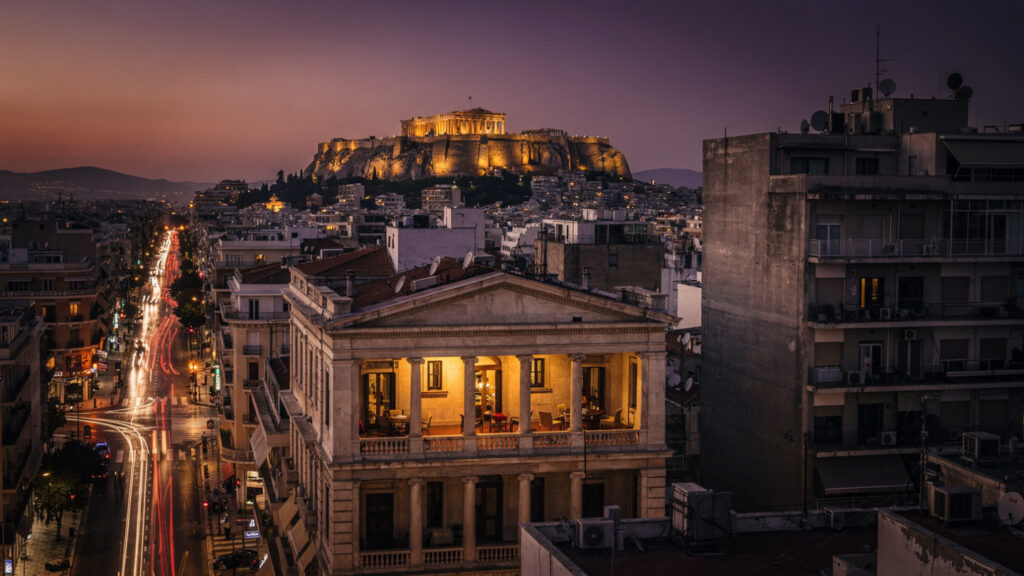
Athens in 2026 has neighbourhoods at all three stages simultaneously. Koukaki is post-third wave and at the saturation point where new short-term rental registrations have been banned. Kypseli is solidly in the second wave with the third arriving at its edges. Metaxourgeio is positioned between the first and second wave, with the cultural identity established but the price appreciation still in its earlier phase. Exarchia is the most complex case: simultaneously at an early stage of formal investment interest and subject to a set of cultural and political dynamics that make it unlike any other neighbourhood in Athens.
The investment intelligence is knowing where each neighbourhood sits on this curve and buying accordingly.
Koukaki | What Full Maturity Looks Like
Koukaki earns its place in this article not as an active opportunity but as the benchmark against which every other neighbourhood should be measured.
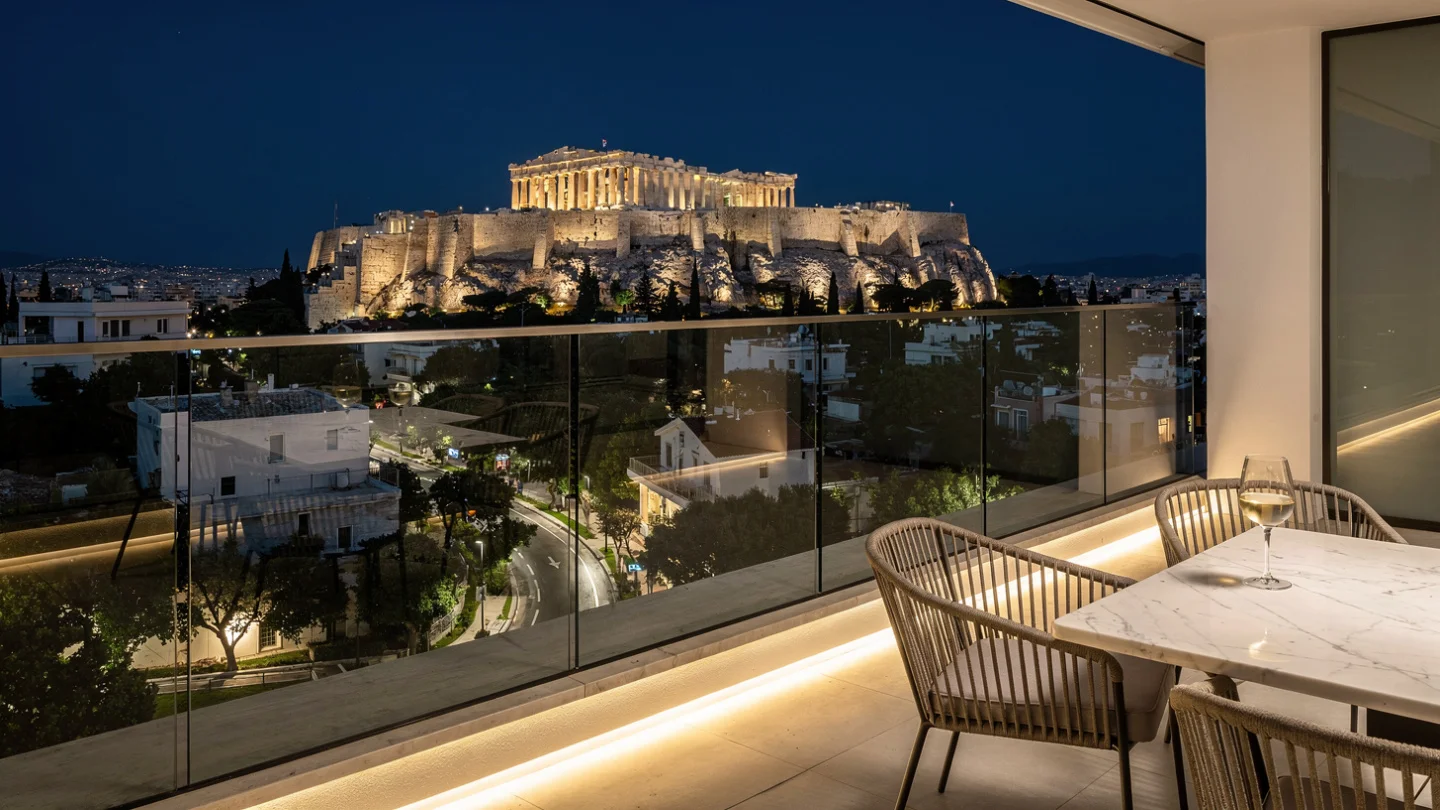
Situated immediately south of the Acropolis, between the Acropolis Metro station and the Filopappou Hill, Koukaki has completed the full arc from overlooked residential neighbourhood to one of the most sought-after addresses in central Athens. Prices have more than doubled since the crisis lows. The neighbourhood’s proximity to the Acropolis Museum, which has become one of the most significant cultural institutions in Europe, anchored its transformation and gave it a quality of demand, cultural tourism combined with long-term residential appeal, that most other Athens neighbourhoods cannot fully replicate.
The lesson of Koukaki is this: the neighbourhoods that sustain their value most consistently in Athens are the ones where the heritage anchor is genuine and irreplaceable. The Acropolis will not move. The Acropolis Museum will not close. The demand for accommodation within walking distance of both, from cultural tourists and the professionals who serve them, is structural rather than cyclical.
New short-term rental registrations in Koukaki are currently banned as part of the Athens central district moratorium through 2026. This has created a two-tier market: existing registered properties trade at a premium that reflects their protected status, while unregistered properties are repriced for long-term residential use. For the buyer seeking yield from short-term rental income, Koukaki in 2026 requires existing registration to justify the entry price. For the buyer seeking long-term capital preservation in a fully established neighbourhood with a genuine heritage anchor, it remains one of the most defensible positions in the city.
Kypseli | The Largest Bet in Central Athens
Kypseli is the most significant neighbourhood-level opportunity in central Athens in 2026, and it is significant precisely because it is still in the process of becoming what the market already expects it to be.
The largest central neighbourhood in Athens, Kypseli occupies the area north of Exarchia and south of the Patission ring road, its street grid a dense arrangement of interwar apartment buildings whose architectural quality is considerably higher than their current condition typically suggests. The neighbourhood was, from the 1920s through the 1970s, one of the most desirable addresses in Athens: middle-class, culturally active, the home of writers and intellectuals who gathered in its cafes and cinemas. The economic crisis hollowed it out, producing the combination of depressed values and retained built quality that makes a neighbourhood attractive to the second wave of regeneration.
That wave is well underway. Prices in Kypseli have risen approximately fifty to sixty percent over five years and continue to appreciate at rates of seven to ten percent annually, outpacing the citywide average. The neighbourhood’s multicultural character, it has been one of Athens’s most diverse communities for thirty years, is now read by incoming residents as an asset rather than a liability: the food culture is extraordinary, the street life is genuine, and the social texture of a neighbourhood that has never been homogeneous produces the quality of urban interest that attracts the creative and professional classes who drive gentrification’s second stage.
The Metro Line 4 corridor, which is scheduled to open in 2026 and whose stations include a stop directly relevant to Kypseli, is the infrastructure catalyst that the neighbourhood’s price trajectory was already anticipating. Historical data across Athens consistently shows ten to fifteen percent value increases within five hundred metres of new metro stations in the years immediately following opening. For Kypseli, this means the infrastructure argument for continued appreciation sits alongside the already-documented gentrification momentum.
The entry price for a property requiring renovation in Kypseli currently sits below two thousand two hundred euros per square metre in most blocks, with renovated properties commanding between two thousand eight hundred and three thousand five hundred. The gap between these figures is the opportunity: a buyer who acquires at the lower end and renovates to a quality that the neighbourhood’s trajectory is moving toward is positioned on the right side of the appreciation curve.
Metaxourgeio | The Artist’s Neighbourhood at Its Most Interesting Moment
There is a window in a neighbourhood’s development that is simultaneously the most culturally interesting and the most financially attractive: the point at which the creative identity is established and visible but the price has not yet fully reflected it.
Metaxourgeio is in that window.
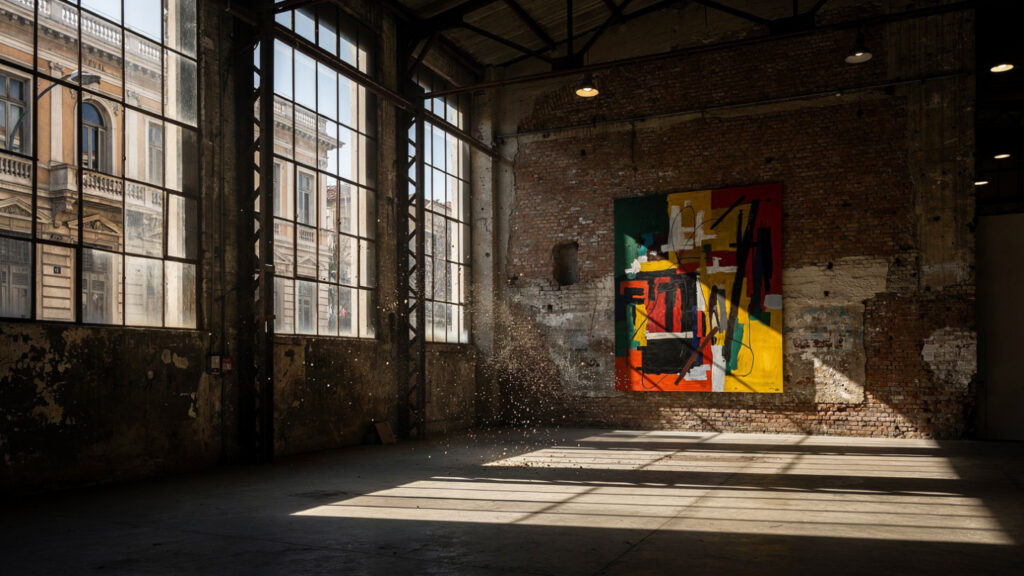
The neighbourhood takes its name from the silk factory, metaxourgio, that once operated here, and its industrial history left it with a building stock of warehouses and workshops alongside the neoclassical apartment buildings that characterise most of inner Athens. This combination, the industrial scale alongside the residential, attracted the artists and gallery owners who established Metaxourgeio’s cultural identity over the past decade, and the neighbourhood is now home to one of the most concentrated art gallery scenes in Greece alongside the creative economy businesses that accompany gallery culture.
The transformation from red-light district to artist hub has been documented in almost every recent analysis of Athens gentrification, and the documentation itself is a sign of the stage: the cultural identity is no longer underground but acknowledged and discussed. What has not yet fully occurred is the price catch-up that this acknowledged identity normally produces.
Entry prices in Metaxourgeio in early 2026 sit meaningfully below Koukaki and slightly below Kypseli in equivalent property quality, reflecting the neighbourhood’s position earlier on the gentrification curve. The risk profile is correspondingly higher: Metaxourgeio’s transformation is real but less complete, and the arrival of the third wave of institutional investment, the boutique hotels and upscale restaurant investment that signal full maturity, is more recent and less established than in Koukaki.
The buyer for Metaxourgeio in 2026 is not the capital-preservation buyer seeking a fully established neighbourhood. It is the buyer with a five to seven year horizon who is prepared to acquire at the current stage, contribute to the neighbourhood’s continuing transformation through quality renovation, and participate in the appreciation that the trajectory strongly suggests will occur.
The heritage argument here is different from Koukaki’s Acropolis anchor. Metaxourgeio’s heritage is its industrial architecture and its position in Athens’s twentieth-century urban history: the neighbourhood that absorbed waves of internal migration throughout the twentieth century, whose buildings carry the marks of this history in their facades and their adaptations, and whose current transformation is one more chapter in a long story of urban reinvention.
Pagrati | Where the Locals Have Always Known to Live
Pagrati occupies the territory east of the Panathenaic Stadium, the marble stadium rebuilt for the first modern Olympic Games in 1896, and it is the neighbourhood that Athenians who know the city well have consistently preferred for their own residential choices.
This is, for the investor, a significant signal.
The neighbourhoods that sustain long-term residential demand most effectively are not the ones that have been discovered by international tourism or publicised by gentrification journalism. They are the ones that the local professional and intellectual class has chosen consistently, the places that work as residential addresses because they combine walkability, human scale, access to services, and a social texture that repays daily life rather than occasional visits.
Pagrati delivers this. Its proximity to the National Garden, the Zappeion, and the Panathenaic Stadium gives it an unusual density of open green space for central Athens. Its main commercial street, Ymittou, has the character of a genuinely neighbourhood-serving retail strip rather than a tourism-oriented one. The tavernas and cafes are full of people who live nearby rather than people who arrived by Airbnb for the weekend.
Price appreciation in Pagrati over the past two to three years has been in the twenty to forty percent range documented across the broader central Athens gentrification wave. The neighbourhood’s entry prices remain below the most prominent tourist-adjacent addresses, reflecting the fact that it has not been primarily driven by short-term rental demand and has therefore been somewhat insulated from the regulatory restrictions that have complicated the investment calculus in Koukaki and other areas.
Metro Line 4 has a station relevant to Pagrati, and the infrastructure uplift that this produces in the years following opening is expected to accelerate the appreciation that fundamental residential demand has already been driving.
Exarchia | The Most Complex Equation in Athens
Every sophisticated analysis of Athens investment eventually arrives at Exarchia, and every analysis that arrives there faces the same challenge: the neighbourhood is simultaneously the most intellectually interesting and the most genuinely unpredictable position in the city.
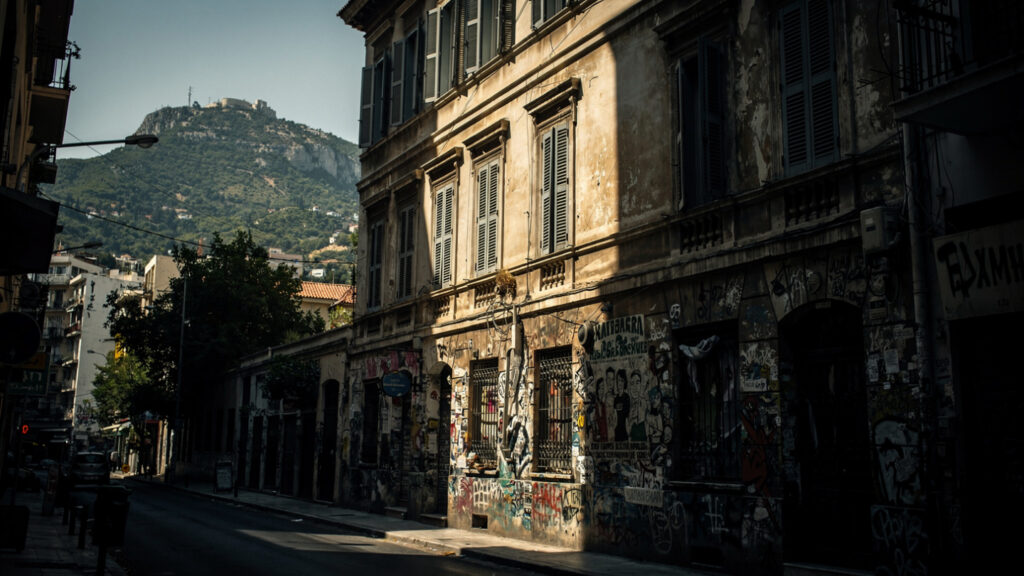
Exarchia is internationally known as the home of Athens’s anarchist political culture and has been the site of significant civil unrest across multiple periods of Greek history. This reputation has suppressed its property prices relative to its location, building quality, and proximity to both the Polytechneion university and the National Archaeological Museum, one of the greatest collections of ancient Greek art in the world and an anchor cultural institution of the first order.
The formal investment interest that has been building in Exarchia since approximately 2022 reflects a calculation that the neighbourhood’s political character, however genuinely distinctive, does not fundamentally alter the real estate logic of a centrally located Athens neighbourhood with an exceptional cultural anchor, improving infrastructure, and prices that still reflect the risk discount applied by buyers who arrived before the gentrification momentum was visible.
Metro Line 4 connects Exarchia to the broader Athens network from 2026, and the infrastructure argument for appreciation applies here with the same force it applies to Kypseli and Pagrati.
The honest assessment for 2026: Exarchia is a position for buyers who understand what they are acquiring, who are not dependent on short-term rental income from the property in the immediate term, and who have a genuine horizon of five to ten years. The trajectory is real. The timeline and the path it takes are more uncertain here than in any other neighbourhood on this list. The buyer who arrives in Exarchia expecting Koukaki’s stability will be disappointed. The buyer who arrives understanding that they are acquiring at a meaningful discount to the neighbourhood’s probable future value, and who is prepared to hold through the uncertainty, is in a defensible position.
Kolonaki | What Prestige Costs and What It Returns
Kolonaki does not need to be discovered. It has been Athens’s most prestigious central address for over a century, and its current position in the investment landscape reflects this: entry prices are the highest in central Athens, yields are the lowest among the neighbourhoods discussed here, and the buyer who acquires in Kolonaki is not making a gentrification bet but a capital preservation argument.
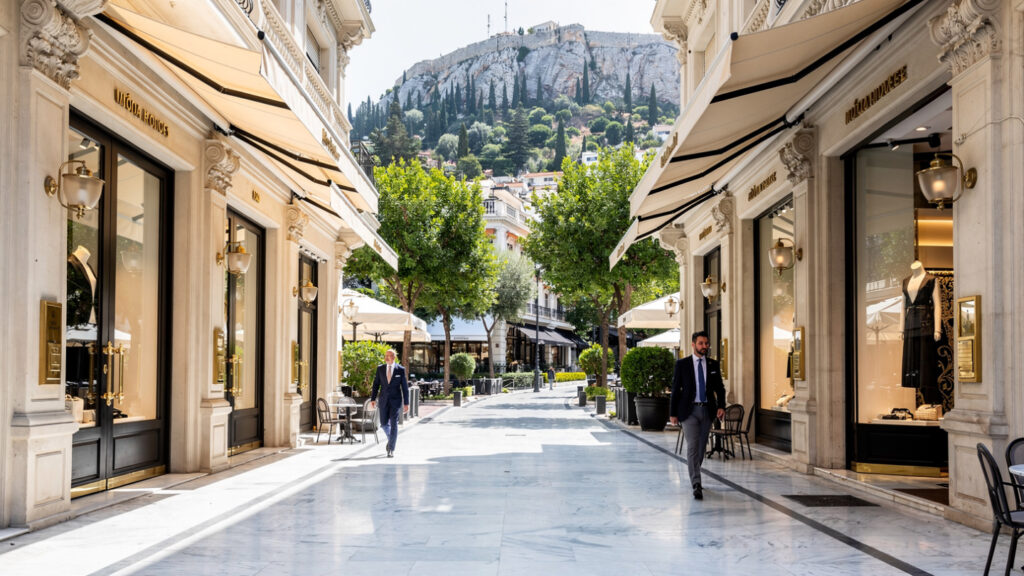
The argument runs as follows: Kolonaki’s position on the slopes of Lycabettus Hill, its proximity to the best commercial street in Athens, Tsakalof and Skoufa, its concentration of embassies, luxury retail, and the social infrastructure of the city’s professional and diplomatic class, produces a demand floor that does not depend on the arrival of the next wave of buyers. You are not going to buy in Kolonaki and find yourself in a neighbourhood that failed to complete its transformation. The transformation occurred before most living buyers were born.
What Kolonaki offers that no other Athens neighbourhood offers is the quality of heritage that belongs only to fully matured, continuously prestigious urban addresses: the combination of nineteenth-century neoclassical buildings on streets that have been maintained to a standard consistent with that heritage, surrounded by the social and commercial infrastructure that has always supported them.
The yield compression is real. Annual gross yields in Kolonaki sit around four to four and a half percent compared to six to eight percent in the gentrifying neighbourhoods. The capital appreciation is steady rather than dramatic: five to eight percent annually, reflecting a neighbourhood that is fully priced rather than in transition.
For the buyer whose primary objective is wealth preservation rather than yield or appreciation upside, Kolonaki in 2026 is not a sophisticated discovery. It is the Athens equivalent of the most defensible positions in any European city’s property market: expensive to enter, slow to appreciate, and essentially impossible to lose catastrophically.
The Metro Line 4 Argument
Running as a thread through several of the neighbourhood analyses above is the Metro Line 4 argument, and it deserves a section of its own because it is the single most significant infrastructure event in the Athens property market for the current cycle.
Metro Line 4, scheduled to open in 2026, connects a corridor of central Athens neighbourhoods that have historically been underserved by the existing metro network. Exarchia, Kypseli, and Pangrati are the most significant beneficiaries. The historical pattern across Athens is consistent: properties within five hundred metres of new metro stations appreciate ten to fifteen percent in the years immediately following station opening.
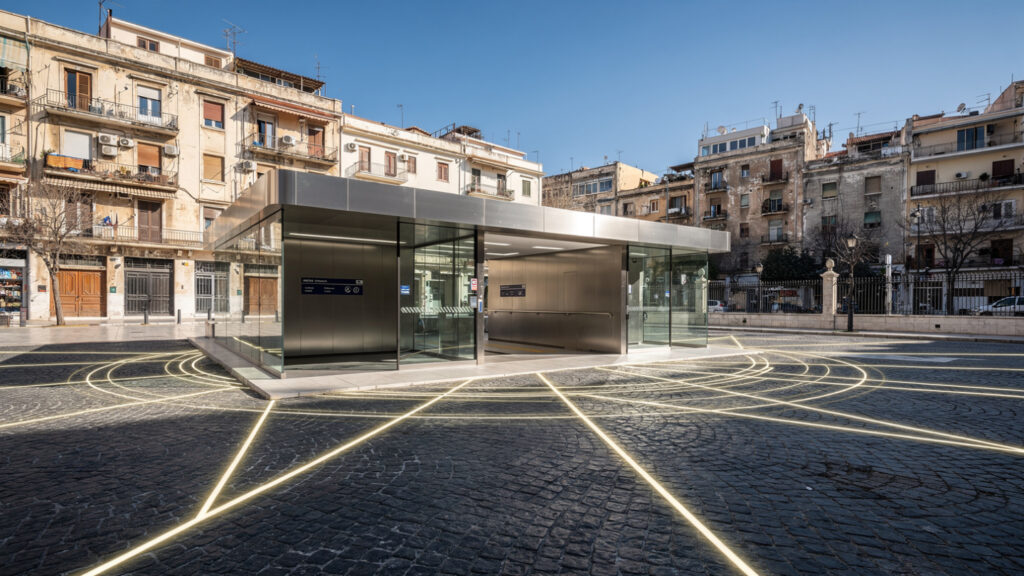
This effect is not Athens-specific. It is documented across European cities wherever transit infrastructure reaches previously underserved neighbourhoods: the reduction in effective distance from the city’s centre that a new metro connection produces is immediately capitalised in property prices, and the full effect typically takes three to five years to work through the market as buyers who had not previously considered the area begin to account for the new connectivity in their assessments.
For buyers considering Kypseli, Exarchia, or Pangrati in 2026, the metro argument is not a speculative overlay on the investment thesis. It is a documented mechanism operating in a measurable direction with a predictable timeline. The question is not whether the infrastructure will produce appreciation but whether the entry price already reflects the anticipated infrastructure benefit or still offers room for the appreciation to occur above the entry point.
Based on current pricing in these neighbourhoods relative to the neighbourhoods with comparable metro connectivity that have already experienced the full infrastructure effect, the answer is that the appreciation is not yet fully priced.
What Athens in 2026 Is Really Offering
The Athens property story is sometimes told as a recovery narrative: a city that fell very far and has been coming back. This framing is accurate but increasingly insufficient for understanding where the market is now.
Athens in 2026 is not a recovery market. It is a transformation market: a city that has been comprehensively repriced relative to other European capitals of comparable cultural significance, that is now attracting the kind of sustained international attention that permanently alters a city’s position in the European property landscape, and that still contains neighbourhoods whose prices have not yet fully reflected either their intrinsic quality or their position in the city’s broader trajectory.
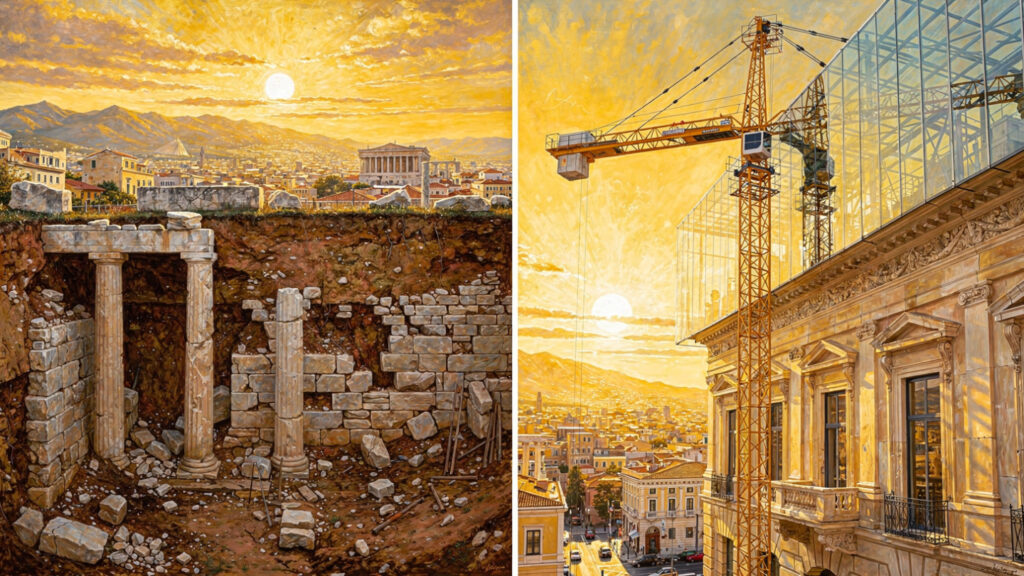
The cultural argument for Athens has always been stronger than the market recognised during the crisis years. The Acropolis, the Archaeological Museum, the Byzantine and post-Byzantine architectural heritage that fills the city’s central neighbourhoods, the food culture, the social culture, the quality of urban life in a Mediterranean capital whose scale and density produce exactly the kind of walkable human-scaled environment that every major city in Northern Europe has been trying to reproduce at vast expense: these are not assets that the crisis created or the recovery will exhaust. They are permanent features of a city that has been continuously inhabited for three thousand years.
The neighbourhood you choose within Athens determines your relationship to this permanent value: whether you are positioned in a place that has already fully expressed it in its price, in a place that is in the process of expressing it, or in a place that the market has not yet fully recognised.
The best positions in 2026 are in the second category. They are not difficult to identify. They require patience, a genuine understanding of what you are buying and why, and the willingness to act before the obvious moment rather than after it.
The obvious moment in Athens passed some time ago. What remains is considerably more interesting than what arrived after the obvious moment in most European cities: genuine neighbourhood character, genuine heritage, genuine upside, and a regulatory window that will not remain open indefinitely.
At Olympus Estate, Property Pantheon examines Greek real estate through the lens of heritage, culture, and the full reality of what belonging to a place means. Athens is not simply an investment thesis. It is one of the great cities of the world at a moment in its latest transformation, and the neighbourhoods that carry the deepest connection to its history are not incidentally the ones with the most interesting property futures.