





Dionysus was not the god of intoxication. He was the god of transformation.
The distinction matters, because what Dionysus governed was never confined to the grape. It reached every process in the ancient Greek kitchen where the harvest’s raw material entered a living process and came out the other side unrecognizable: stronger, more stable, more nourishing, carrying in its changed form the concentrated essence of the season and landscape that had produced it in the first place.
The grape became wine. The milk became curd. The grain became krimnos. The honey became hydromeli. The olive became the brine-cured fruit of the stone pantry, its living liquid as much a preparation in itself as the fruit it surrounded. In each case, the same transformation played out in different material: raw ingredients surrendering to a process and emerging as something the process alone had made possible, something the raw material alone could never have become.
The ancient Greek world gave this force a name: Dionysus. Modern biology calls the same thing fermentation. The name changes. The underlying observation does not. The Macedonian sanctuaries at Dion preserved this exact understanding of the god.
The Zoe and the Theology of the Living Process
Greek thought drew a distinction that later scholarship, above all Carl Kerényi’s study of Dionysus, has developed into a useful frame for reading the god’s mythology: the difference between bios, an individual life with its own specific span and its own specific ending, and zoe, the raw pulse of life itself, which outlasts any individual form’s ending and simply expresses itself in whatever form the living process produces next.
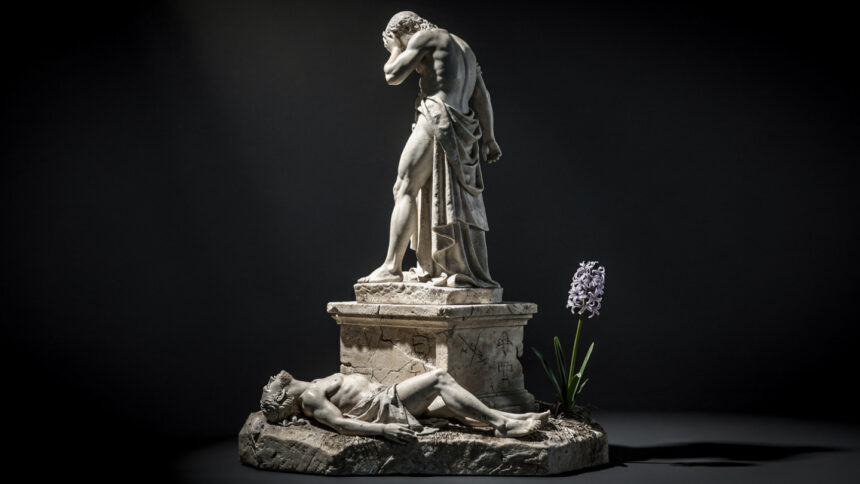
Dionysus, on this reading, is the god of zoe. His mythology, a god who dies and returns, who is torn apart and reassembled, who descends and rises again, encodes exactly this observation: the living force does not end with any one form. It transforms. The grape dies on the vine at harvest. Wine is born from that death. Nothing living actually ended. It changed.

This understanding was never confined to the vine. It framed how the ancient Greek kitchen understood every fermentation it practiced. Grain fermenting into krimnos was barley undergoing the same Dionysian change in its own medium. Honey turning into hydromeli was the beekeeper’s harvest undergoing the identical transformation. An olive submerged in brine was entering that same process, one whose completion would eventually produce the cured fruit the winter table needed.
The fermentation jar held this transformation. The stone pantry was the space built to let it happen undisturbed.
Krimnos and the Fermented Grain
Krimnos appears in ancient sources as a fermented barley preparation, the daily drink of people whose lives demanded sustained physical and intellectual capacity.
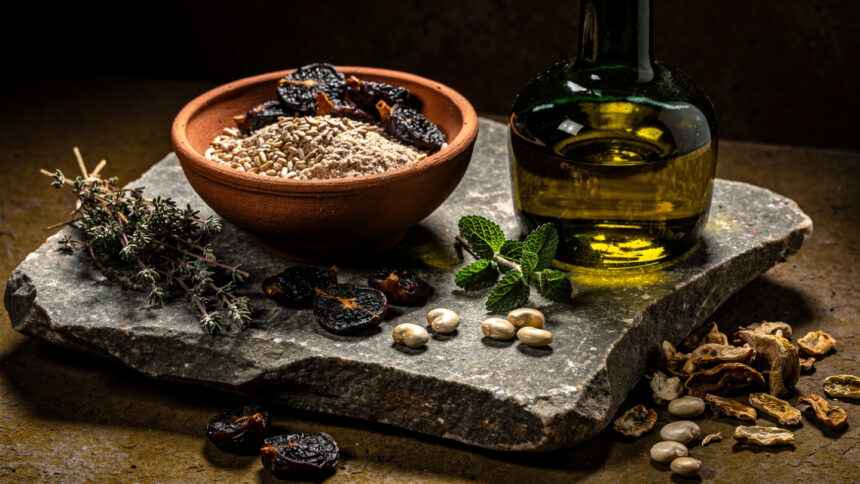
Its method was simple and patient. Coarse barley, the grain of the Greek table before wheat took over, was steeped in water and left to ferment through the action of wild yeasts and lactic acid bacteria already living on the grain’s own surface, an invisible population the preparation quietly depended on. The result was cloudy, sharp, and genuinely alive: fermentation was still active in it at the moment it was drunk.

Ancient sources that mention krimnos treat it consistently as a staple rather than a luxury: the drink of Spartans, whose austere, functional diet the ancient world held up as a model, and a preparation philosophers recommended as the foundation of a diet meant to keep the mind clear and the body steady for a philosophical life.
Krimnos shares real technology with the trahanas article in this collection: both express the same ancient Greek insight, that fermentation released and concentrated a grain’s nutritional potential in a way no unfermented grain ever could. Trahanas combined fermented grain with fermented dairy. Krimnos was fermented grain in its plainest available form, stripped down to the essential relationship between barley and a living process.
Hydromeli and the Memory of the Mountain
Hydromeli, honey mead, predates the vine in the Aegean’s own fermentation history.
Ancient sources place mead-drinking before grape cultivation had established wine as the Greek world’s dominant fermented drink. The myth connecting Dionysus to the vine casts him as the god who brought wine to a world that had, until then, known only fermented honey, a drink that required nothing beyond keeping bees and letting water and time do the rest, no vintner’s skill needed at all, the very gift Icarius received when Dionysus later taught him to make wine.
Mountain hydromeli was made from wild thyme honey, gathered from Hymettus, Taygetos, and Pindus, combined with high-altitude spring water and left in vessels whose previous contents had already seeded the microbial life fermentation required. Wild thyme honey carried the concentrated floral character of an entire season’s foraging in its own sugars, thyme, sage, pine resin, and other mountain herbs whose specific aromatic compounds fermentation released and reshaped into the volatile esters that gave a mature hydromeli its particular character.

To drink mountain hydromeli was to taste an entire summer concentrated into a winter drink. Fermentation did more than convert honey’s sugars into alcohol. It amplified the honey’s own floral character until the finished drink carried more complexity than the raw honey ever held, in exactly the way a finished wine holds more complexity than the grape it came from.
This was the same Dionysian process at work in mountain honey: a beekeeper’s raw harvest entering a living process and coming out the other side carrying more of the landscape’s own character than it ever carried going in.
The Olive Brine and the Stone Pantry
The olive submerged in brine offers the clearest living proof, still present in the contemporary Greek kitchen, that this whole fermentation practice never actually stopped.
A Kalamata olive in salt brine is not preserved the way canning preserves food, by arresting a living process and holding the result in permanent stasis. It is preserved by fermentation, the living process itself doing the preserving: lactic acid bacteria in the brine convert the olive’s natural sugars into lactic acid, and the resulting acidity is exactly what keeps decay-causing organisms from ever taking hold.
The brine in the jar is not simply the medium the olive sits in. It is a living ecosystem that transforms the olive. An olive that has spent enough time in a genuinely active brine is not the same olive that went in. Its bitterness has softened. Its texture has shifted. Its flavor has concentrated and grown more complex through the ongoing work of a microbial population the brine feeds and sustains for as long as the process runs.

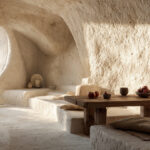
The stone pantry, its thick walls holding the cool, stable temperature fermentation actually needs, was never simply storage. It was architecture built specifically for this process, a space designed to give fermentation exactly the steady conditions it requires, free of the temperature swings that would otherwise disrupt it. The Cretan cellar cut into limestone and the Maniot stone larder built from the same hillside rock both reflect the same understanding: fermentation needs the constancy only underground stone temperature reliably provides, and a household that understands this designs its spaces around exactly that constancy.
The Symposion and the Shared Ferment
The symposion, which the ancient Greek dining article and the Chronos and Kairos article in this collection both develop as the civic occasion for philosophical conversation and convivial wine, also relied on cabbage eaten before the wine, the practice the Lycurgus cabbage article develops, as literal preparation of the body for its encounter with a Dionysian ferment.
Sharing fermented food and drink at the symposion was never simply people bonding over a shared meal. It was shared participation in the same transformation: a community consuming what a living process had made of the landscape’s own raw materials, the very foods and drinks that carried it through the season.

Bread leavened with a sourdough culture carried from one baking to the next. Wine fermented under a vintner’s care through the harvest season. Olives whose brine a household had tended all autumn. Cheese whose cultures a shepherd had kept alive across an entire grazing season. Every one of these was a living process’s own product, the same underlying transformation working through its own particular medium.
To eat at the ancient Greek table was to take part in that transformation directly. To share fermented food from a common landscape was to share in the living process that landscape, and the invisible population inside every jar, had made possible.
Still Alive in the Contemporary Kitchen
The ancient Greek kitchen’s fermentation practice has never needed reviving, because it never actually stopped.

The sheep’s milk yogurt of Epirus is a living culture maintained without a real break, from ancient pastoral practice through Byzantine monasteries to the shepherds whose yogurt Athens markets today sell under regional labels that encode exactly where that culture originated. The wild herb-brined olives of the Peloponnesian stone pantry continue the same ancient brine practice, its living cultures kept alive in the same vessels and cellars across generations. The sourdough bread of the Greek island bakeries carries a leavening culture that predates the industrial yeast most contemporary baking now treats as standard.
Krimnos itself has not survived in its ancient form in the contemporary Greek kitchen. Hydromeli survives in the mountain regions where beekeepers have kept making the fermented honey drink ancient sources describe. Both remain fully recoverable, for any household willing to actually make them.

None of this needed reviving. It needed only continuing. The Dionysian transformation is still active in the stone pantry of a Peloponnesian household, in the brine jars of a Cretan cellar, in the yogurt cultures an Epirus shepherd maintains, in the sourdough cultures an island baker keeps alive. The living process persists. The god of transformation is still at work in the dark of the larder.
The jar is still bubbling. It always has been.
At Olympus Estate, Food and Seasonal Life traces the culinary traditions of the Greek world from the ancient harvest through the Byzantine kitchen to the contemporary table. Dionysus was not the god of intoxication. He was the god of transformation. The grape became wine. The milk became curd. The grain became krimnos. The honey became hydromeli. The olive entered the brine and emerged as something the brine had made possible. Zoe, the raw pulse of life that persists through any individual form’s ending, was the force the ancient Greek kitchen harnessed in every fermentation jar in every stone pantry in every household that understood what this transformation meant in practice. Krimnos is the fermented barley of the Spartan and the philosopher. Hydromeli is mountain honey concentrated into a winter drink by the same process that concentrates the grape into wine. The brine in the jar is not the medium the olive is stored in. It is the living ecosystem the olive is transformed by. None of this has ended. The jar is still bubbling. It always has been.