



Greece has two classical inheritances, and only one of them is usually called classical.
The first is the inheritance that the Western tradition has most thoroughly processed: the Athens of the fifth century BCE, the philosophy, the drama, the architecture, the political experiment, the sculpture. This inheritance was transmitted to the Western world through Rome, through the Renaissance recovery of Greek texts, and through the eighteenth century’s philhellenic idealization of ancient Greece that shaped modern European culture’s understanding of its own origins.
The second inheritance is the Byzantine: eleven centuries of a Greek-speaking Christian empire centered at Constantinople, whose administrative, theological, and artistic traditions shaped the civilization of the eastern Mediterranean from the fourth century CE until 1453, and whose consequences in Greek culture, language, religion, and social organization are as present in contemporary Greece as anything the fifth century BCE produced.
The asymmetry in how these two inheritances are understood internationally is not a Greek problem. It is a problem of the Western tradition’s selective recovery of antiquity. The Greeks themselves have never confused the matter: the word Romios, the Roman, was the term that Greeks used to describe themselves through the Byzantine period and into the nineteenth century, in acknowledgment of the Byzantine Empire’s self-understanding as the continuation of Rome. It was the Greek nationalist intellectuals of the independence struggle who recovered the Hellenic identity as the primary framework of Greek cultural self-understanding, and even they worked with both inheritances simultaneously.
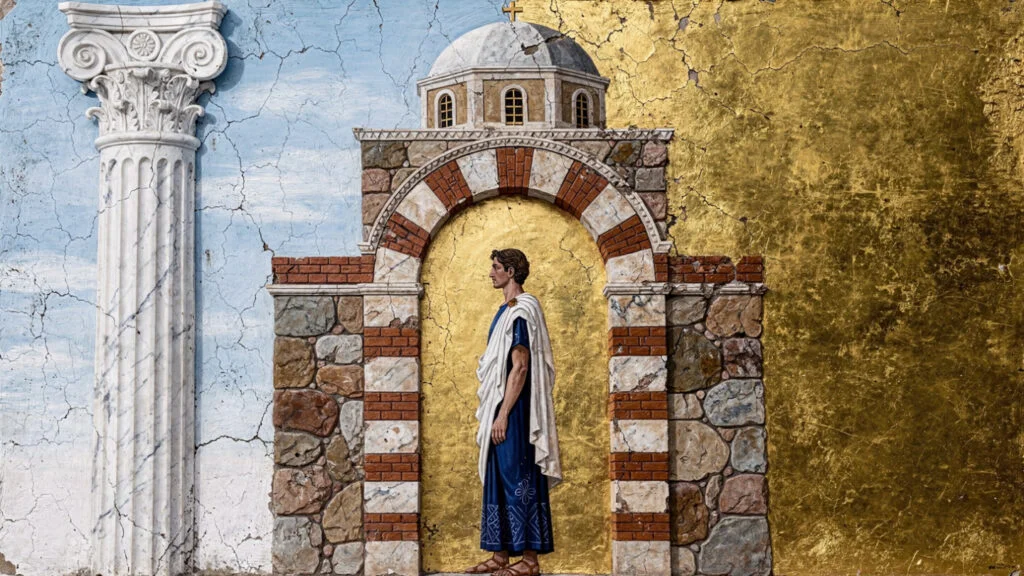
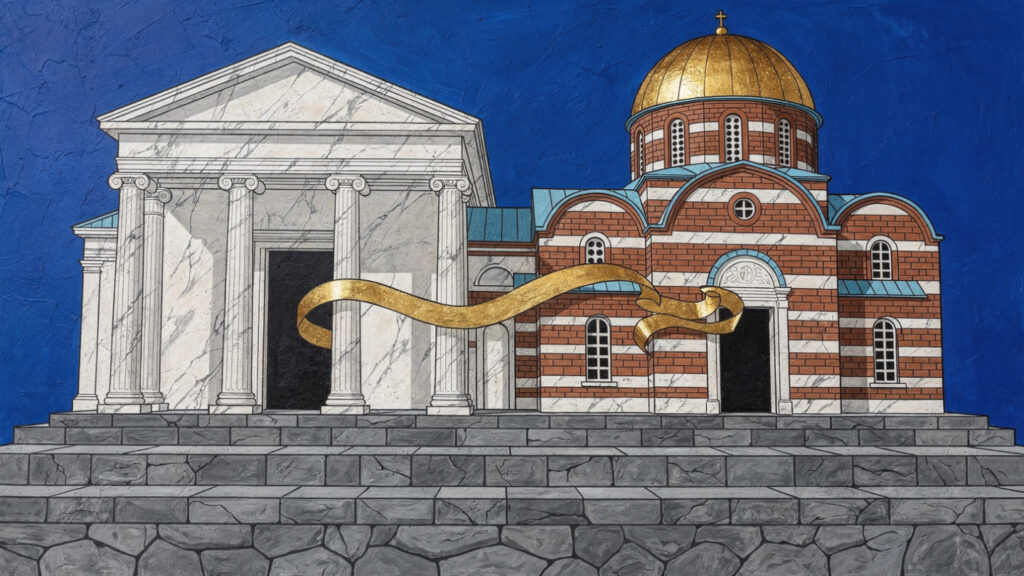
Walking through any Greek town today, both inheritances are visible in the built environment. The classical columns in the Archaeological Museum, the Byzantine church on the main square with its cross-in-square plan and its central dome, the neo-Byzantine cathedral that a nineteenth-century architect designed in conscious reference to both: these are not competing traditions but layers of a continuous civilization, each generation building on and in conversation with what the previous generations had left.
What the Byzantine Empire Was
The Byzantine Empire was not a distinct civilization that replaced Rome. It was Rome, the eastern half of the Roman Empire that survived the collapse of the western half in 476 CE, continuing under its own administrative and cultural logic for a further thousand years.
The empire’s Greek character developed gradually through the early centuries of its existence: Latin was the language of law and administration in the early Byzantine period, but Greek was the language of the population of the eastern Mediterranean and of the increasingly influential church whose theological debates were conducted in Greek. By the seventh century CE, the emperor Heraclius had formalized what practice had already established: Greek became the empire’s official language of administration, and the empire’s cultural identity became explicitly and consciously Greek in a way that the earlier Greco-Roman synthesis had left more ambiguous.
Constantinople, founded by Constantine in 330 CE on the site of the Greek city of Byzantium, was the city that embodied this synthesis at its most developed: a Roman administrative capital with a Greek cultural identity and a Christian theological framework, at the intersection of Europe and Asia, governing an empire whose geographic reach at its height under Justinian in the sixth century extended from Spain to Mesopotamia. The Hagia Sophia, which Justinian built between 532 and 537 CE, remains the most complete surviving expression of what the Byzantine synthesis produced at its most ambitious: a building that solved the problem of how to place a dome of unprecedented diameter on a square base by an engineering solution, the pendentive, that had not existed before it was required, producing an interior space of such luminous immensity that the ambassadors of the Rus, according to the chronicle, reported that they did not know whether they were in heaven or on earth.
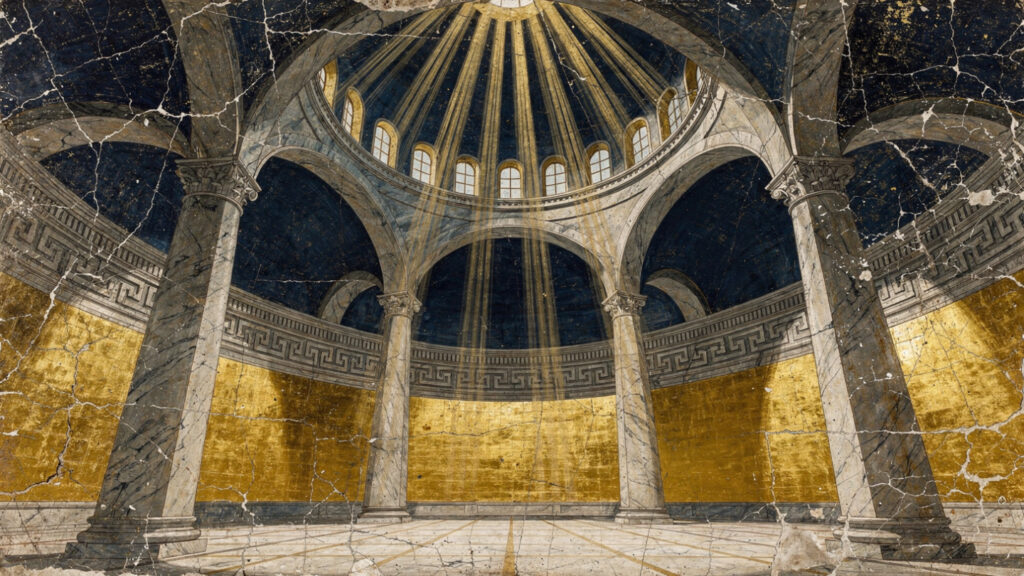
The empire that Constantinople governed survived the Arab conquests of the seventh century, the Bulgarian wars of the ninth and tenth centuries, the Crusader occupation of Constantinople from 1204 to 1261, and the steady contraction of its territorial base that the fourteenth century’s military catastrophes produced, until the Ottoman sultan Mehmed II took Constantinople on May 29, 1453, and the last Byzantine emperor Constantine XI Palaiologos died in the final defense of the city walls.
The Orthodox Church as Byzantine Institution
The Greek Orthodox Church is the most direct and most completely preserved institutional continuity between the Byzantine period and the contemporary world, and its character reflects this continuity in every dimension of its organization and practice.
The theological framework that the Byzantine period established through the seven Ecumenical Councils, from Nicaea in 325 CE through the Second Council of Nicaea in 787 CE, remains the doctrinal foundation of Orthodox Christianity without modification: the formulations of Trinitarian theology, the precise definition of Christ’s two natures established at Chalcedon in 451 CE, and the theology of icon veneration that the Second Council of Nicaea articulated in response to the iconoclast controversy are the theological positions that the contemporary Orthodox Church maintains as the conclusions of a conciliar process whose authority it does not revisit.
The liturgical practice of the contemporary Greek Orthodox Church is the Byzantine liturgical legacy in a form that has been preserved with the conservatism that the Orthodox theological understanding of Tradition, with a capital T, requires. The Divine Liturgy of John Chrysostom, which dates to the fourth century CE and which Chrysostom organized from earlier liturgical materials, is the liturgy that is celebrated in every Greek Orthodox church every Sunday and on most feast days. The Byzantine hymns, some of which survive in musical notation from the middle Byzantine period and can be reconstructed in their medieval melodic form, are the repertoire that Byzantine chant, psaltiki, transmits through a continuous performance legacy that the church has maintained with remarkable fidelity.
The vestments that the Orthodox priest wears during the liturgy derive from the vestments of the Byzantine imperial court. The garments, the epitrachelion, the phelonion, the omophorion of the bishop, have their origins in the court dress of the Byzantine administrative and ceremonial legacy, transferred to ecclesiastical use in a process that reflects the close relationship between the imperial and the ecclesiastical in the Byzantine world. The priest who celebrates the liturgy in a village church in the Greek mountains is wearing a garment legacy whose origins are in the court of Constantinople.
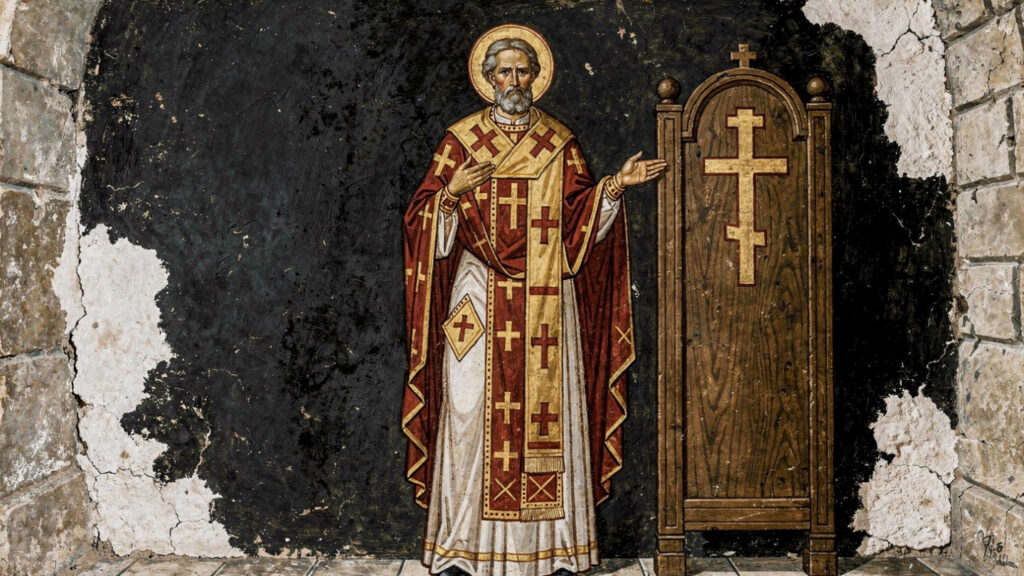
The iconostasis, the screen that separates the nave from the sanctuary in every Orthodox church, derives from the Byzantine templon, the barrier that the Byzantine church placed between the altar area and the congregation. Its development from the relatively open templon of the early Byzantine period to the fully closed iconostasis of the middle and late Byzantine period is documented in the archaeological and textual record of the period, and its current form, a wooden or stone screen covered with icons arranged in an iconographic program, is the form that the late Byzantine period established and that every Orthodox church since has maintained.
The Architecture and What It Means
Byzantine architecture is the most visible dimension of the Byzantine inheritance in the contemporary Greek landscape, because churches are present in every Greek settlement from the smallest village to the largest city, and because the architectural form of the Orthodox church was established in the Byzantine period and has been maintained with significant continuity since.
The cross-in-square plan, in which the interior of the church is organized around the central dome that covers the crossing of the longitudinal and transverse axes of the building, with the four corner bays covered by smaller domes or vaults, is the canonical Byzantine church form of the middle period, from the ninth century onward. The engineering solution that makes this form possible, the pendentive, the curved triangular surface that transitions from the square formed by four arches to the circular base of the dome, was developed in the early Byzantine period and represents one of the most significant structural innovations in the history of architecture: it allows a dome to be placed on a square plan without the intermediate octagonal drum that the Roman Pantheon’s circular plan required.
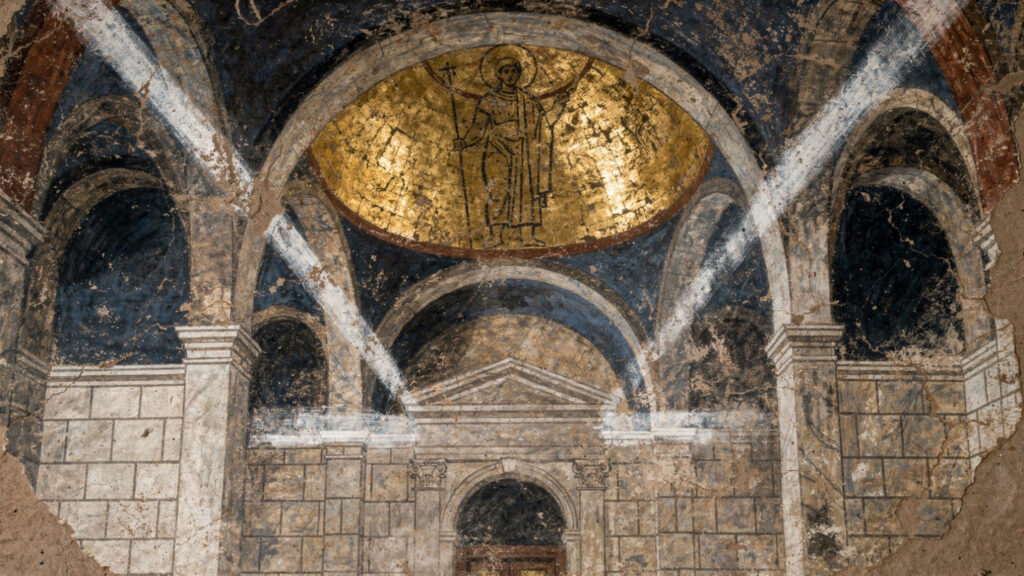
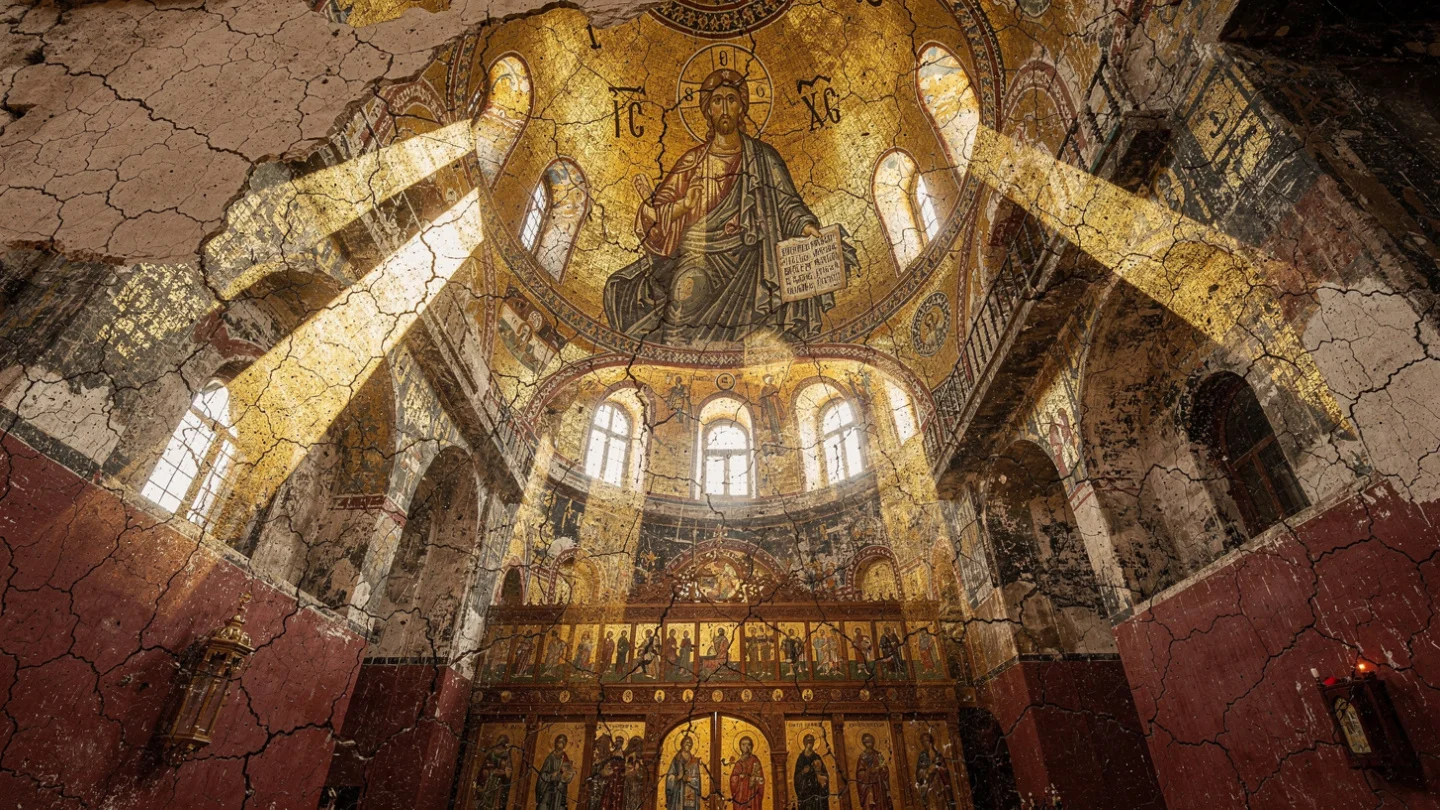
The quality of the interior that the Byzantine architectural system produces is the quality that the theological program required: the dome as heaven, the zone below the dome as the zone of the saints and angels mediating between heaven and earth, the zone of the nave as the zone of the faithful congregation, and the sanctuary behind the iconostasis as the zone of the divine mystery accessible only to the ordained. The light that enters through the windows at the base of the dome falls on the mosaic of Christ Pantokrator in the dome itself and produces the luminous effect that the Byzantine theological understanding of divine light as a material reality gave theological content to: the church interior was understood as a space where the divine light was literally present in a way that the exterior world was not.
The Church of the Holy Apostles in the ancient Agora of Athens, built around 1000 CE and the only Byzantine structure surviving in the Agora from the classical period, is the most accessible example of the middle Byzantine cross-in-square church in Athens. Osios Loukas in Boeotia, which the architectural masterpieces article in this collection develops in detail, is the most completely preserved example in Greece of the Byzantine church with its original mosaic decoration substantially intact.
Iconography and Its Conventions
The Byzantine icon is not a painting in the Western art historical sense: it is not an artist’s personal vision of a sacred subject rendered in the stylistic conventions of their time and place. It is a representation of a divine or holy reality according to canonical conventions that the tradition has established through theological reflection and conciliar decision, and that the individual iconographer is responsible for transmitting rather than varying.
The conventions of Byzantine iconography, the gold ground that represents the uncreated light of divine reality in which the sacred figures exist, the elongated proportions of the figures that indicate their spiritual nature, the palette of colors assigned to subjects by the iconographic tradition, the reverse perspective that places the vanishing point in the viewer rather than within the picture plane, drawing the viewer into the sacred space rather than the viewer looking into a depicted space, all derive from theological positions about the relationship between the material image and the spiritual reality it represents.
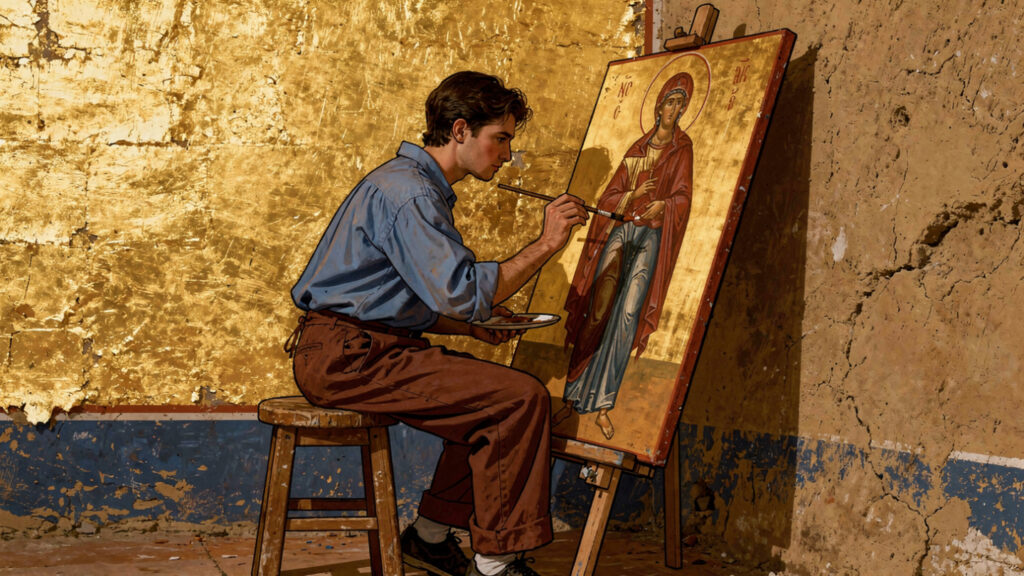
The theology of the icon that the Second Council of Nicaea articulated in 787 CE, in the resolution of the iconoclast controversy that had convulsed the Byzantine church and empire for more than a century, established the distinction between the worship due to God alone, latreia, and the veneration appropriate to icons, proskynesis: the icon is honored not as an object but as a representation whose honor passes to its prototype, the divine or holy person depicted. This theology is not a medieval relic that the contemporary church maintains from inertia: it is the active theological framework within which contemporary Greek iconographers understand their work.
The production of icons in contemporary Greece follows an established methodology in both technique and theological orientation: the wooden panel prepared with gesso, the drawing in the manner of the masters, the application of gold leaf, and the painting with egg tempera in the sequence that the craft requires. Contemporary Greek iconographers who have studied at the recognized schools of iconography, in Thessaloniki, in Athens, and in the monastic communities of Mount Athos where this art form has been maintained in continuous practice, produce work that is in direct continuity with the middle Byzantine style while being entirely contemporary in its execution.
Language and Its Byzantine Layer
The Greek language that contemporary Greeks speak carries the Byzantine period in its vocabulary, its grammar, and the register of its most formal written expression in a way that no other linguistic legacy in Europe maintains so directly.
The Greek utilized by the Byzantine Empire for its administration, theology, and literature was a form of the language that self consciously maintained continuity with the classical Attic heritage while incorporating the linguistic shifts produced by a millennium of spoken usage. This Byzantine literary tongue, sometimes identified as Medieval Greek, serves as the foundation for the Orthodox Church’s liturgical texts. The Divine Liturgy, the troparions, the kontakia, and the myriad other compositions of the Byzantine hymnographic corpus are rendered in a register that an educated contemporary Greek can comprehend with the aid of the liturgical context and familiarity with ecclesiastical terminology, even though this form remains distinct from the vernacular spoken today.
The vocabulary of the contemporary Greek language contains Byzantine layers that the casual observer may not identify as Byzantine: the words for administrative and ecclesiastical functions, for the objects and practices of the church, for the legal and social institutions that the Byzantine period established, are present in the contemporary language as the direct descendants of their Byzantine originals. The word for mayor, dimarchos, the word for the municipal council, dimotiko symvoulio, and the word for the parish, enoria, all carry their Byzantine administrative and ecclesiastical origins directly into contemporary usage.
Katharevousa, the formal written Greek adopted by the newly independent Greek state in the nineteenth century as its official language and maintained in use until 1976, functioned as a deliberate reconstruction. It sought a form closer to classical and Byzantine written models than to the spoken demotic of the era. This effort aimed to bridge the divide between the contemporary vernacular and the prestigious literary achievements of the ancient and Byzantine past that the Greek intellectual world had long preserved.
The Byzantine Inheritance in Social Life
The Byzantine Empire’s social organization was built around the household, the parish, and the community in ways that shaped the Greek social structures that the Ottoman period maintained and that the modern Greek state inherited. The patterns of family obligation, community solidarity, and the relationship between the individual and the collective that contemporary Greek social life exhibits are not simply Mediterranean cultural characteristics: they are the form that the Byzantine social organization gave to these more general Mediterranean values, transmitted through eleven centuries of continuous practice.
The patron saint tradition, in which every Orthodox Christian has a name-day that is more socially significant than their birthday, derives from the Byzantine practice of organizing the social calendar around the feast days of the saints: the name-day celebration is a Byzantine social institution that the contemporary Greek observes without necessarily being aware of its Byzantine origin.
The relationship between the state and the church that the contemporary Greek constitution establishes, in which the Greek Orthodox Church is recognized as the prevailing religion of Greece and maintains a relationship with the state that other religious communities do not share, is the modern form of the symphonia, the harmony between church and state, that the Byzantine political theology developed as its model of the proper relationship between the two powers. The Byzantine model was not a theocracy in the strict sense: it maintained distinct spheres for the imperial and the ecclesiastical authority while asserting that the two should operate in a harmonious coordination for the benefit of Christian society. The contemporary relationship between the Greek state and the Orthodox Church is not identical to the Byzantine symphonia, but it is not unrelated to it.
Mount Athos | The Living Byzantine World
The monastic republic of Mount Athos, the third peninsula of Halkidiki whose character the Halkidiki travel guide in this collection describes, is the most complete surviving expression of the Byzantine monastic tradition in the contemporary world.
The twenty monasteries of Mount Athos, the oldest of which, the Great Lavra, was founded in 963 CE, have maintained continuous monastic life since their foundation through the Byzantine, Ottoman, and modern Greek periods. The administrative autonomy that the Byzantine imperial charters granted to the Athonite community has been maintained through the Ottoman period by imperial firman, through the modern Greek period by the constitutional arrangement that gives the Holy Mountain its unique self-governing status within the Greek state, and through the European Union by a derogation that preserves the Athonite entry restrictions, including the prohibition on women, within the EU’s legal framework.
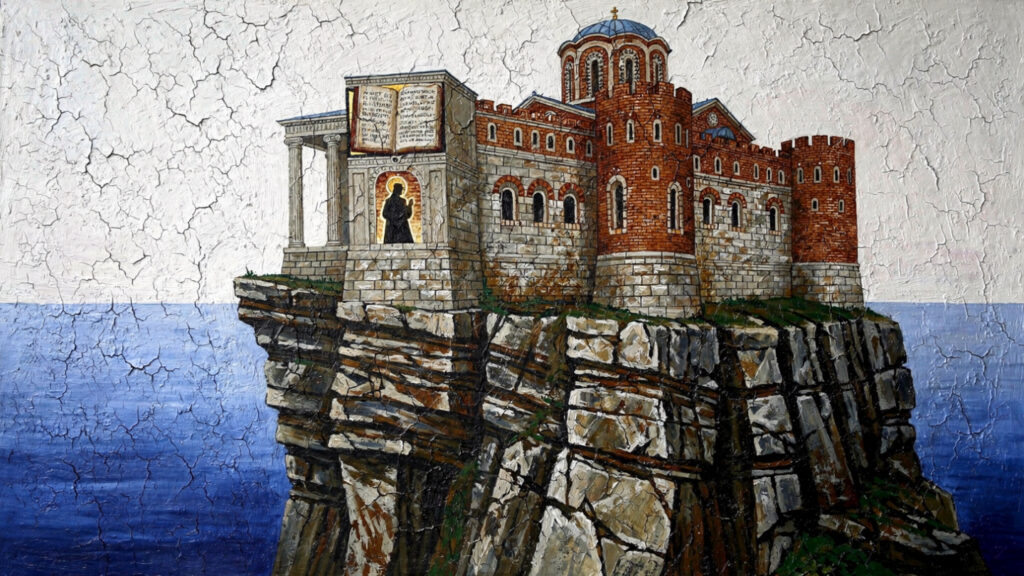
The libraries of the Athonite monasteries hold manuscript collections of international significance: the Vatopedi Monastery’s library contains the earliest surviving complete codex of Ptolemy’s Geography, the Iviron Monastery holds manuscripts that include the oldest surviving example of the Greek cursive minuscule script, and the combined manuscript holdings of the twenty monasteries represent one of the most significant collections of Byzantine documentary heritage in the world. The conservation and digitization of these manuscripts, which has been ongoing through international scholarly collaboration since the 1990s, is the direct continuation of the Byzantine library tradition that Mount Athos has maintained since the tenth century.
The Two Inheritances Together
The contemporary Greek nation understands itself through both inheritances simultaneously, and the character of contemporary Greek culture reflects this double consciousness: the classical antiquity that the international world recognizes and the Byzantine continuity that the Greeks themselves have never ceased to live.
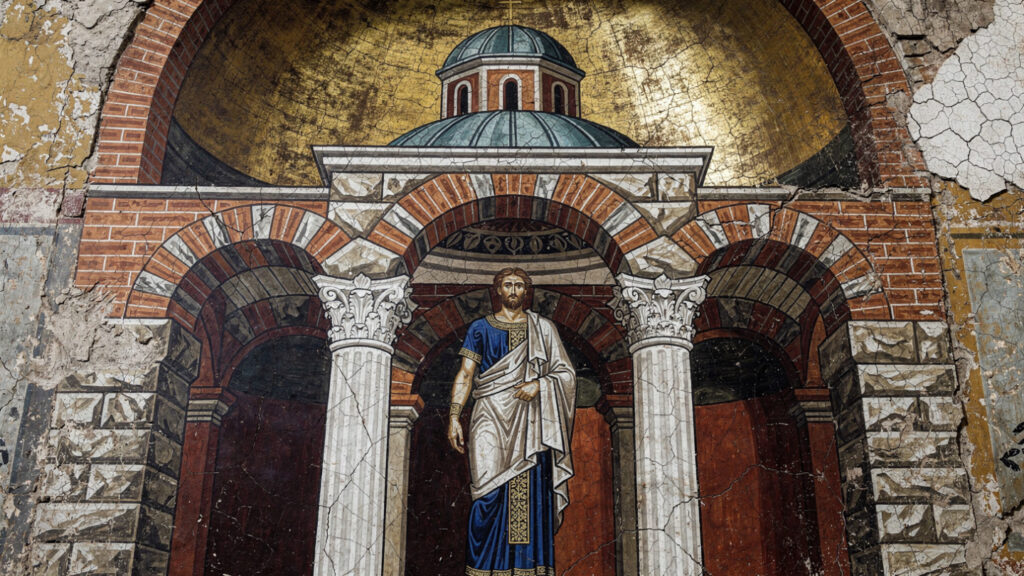
The Greek independence struggle of the 1820s was fought under a dual banner. The revolutionary intellectuals who drafted the Greek constitution drew simultaneously on the classical Athenian ideal of civic self-governance and the Byzantine concept of Orthodox Christian identity, as both remained deeply ingrained in the culture from which they operated. The resulting Greek state inherited the archaeological monuments left by the classical era alongside the Orthodox Church preserved through the Byzantine centuries, and it has administered both as the central pillars of its national identity ever since.
The traveler who arrives in Greece expecting only the classical will find the Byzantine at every turn: in the churches, in the liturgical chant audible through open doors on feast days, in the iconostasis visible through the open narthex of any Orthodox church, in the gesture of crossing oneself that Greeks make when passing a church, in the name-day celebrations that organize the social calendar, in the quality of light in the mosaic of a middle Byzantine church that the Osios Loukas or the Daphni monastery provide.
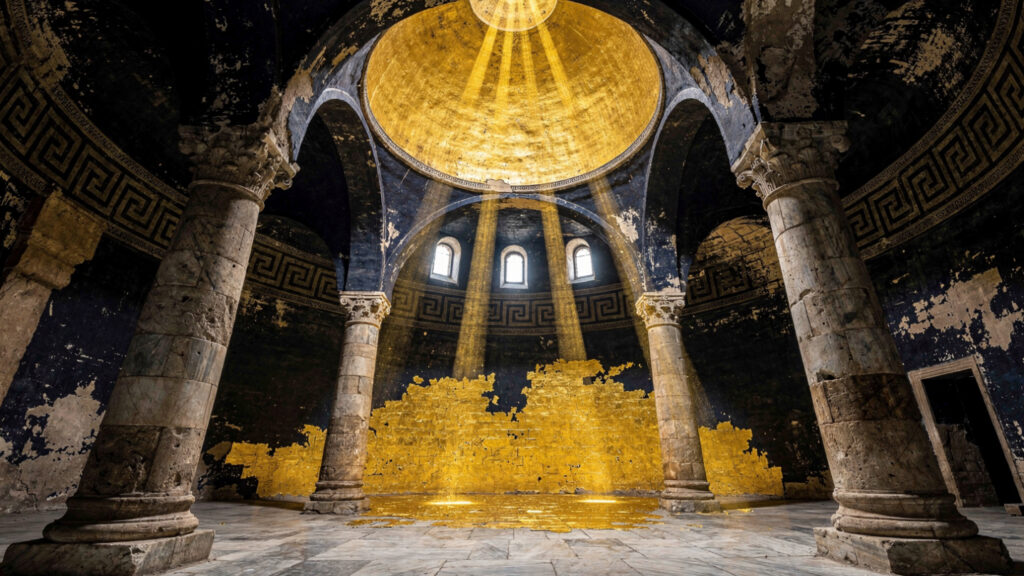
The traveler who understands what they are seeing will find not two separate traditions competing for the same cultural space but a single continuous civilization that has managed, across three thousand years, to remain recognizably itself through the most radical political and cultural transformations that the history of any nation records.
At Olympus Estate, Cultural Chronicles traces the full depth of the Greek inheritance, from the classical period that the Western world calls antiquity to the Byzantine millennium that the Greek world never stopped calling its own. The dome of the church on the main square of every Greek town is the answer to the Parthenon on the Acropolis above it. Both are the same civilization, building differently for the same essential purpose.