




The pan came first.
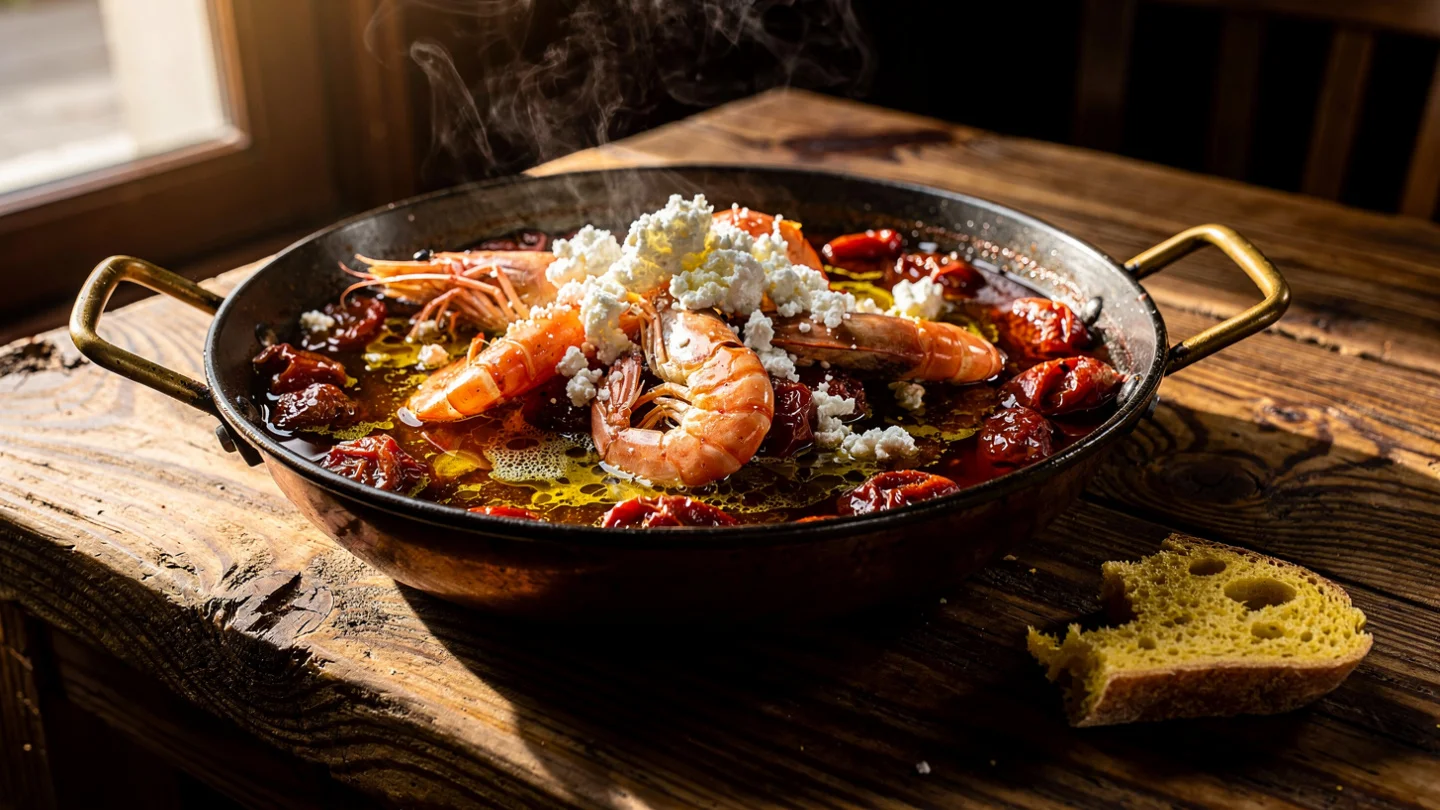
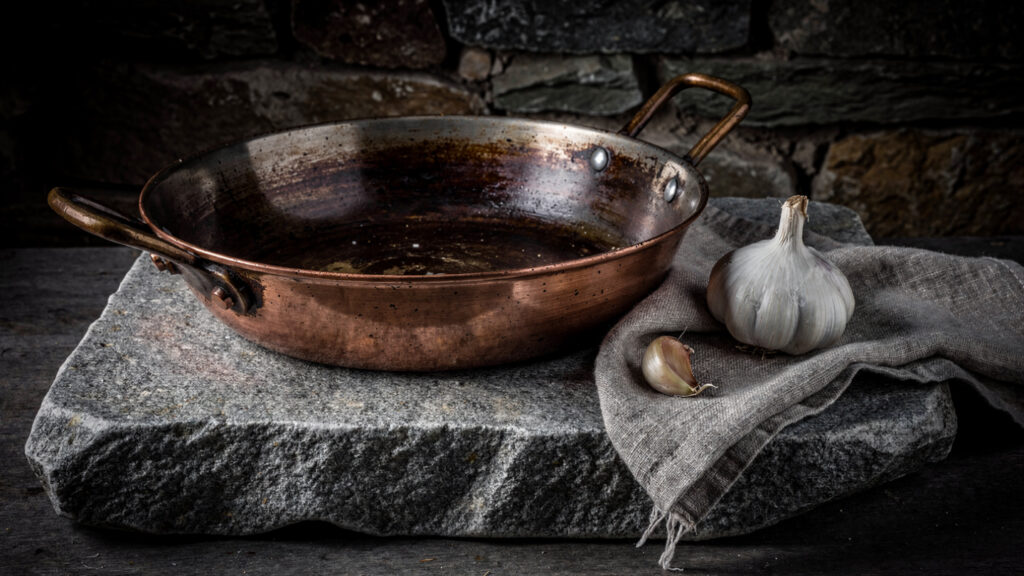
The word saganaki does not name a dish. It names the vessel that the dish is cooked in: the small two-handled pan, the sagani, whose name the Turkish word sahan, meaning a shallow copper dish, gave to Greek. Saganaki in the Greek kitchen is any preparation cooked and sometimes served in this pan, and the range of saganaki preparations is wider than the flaming cheese that the word has come to represent internationally. Mussels saganaki, halloumi saganaki, eggs saganaki: what they share is the pan, the method of cooking in a small concentrated vessel with high sides that reduces the liquid and focuses the heat on the ingredients, and the tradition of bringing the pan itself to the table so the dish arrives still sizzling.
Shrimp saganaki is the version that the Greek coastal taverna produces in the months when the prawn boats are working the Aegean and the tomatoes are at their August ripeness simultaneously. The combination of fresh prawns, ripe tomatoes reduced in olive oil, the anise-scented flare of ouzo deglazing the pan, and the feta crumbled over the top in the final minutes is the combination that has made the dish one of the most consistently reproduced items on the Greek meze table, because the elements work together in a way that the sum exceeds the parts: the ouzo’s anise note against the tomato’s acidity, the feta’s brine against both, and the prawn’s sweetness carrying the whole.
The Ouzo and What It Does
The ouzo is not decoration.
In a preparation where the tomato is the sauce’s primary acid and the feta is the primary salt, the ouzo functions as both a deglaze and a flavor bridge: when added to the hot pan, it loosens the caramelized tomato paste and onion residue from the base, dissolving it into the sauce and enriching the liquid with the concentrated flavor of the fond. The alcohol evaporates in the first minute of simmering, leaving the anise character of the grape marc distillate and the herbs that give ouzo its distinctive flavor, primarily star anise and fennel, as a botanical undertone beneath the tomato and the spice.
The anise note in a tomato and prawn preparation is not novel: the Marseillais bouillabaisse uses pastis, the Provençal spirit distilled with the same anise character, and the Turkish seafood tradition uses raki, the Turkish anise distillate, in similar applications. The Greek version using ouzo is the regional expression of a principle that the Mediterranean seafood kitchen has discovered independently in multiple traditions: that the anise family of aromatics has an affinity with seafood, cutting the richness of the sauce while adding a botanical complexity that thyme or oregano alone cannot provide.
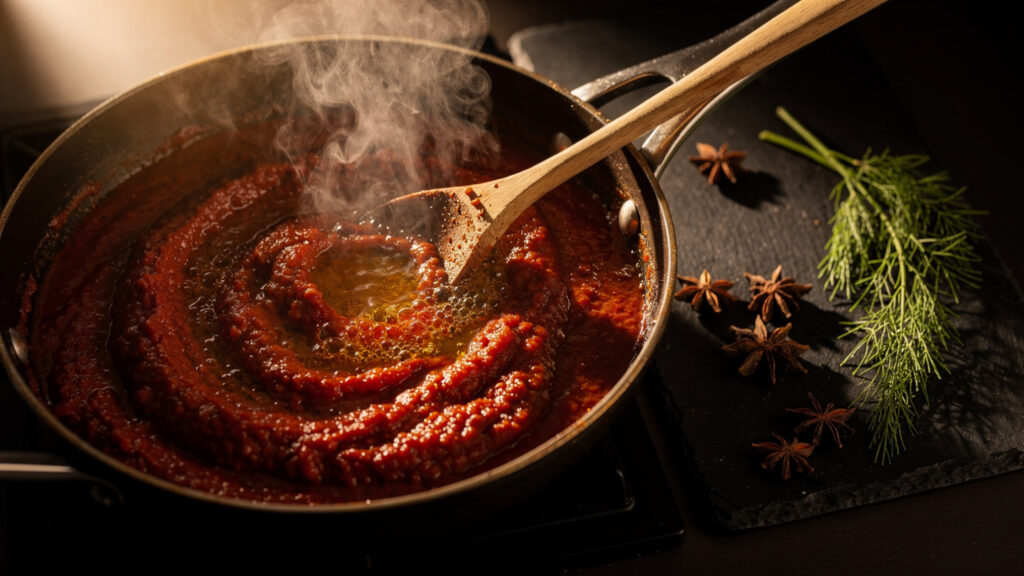
The quantity of ouzo in the recipe is modest, three tablespoons, which is correct: the ouzo’s function is to contribute its botanical character to the sauce rather than to dominate it. A heavier hand with the ouzo produces a preparation that tastes primarily of anise, which is not the balance the dish requires.
The Shrimp and the Timing
Shrimp are among the most time-sensitive ingredients in the coastal kitchen, and the interval between properly cooked and overcooked is measured in minutes rather than in the larger tolerances that the braised meats and long-simmered sauces of the inland kitchen provide.
The transformation that overcooking produces in shrimp is the result of the rapid denaturation of their muscle proteins at temperatures above approximately 60 degrees Celsius: the proteins tighten, expel their moisture, and the shrimp becomes rubbery rather than remaining the tender, sweet thing it was when it entered the pan. The interval between the opaque pink that indicates correct cooking and the tight curl that indicates overcooking is approximately two to three minutes in a moderately hot sauce, and the attentive cook removes the pan from the heat before the shrimp appear to be fully done, trusting the residual heat to complete the cooking.
Fresh shrimp, in season from the Aegean coastal fishing grounds, have a sweetness that the frozen product cannot replicate, because the deterioration of shrimp quality begins immediately after the catch and the freezing process, however rapid, interrupts but does not eliminate it. Where fresh shrimp are available, the shrimp saganaki is a different dish from the frozen version: more delicate, more directly expressive of the sea, and less dependent on the tomato and feta to carry the flavor burden.
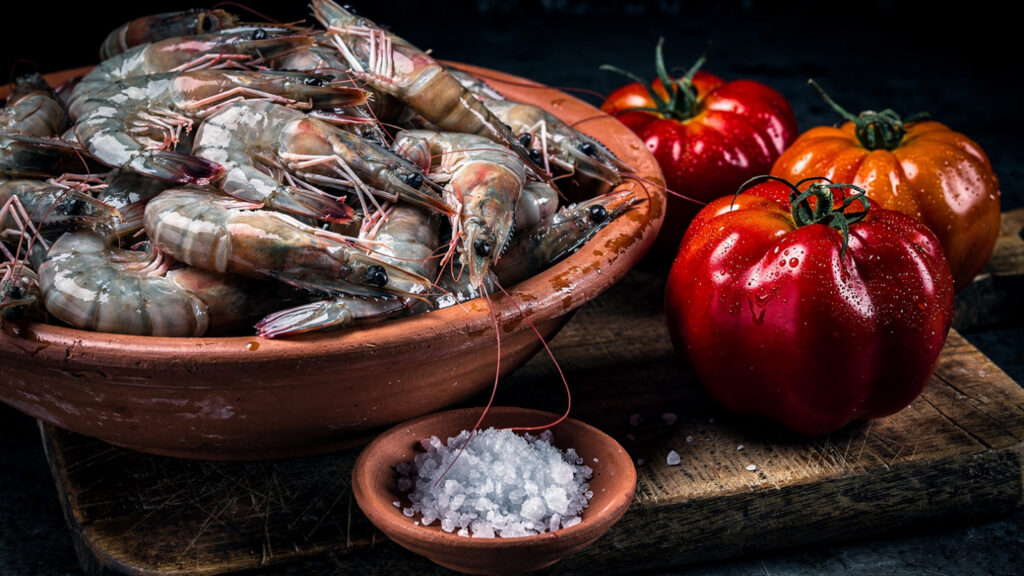
The peeling and deveining that the recipe requires is not optional: the intestinal vein that runs along the prawn’s back contains the digestive contents of the animal and has a mineral bitterness that is perceptible in a preparation as clean-flavored as this one. Removing it takes a minute per prawns and produces a noticeably cleaner result.
The Feta and Its Role
The feta goes in last, after the shrimp are cooked, and it is crumbled rather than sliced: the crumble allows it to distribute unevenly through the surface of the preparation, some pieces melting partially into the sauce and some remaining as distinct creamy pockets of salt and acid.
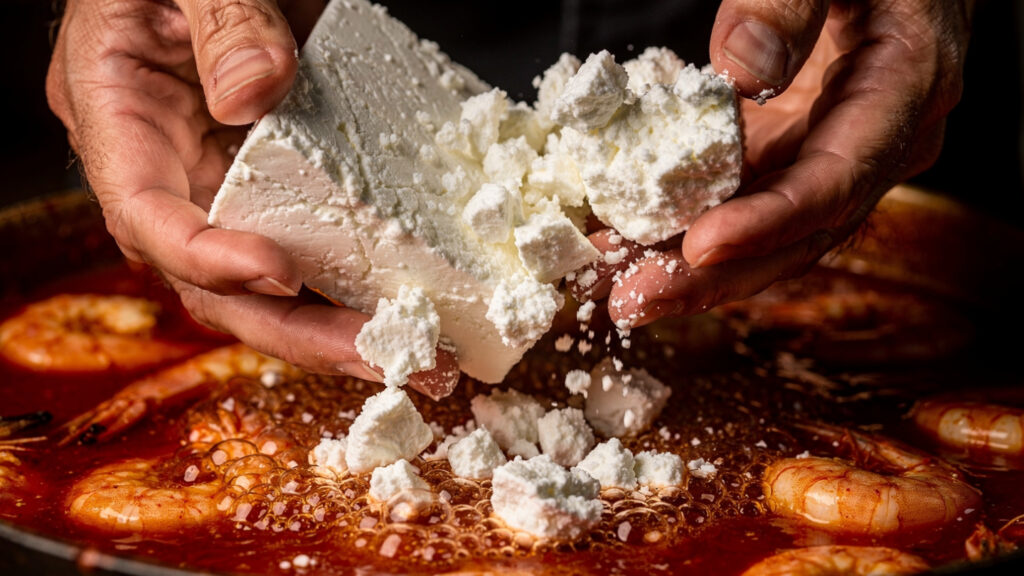
The role of the feta in the shrimp saganaki is to provide the salt that the sauce requires to complete its flavor without being added as pure salt, and to provide the dairy richness and the sharpness of sheep’s milk cheese that distinguishes the Greek version of this preparation from the Italian acqua pazza or the French marinière: the feta is not incidental but constitutive, the element that makes the dish specifically Greek in its flavor profile.
PDO feta, made from sheep’s milk or sheep and goat’s milk combined in the traditional proportions, has a higher acidity and a more complex flavor profile than the cow’s milk alternatives that some international markets sell as feta. In a preparation as simple and as directly flavored as shrimp saganaki, the quality of the feta is immediately perceptible in the finished dish.
Olympus Estate · Food & Seasonal Life
Saganaki Shrimp · Prawns in Spiced Tomato Sauce with Ouzo and Feta
The Aegean coastal taverna’s finest meze: sweet prawns, ripe tomatoes, the anise flare of ouzo, and feta crumbled over the top. The pan comes to the table still sizzling.
Ingredients
- Extra virgin olive oil4 tbsp
- Onion, finely chopped1½ cups
- Garlic cloves, minced4
- Red bell pepper, thinly sliced1
- Cherry tomatoes, halved300 g
- Red chili flakes½ tsp
- Dried oregano½ tbsp
- Sweet paprika¼ tsp
- Tomato passata or tomato sauce1 cup
- Tomato paste1 tbsp
- Sea salt and black pepperto taste
- Medium shrimp, peeled and deveined500 g
- Ouzo3 tbsp
- Greek feta, crumbled150 g
- Fresh parsley, finely chopped2 tbsp
- Crusty breadto serve
Method
-
1
Build the aromatic base (5 min)
Heat the olive oil in a wide skillet or sagani pan over medium heat. Add the onion and cook, stirring occasionally, for 5 minutes until soft and translucent.
-
2
Add the vegetables (5 min)
Add the garlic, bell pepper strips, and cherry tomatoes. Cook together for 5 minutes, stirring often, until the tomatoes begin to break down and release their juice.
-
3
Build the sauce (3 min)
Add the chili flakes, oregano, and paprika and stir to combine. Add the tomato passata and tomato paste. Season with salt and pepper and simmer for 2 to 3 minutes until the sauce has thickened slightly and the flavors have come together.
-
4
Add the shrimp and ouzo (5 min)
Add the shrimp to the pan and pour in the ouzo. Stir to coat. Cover and cook over medium heat for approximately 4 to 5 minutes until the shrimp are just pink and opaque. Do not overcook: shrimp become rubbery past the moment they are done, and that moment arrives quickly.
-
5
Finish with feta (3 min)
Uncover the pan and scatter the crumbled feta generously over the surface. Cover again and reduce the heat to medium-low. Cook for 3 minutes until the feta has softened and the flavors have melded. The feta should remain in distinct creamy pieces rather than fully dissolving.
-
6
Serve immediately
Remove from heat, scatter fresh parsley over the top, and bring the pan directly to the table. Serve with generous bread for the sauce. The bread is essential.
At Olympus Estate, Food and Seasonal Life traces Greek cuisine as a living calendar, from the prawn boats working the Aegean in the summer months to the small two-handled pan that gives saganaki its name. The vessel came before the dish. The shrimp arrive in the season when the tomatoes are also at their best. The ouzo has been in the bottle since last year. These are not coincidences.