




Historical evidence suggests that the consumption of coffee in the Greek world evolved from a luxury trade item into a primary social stabilizer. The practice began in the urban centers of the Ottoman era and quickly moved into the rural provinces of Macedonia and the Peloponnese. The technical preparation involves a briki, which is a narrow-necked copper or brass pot designed to concentrate heat. The coffee is ground to a microscopic powder to ensure a high level of suspended solids in the final cup. This density allows for a slow release of flavor and a prolonged drinking experience.
Archaeological findings in old marketplaces confirm the presence of dedicated areas for coffee preparation. These spaces functioned as informal courts and town halls. The ritual is characterized by the presence of kaimaki, a thick foam that serves as a biological and thermal seal. The continued use of the hovoli, or heated sand pit, remains a preferred method for achieving a uniform temperature. This practice ensures that the coffee does not reach a violent boil, which preserves the delicate oils of the bean.
Morning Heat and the Domestic Hearth
The morning air in the mountains of Macedonia is often sharp and carries the scent of damp pine and cold earth. In the small villages that dot the slopes, the day does not begin with the movement of machinery but with the quiet sound of a metal spoon hitting the side of a briki. This vessel is the primary tool of the domestic hearth. It is small and functional, yet it carries the weight of a long and continuous history. The heat is applied slowly, often over a low flame or within the mineral warmth of the hovoli. The process requires a level of patience that stands in contrast to the rapid pace of modern commerce. There is no rushing the rise of the coffee. To move too quickly is to ruin the texture and the taste. The environment demands a slow and deliberate engagement with the elements of fire and water.
The Physical Craft of the Brew
The preparation of Ellinikos coffee is a study in the management of heat and pressure. The ultra-fine grind of the beans creates a large surface area, which allows for a rapid extraction of flavor even at temperatures below the boiling point. The kaimaki that forms on the surface is a critical indicator of the quality of the preparation. This foam is composed of trapped gases and oils that create a velvety texture on the palate. In a culture that values the sensory reality of the present moment, the presence of a thick foam is a sign of a successful ritual. The coffee is served in a small porcelain cup, accompanied by a glass of cold water to clear the palate. This combination of hot and cold, bitter and fresh, is the standard sensory profile of the Greek morning.
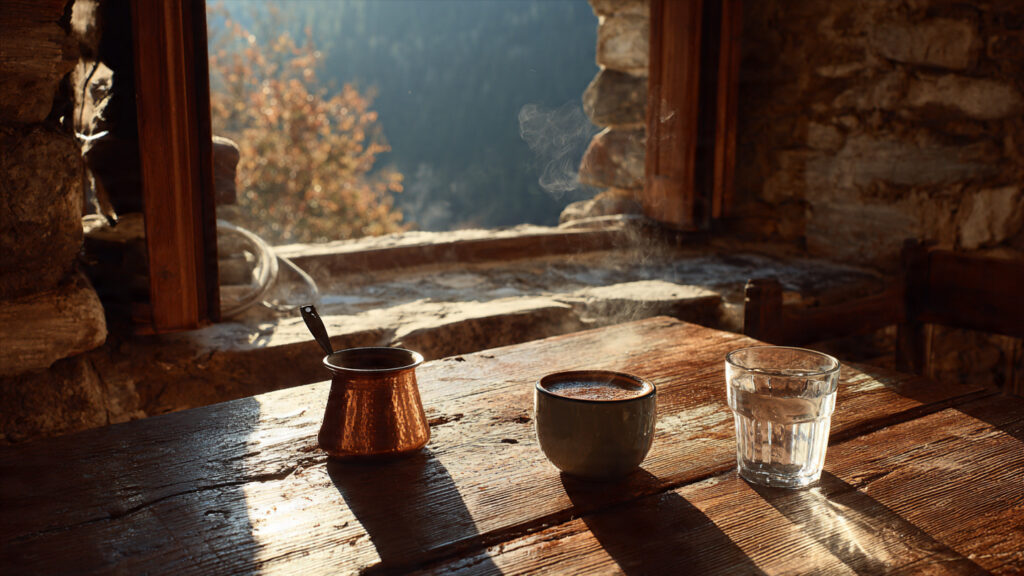
The water itself is often sourced from local springs in regions like Thessaly or Attica, where the mineral content adds a specific character to the drink. The use of the hovoli is particularly important for maintaining a steady temperature. The sand acts as a thermal mass that surrounds the pot and prevents the formation of hot spots that could scorch the grounds. This method is a direct descendant of ancient heating techniques used in metalworking and cooking. It is a grounded, material practice that relies on the natural properties of the earth to achieve a refined result. The physical act of submerged heating creates a cup that is dense and structurally stable.
In the coastal towns along the Aegean, the ritual is often performed outdoors, where the sea air interacts with the aroma of the roasting beans. The wind and the salt become part of the experience. The coffee is not a separate event but is integrated into the surrounding landscape. The materials of the ritual – the copper of the pot, the ceramic of the cup, and the water from the earth – are all sourced from the immediate environment. This creates a sense of continuity between the person, the drink, and the land. The ritual is a way of anchoring oneself in the physical world.
The Kafeneio and the Shape of Community
The kafeneio is the primary social hub of the Greek community, acting as a modern equivalent to the ancient agora. It is a neutral ground where individuals gather to exchange news and maintain the social fabric of the village. The chairs are often arranged to face the street, allowing for a constant observation of the public space. This layout encourages a lifestyle of presence and awareness. The coffee serves as the entry fee for this shared space. A single cup can justify an entire morning of conversation and observation. It is a tool for the management of time.
In the Peloponnese, these establishments are often the oldest buildings in the town, with thick stone walls that provide a cool interior during the heat of the summer. The atmosphere inside is one of calm and predictable repetition. The regulars have their assigned seats, and the rhythm of the service is dictated by the needs of the community rather than a corporate clock. This is where the local history is preserved through oral tradition. The kafeneio is a repository of memory, where the stories of the past are retold over the steam of the brew. The social structure is flat, allowing for a cross-generational dialogue that is rare in more hurried societies.


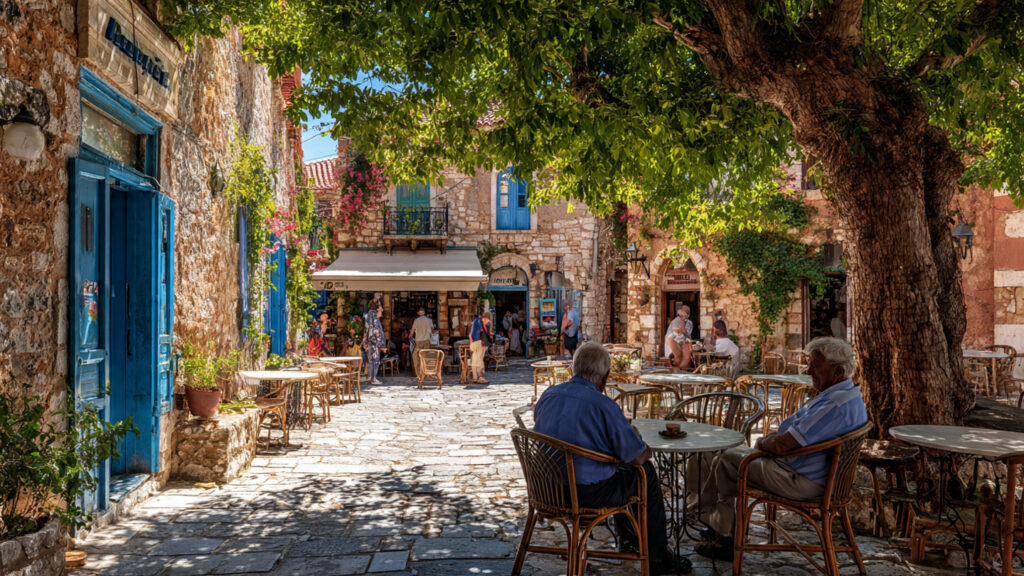
The act of sitting is as important as the act of drinking. To take a coffee to go is a recent urban adaptation that remains foreign to the traditional spirit of the ritual. The true value of the coffee is found in the duration of the stay. This persistence of sitting is a form of resistance against the fragmentation of the day. It is a commitment to the person sitting across the table and to the environment itself. The Hellenic preference for long, uninterrupted sessions of coffee drinking is a reflection of a culture that prioritizes relationships over transactions.
Reading the Grounds
The practice of kafemanteia, or the reading of the coffee grounds, is a traditional method of processing collective anxieties and expectations. After the coffee is consumed, the cup is turned over onto a saucer, allowing the thick residue to settle into patterns. These shapes are then interpreted by a skilled practitioner, often an older woman of the community. While some may see this as a curiosity, it functions as a sophisticated social technology for addressing the unknown. It provides a narrative framework for discussing the future without the need for technical jargon or abstract theory. It is a way of looking at the shadow to find the light.
This practice is deeply rooted in the history of Crete and the islands, where the isolation of the landscape fostered a reliance on local wisdom. The interpretation of the grounds is a collaborative process that strengthens the bonds between the participants. It is an act of shared imagination that turns a simple residue into a map of possibilities. The patterns are seen as reflections of the natural world – trees, birds, or mountain paths. This connects the internal state of the individual to the external reality of the Greek Landscape. The ritual provides closure to the coffee session and prepares the mind for the next phase of the day.
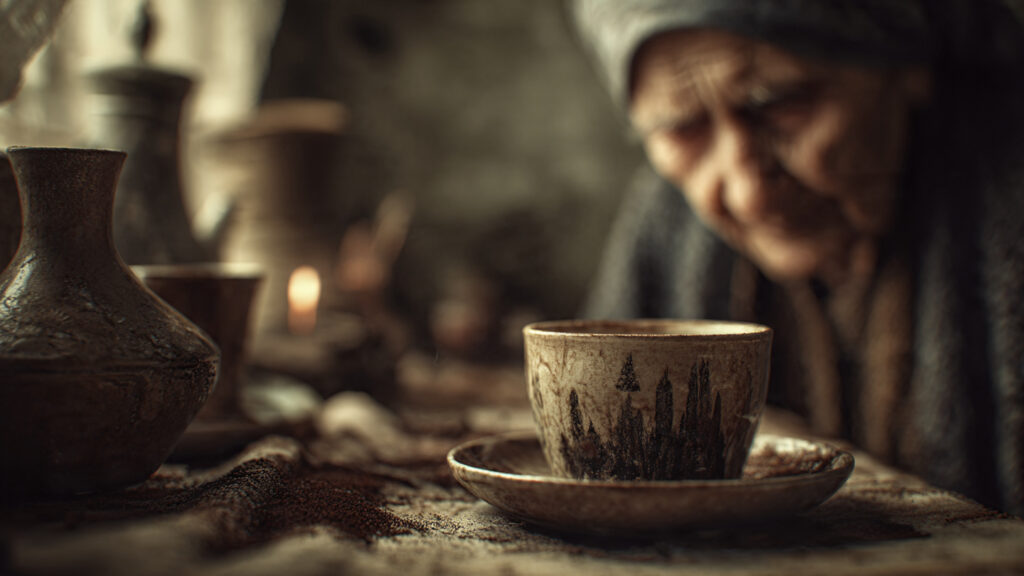
The density of the coffee grounds is the physical evidence of the drink’s completeness. Unlike filtered coffee, which leaves nothing behind, the traditional brew leaves a material record of its existence. This residue is a reminder that every action has a consequence and every experience leaves a trace. The kafemanteia is simply a way of acknowledging this truth. It is a heritage-based practice that values the unseen as much as the seen. It is a quiet, domestic form of philosophy that has survived for generations.
The Athenian Adaptation
In the urban centers of Athens, the ritual has adapted to the faster pace of city life without losing its core identity. The introduction of the freddo espresso and freddo cappuccino in the late twentieth century provided a cold alternative that suited the climate. These drinks are made by mixing hot coffee with ice at high speed to create a dense, stable foam. This method preserves the structural integrity of the coffee even as it is cooled. The Athenian coffee shop is a blend of the traditional and the modern, where the ancient marble of the city provides a backdrop for a contemporary rhythm.
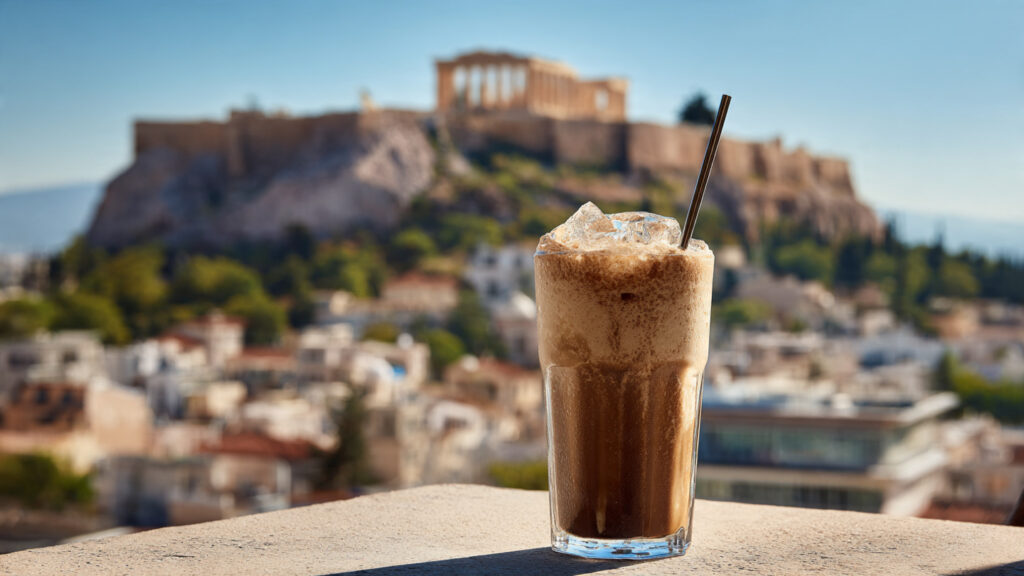
Despite the change in the temperature of the drink, the social habits remain consistent. The city dwellers still find time to sit for extended periods, using the coffee as a reason to pause their urban movements. The café remains a territory of psychological stability. Whether in a high-traffic square or a quiet side street in Attica, the coffee remains the primary tool for regulating the day’s tempo. The transition from the hot briki to the cold shaker is a technical shift, but the cultural logic remains the same. The goal is still to create a structured pause in the day.
This adaptation shows the resilience of the Greek coffee culture. It can incorporate new technologies and trends without being erased by them. The freddo is now as much a part of the Hellenic identity as the traditional brew. It reflects a society that is comfortable with its history while moving through the present. The coffee cup is a vessel of continuity. It connects the mountain village to the urban street through a shared understanding of what it means to take a break.
The Final Sip
The ritual concludes with the final sip, leaving the thick silt at the bottom of the cup undisturbed. This is a moment of quiet completion. The heat of the morning has been managed, the conversation has been had, and the mind has been stabilized. In the traditional homes where the hearth is still honored as the domain of Hestia, this daily act is a way of maintaining the order of the household. It is a simple, grounded practice that requires no special equipment other than a pot, some grounds, and a little time.
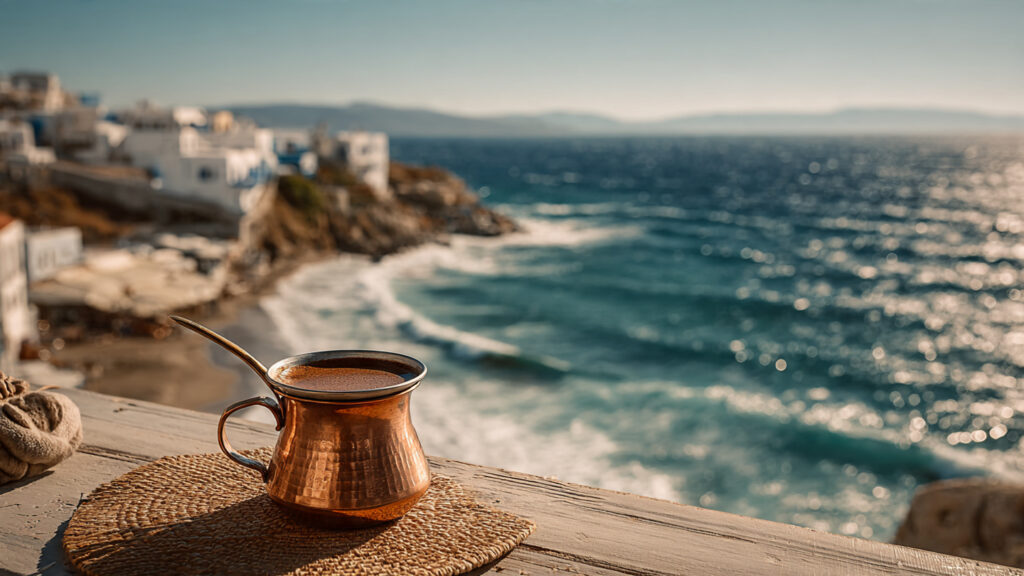
The endurance of coffee in Greece is not a mystery when viewed through the lens of heritage. It survives because it works. it provides a physical and social service that cannot be replaced by faster or more efficient alternatives. The ritual is a guardian of the day’s rhythm. It ensures that the person remains in control of their own time. The smell of the roasting beans and the sight of the rising foam are the sensory anchors of a culture that refuses to be rushed.
The sun moves across the sky and the shadows shift in the square. The next cup will come in the afternoon, marking another transition in the cycle of the day. The ritual continues.
The coffee is ready. The world can wait.