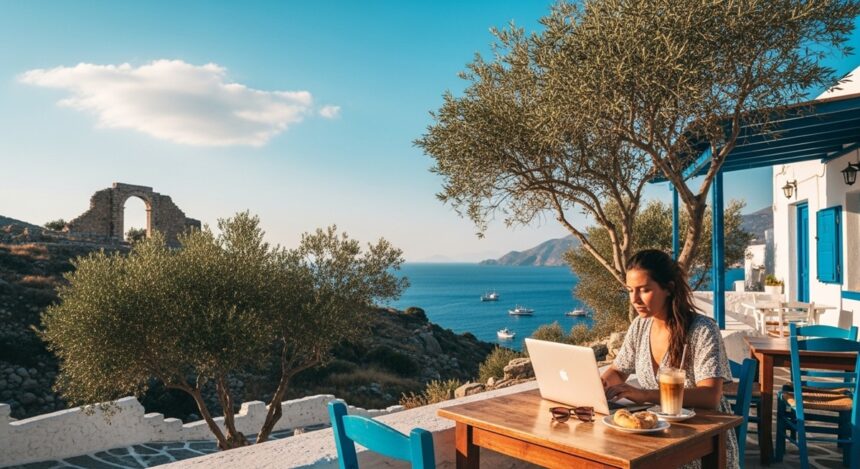





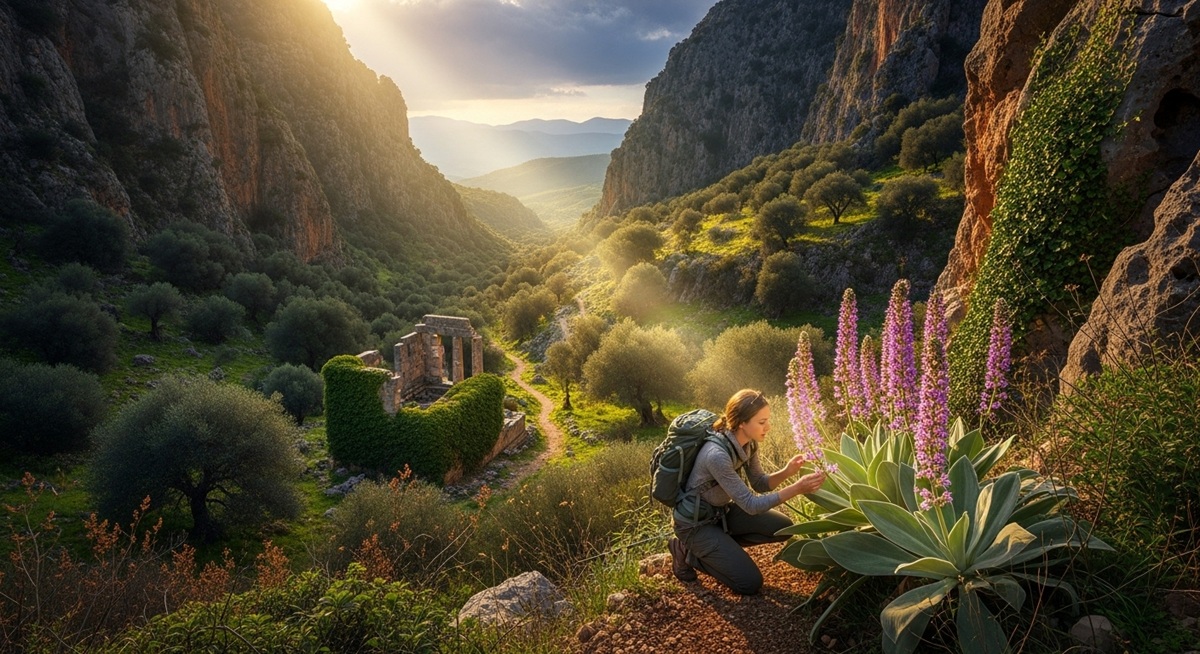
There’s a side to Greece that whispers secrets through the rustle of leaves and the scent of wild blooms—a realm where ancient myths entwine with the rugged landscapes of today. Far from the postcard-perfect beaches and iconic ruins, this Greece thrives in hidden valleys, windswept cliffs, and sun-drenched hillsides. It’s a land of mythical herbs, plants that once fueled epic tales, healed legendary heroes, and even swayed the fates of gods. These are living links to Homer’s epics, Hippocrates’ remedies, and the divine interventions of Olympus.
At the heart of this enchanted world stands the Dittany of Crete, a herb so potent it could mend wounds inflicted in battle or ignite passions that rivaled those of the gods. But it’s far from alone. Greece harbors a treasure trove of forgotten mythical herbs, each with stories that blend seamlessly into modern travel adventures. Imagine hiking through Crete’s gorges, where the air hums with legends, or foraging on Samos’ slopes, tracing the footsteps of Odysseus himself.
The Enchanted World of the Dittany of Crete
No herb captures the essence of Greek mythology and wilderness quite like the Dittany of Crete (Origanum dictamnus). This resilient plant, with its fuzzy leaves and pinkish-purple flowers, clings to life on Crete’s most unforgiving terrains, embodying the island’s untamed spirit.
In Myth and Literature
The Dittany of Crete leaps from the pages of ancient texts like a divine remedy. In Homer’s Iliad, when the Trojan hero Aeneas lay wounded on the battlefield, Aphrodite—the goddess of love—rushed to his aid. She harvested dittany from Mount Ida’s slopes, applying it to staunch the bleeding and restore his strength in moments. This highlighted the herb’s reputed powers as a healer of arrow wounds and a symbol of resilience.

Virgil echoed this in the Aeneid, while later poets romanticized it further. Cretan folklore tells of wild goats, pierced by hunters’ arrows, instinctively seeking out dittany to chew and expel the barbs, healing miraculously. Such tales painted the herb as a gift from the gods, accessible only to the pure-hearted or the desperate. It even earned the nickname “erontas,” derived from the Greek word for love, underscoring its role as an aphrodisiac in rituals and romances.
In Real Life
Fast-forward to today, and the Dittany of Crete remains a botanical marvel, though it’s now endangered due to overharvesting and habitat loss. Native exclusively to Crete, it thrives on limestone cliffs at elevations up to 1,500 meters, particularly in the White Mountains (Lefka Ori) and the Dikti range. Its essential oils pack antimicrobial and anti-inflammatory properties, validating ancient claims—modern studies suggest it aids digestion, soothes skin irritations, and even combats bacterial infections.
Harvesting it was once a rite of passage for young Cretan men, who scaled perilous heights to gather sprigs as tokens of devotion for their beloveds. Today, sustainable cultivation preserves this tradition, with farms propagating it for teas, ointments, and culinary uses. Yet, wild specimens evoke that raw, mythical thrill, reminding us of nature’s delicate balance.
Travel Tips for Encountering Dittany
For a safe introduction, head to the Botanical Park & Gardens of Crete near Chania. This lush oasis cultivates Dittany of Crete alongside other native flora, offering guided tours that blend botany with mythology—perfect for families or casual visitors. Admission is affordable, and the on-site cafe serves herbal infusions made from the plant itself.


Adventurous souls should trek the Samaria Gorge in the White Mountains, a UNESCO Biosphere Reserve. This 16-kilometer hike descends through dramatic canyons where dittany dots the cliffs. Start early from Xyloskalo trailhead; along the way, spot ibex that might just be channeling those ancient goats. For a more thorough exploration, join a guided herb-foraging tour in the Psiloritis Mountains, where local experts share stories and sustainable picking practices. Remember to book permits in advance, especially during peak season from May to October, and always prioritize conservation—leave no trace to protect this endangered gem.
Moly of Samos: The Herb of Divine Protection
Shrouded in enigma, Moly emerges from Homer’s Odyssey as a safeguard against the darkest sorceries, a plant that even gods handled with care.
In Myth
When Odysseus faced the witch Circe on her enchanted isle, she transformed his men into swine with her potions. Enter Hermes, the messenger god, who bestowed upon Odysseus a herb called moly—black-rooted with milky-white flowers—to immunize him against her spells. This act not only saved the hero but symbolized divine intervention in mortal affairs. Ancient scholars like Theophrastus pondered its identity, linking it to protection rituals where it warded off evil spirits and illusions.

In broader lore, moly represented enlightenment, piercing through deception to reveal truth—a fitting emblem for a wanderer like Odysseus navigating treacherous seas.
In Real Life
Botanical detectives have speculated that moly could be Allium nigrum or a wild garlic variant, known for its pungent roots and blooms. These plants flourish in Mediterranean climates, rich in sulfur compounds that indeed offer antimicrobial benefits, perhaps explaining its “protective” reputation. On Samos, where herbal traditions date back to Pythagoras, wild alliums carpet the terrain, used in local cuisine and remedies for everything from colds to digestive woes.
Conservation efforts highlight its vulnerability to climate change, urging mindful foraging to preserve these ancient strains.
Travel Tips for Discovering Moly
Samos beckons with its verdant hills, ideal for herb hunts. Start in Karlovasi, a charming town on the northwest coast, and hike Mount Kerkis’ trails. This volcanic peak, rising 1,437 meters, hosts diverse flora including potential moly relatives—spring is prime time when white flowers bloom. Local guides from the Samos Hiking Club offer myth-infused tours, pointing out edible greens and sharing Odyssey anecdotes.
For a relaxed vibe, visit the Potami Waterfalls area, where forested paths lead to crystal pools amid herb-scented air. Stay in Pythagoreio, a UNESCO site, and explore nearby herb shops selling moly-inspired teas. Ferries from Athens make Samos accessible; combine with beach days for a balanced trip that marries myth with Mediterranean bliss.
Silphium: The Lost Herb of Love and Mystery
Few plants evoke such intrigue as Silphium, a once-ubiquitous herb that vanished into legend, leaving behind tales of passion and prosperity.
In Myth and History
Hailing from Cyrene in ancient Libya (under Greek influence), silphium was a panacea: contraceptive, abortifacient, seasoning, and cure-all. Myths portrayed it as Apollo’s gift, its heart-shaped seeds inspiring the modern heart symbol. Romans prized it above silver, leading to overexploitation and extinction by the 1st century AD. Pliny the Elder lamented its loss, describing how it flavored feasts and fueled amorous escapades.

In Greek lore, it symbolized controlled fertility, empowering women in a patriarchal world—a subtle rebellion wrapped in botany.
In Real Life
Though extinct, relatives like Ferula species persist in Crete and Kythera, offering glimpses of what silphium might have been. These umbellifers boast similar compounds with anti-inflammatory effects, used today in herbal medicine. Archaeological digs in Cyrene reveal its economic might, with coins stamped in its image.
Modern botanists hunt for surviving strains, but for now, it’s a cautionary tale of unsustainable harvest.
Travel Tips for Tracing Silphium’s Legacy
While true silphium eludes us, Crete’s eastern coasts near Ierapetra harbor similar plants. Explore the Minoan ruins at Gournia, imagining ancient healers amid wild ferulas. For a North African nod, day-trip to Libya if safe, but stick to Greek isles for accessibility.
Kythera, Aphrodite’s birthplace, features herb walks on its trails—join eco-tours from Chora village to spot analogues. Visit during the Kythera Summer Festival for cultural immersion. Easy flights from Athens make it a hidden gem for myth chasers.
The Laurel of Apollo: Symbols of Victory and Prophecy
The Laurel (Laurus nobilis) stands eternal in Greek myth, a tree of transformation and triumph that scents the air around sacred sites.
In Myth
Pursued by Apollo, the nymph Daphne pleaded for escape and morphed into a laurel tree. Heartbroken, Apollo adopted its leaves as his crown, decreeing it sacred. This tale birthed the Pythian Games at Delphi, where victors wore laurel wreaths—echoed in Olympics and poetry.

It embodied prophecy, with oracles chewing leaves for visions, linking it to inspiration and divine favor.
In Real Life
Wild laurel groves thrive in the Peloponnese and Delphi’s slopes, their evergreen leaves flavoring Greek stews and teas. Rich in eugenol, it aids digestion and relaxation, blending myth with modern wellness.
Sustainable harvesting keeps traditions alive, though urban sprawl threatens habitats.
Travel Tips for Experiencing Laurel
Delphi’s archaeological site is unparalleled—wander the Temple of Apollo, where laurel perfumes the paths. Guided tours from Athens include myth recitals; hike the Parnassus trails for wild encounters.
In Olympia, explore ancient stadiums amid laurel shades. Spring festivals revive wreath ceremonies—book ahead for immersive experiences.
Hyssop: The Purifying Herb of Renewal
Hyssop (Hyssopus officinalis) cleanses both body and soul, a staple in ancient rites that still blooms across Greece.
In Myth and Ritual
Greek priests wielded hyssop branches in purification ceremonies, sprinkling holy water to banish impurities. Biblical echoes amplified its sanctity, symbolizing spiritual rebirth and clarity.

It bridged realms, used in temples to invite divine presence.
In Real Life
Abundant in Macedonia and Crete, hyssop ‘s camphor-like aroma repels insects and soothes respiratory ills. Herbalists brew it for teas, validating its cleansing lore.
Endangered in spots, conservation parks protect it.
Travel Tips for Finding Hyssop
Taygetos Mountains in the Peloponnese offer rugged hikes through hyssop fields—start from Sparta for Spartan history ties. Local monasteries host herb workshops.
In Crete’s Rethymno region, forage ethically on guided tours. Combine with beach stays for holistic travel.
More Forgotten Gems: Expanding the Herbal Pantheon
Beyond the stars, lesser-known mythical herbs dot Greece’s mosaic. Consider Mandrake, screamed in myths for its humanoid roots, linked to fertility spells—spot it in Thessaly’s plains, near Mount Olympus’ mythical aura. Travel tip: Visit Larissa’s folklore museums for insights, then hike Pindos trails.
Heliotrope, turning to the sun like Clytie in legend, symbolizes devotion. Found on Rhodes, its vanilla scent enchants. Explore Lindos Acropolis, inhaling blooms that evoke eternal love.
Saffron from Crocus, born of a tragic myth, paints Crete’s fields gold. Minoan frescoes depict its harvest; join autumn picking festivals in Kozani for hands-on myth.

These additions enrich your journey, revealing Greece’s layered herbal lore.
The Endangered Herbal Legacy of Greece
Greece’s forgotten mythical herbs weave a fragile web, threatened by tourism and climate shifts. Conservation initiatives, like Crete’s protected parks, safeguard them, blending eco-tourism with preservation. By visiting responsibly, travelers support this legacy, ensuring myths endure.
Walking the Herbal Trails of Myth
Embarking on this herbal quest transforms Greece into a living epic. From Dittany of Crete ‘s cliffs to laurel ‘s sacred groves, each plant invites deeper connection. Let these guardians guide you to a profound, mythical Greece.