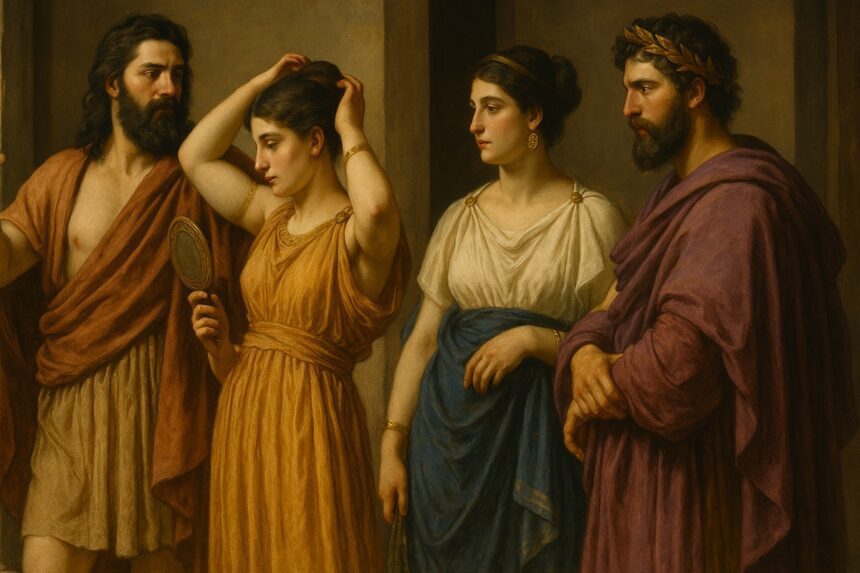



The Hesperides were the nymph daughters of Evening who tended a sacred orchard at the edge of the world. Their garden contained the Golden Apples that granted immortality to those who ate them. Heracles performed his eleventh labor by retrieving these fruits after defeating the dragon Ladon who never slept. In biological history, these apples were likely the earliest Citrus Species introduced to Europe from the East. The Peloponnese and the Aegean islands remain the primary zones where these ancient genotypes survive in isolation. These fruits are not the sweet hybrids found in modern grocery stores. They are thick-skinned, acidic, and heavy with essential oils. They require specific moisture levels and protection from the salt winds of the coast. The Bergamot and the Citron represent the peak of this genetic heritage. They thrive in the high-altitude valleys where the air remains cool throughout the winter months.
The light in the ravines above Sparta does not behave like the light on the beaches because it stays trapped in the pine needles and the damp crevices of the rock. You walk into a village where the houses are built of the same gray stone as the cliffs and the air smells like wet earth and cold peel. There is a specific silence here, a silence of things waiting. In these pockets, the sun is a visitor rather than a landlord. This is the shadow of the mountain, and it is where the garden actually exists in the modern world as a place of twilight and moisture. This environment allows for a biodiversity that the flat plains simply cannot support.

The trees here are old, their trunks twisted into shapes that mimic the tectonic stress of the Taygetos range. They do not look like the productive, pruned trees of a commercial farm but instead resemble survivors of a forgotten era. When the winter air settles into these valleys, it brings a chill that would kill a common orange tree. However, the rare species of the shadow have evolved a different set of defenses, growing thick, pebbled skins and filling their cells with oils that act as a natural antifreeze. To find these fruits, you have to leave the main roads and follow the sound of running water into the deep folds of the mountain.
The Bitter Gold of the Mountain Bergamot

The aforementioned peel belongs to the most enigmatic resident of this shadow. It is often associated with high-end boutiques, but in the Peloponnese, it remains a fruit of the winter hearth. It does not crave the blazing sun and instead thrives in the cooler air of the foothills. Its skin is thick and oily, carrying a fragrance so potent it feels like a physical weight in the air. This is a fruit that requires a deep respect for the bitter edges of nature. It is too bitter to be eaten raw, a defense mechanism that protects the precious oils from being consumed by birds or insects before the seeds are ready.

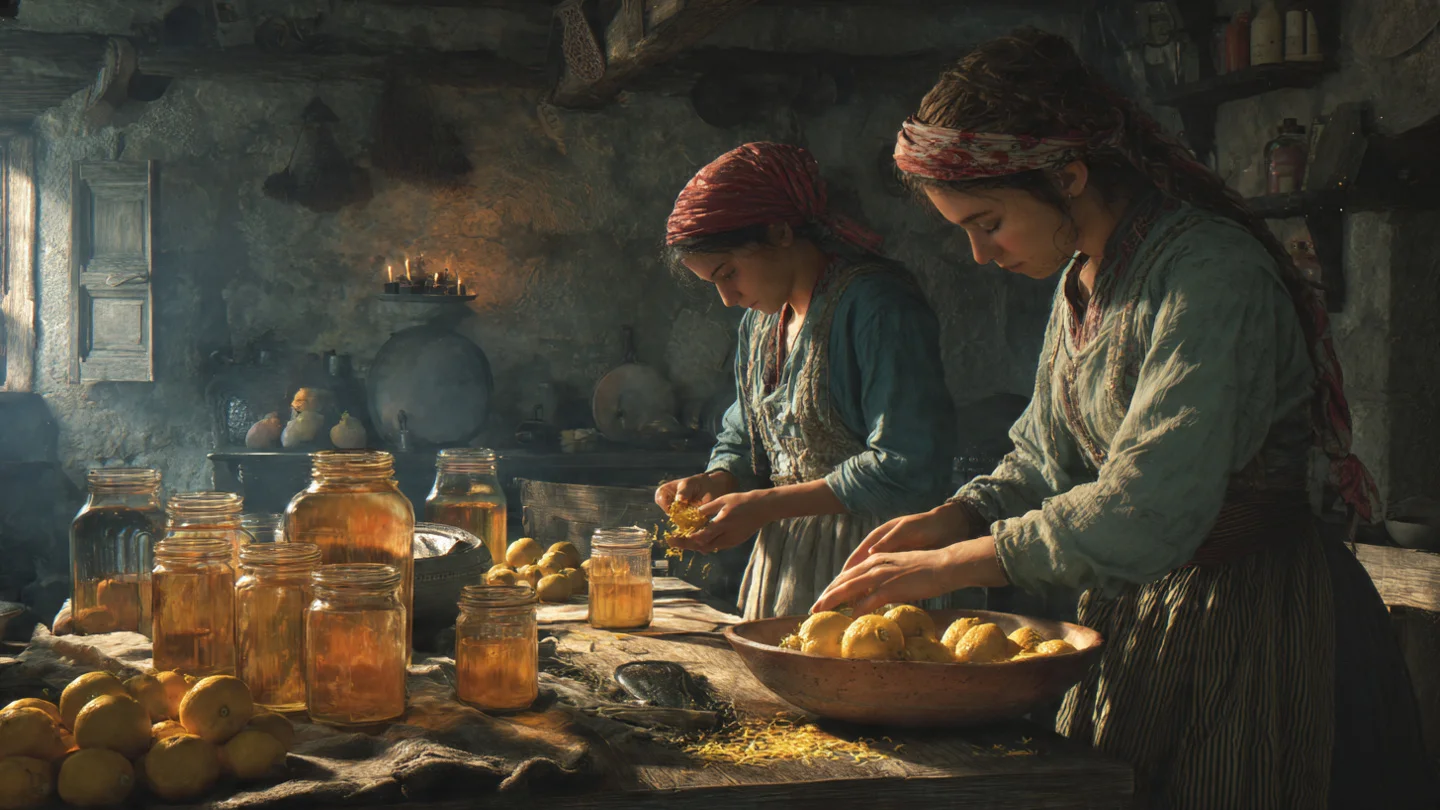
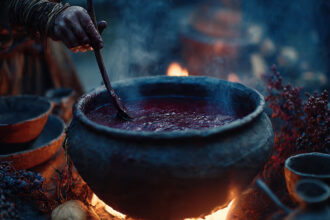
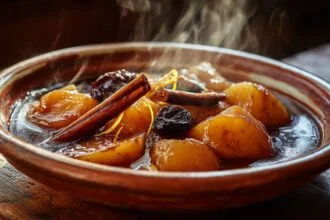
The transformation of this harvest is a slow labor. The women of the mountain villages take the fruit and shave the outermost layer of the peel with small metal rasps. This is done by hand because there is no machine that can replicate the sensitivity required to remove the zest without bruising the fruit. The shavings are then boiled multiple times to remove the intense bitterness before they are finally preserved in a heavy syrup of honey or sugar. This is the Spoon Sweet, a Dionysian alchemy of the kitchen that turns a fruit that is practically inedible into a delicacy that captures the essence of the mountain winter.
Historically, the oil was harvested using the sponge method. Workers would press the fruit against large natural sponges to absorb the essential oils and then wring them into ceramic jars. This was a slow and exhausting process that reflects a world before industrial extraction. The resulting oil was pure and intense, used as a medicine, a perfume, and a flavoring for tea. Today, the trees in the hidden valleys still produce this essence in concentrations that modern hybrids cannot match.
The Ancestor and the Heritage of Taste
The Citron is the ancestor of all citrus, a prehistoric fruit that looks like a rough-hewn stone from a mountain wall. It is almost entirely pith with a tiny heart of juice at the center. Its aroma is the definition of the ancient Mediterranean. This fruit is a specialist of the shadow, preferring sheltered valleys where the frost cannot reach it but the air remains crisp. Its presence in the Greek landscape is a living link to the botanical expeditions of Alexander the Great, who brought the Median Apple back from his campaigns in the East.

Ancient scientists like Theophrastus described the specimen with a sense of wonder, noting its ability to repel insects and its medicinal properties. In the hidden gardens of Naxos and the southern Peloponnese, these trees are treated like family elders and guardians of biodiversity. They hold a chemical complexity that modern oranges have lost, and to taste a preserve made from the skin of a wild ancestor is to experience the Ancient Greek way of life. It is unvarnished, intense, and deeply rooted in the soil.

Cultivating these ancients is a technical challenge because the trees are sensitive to wind and temperature fluctuations. They require a specific kind of drainage that only the rocky slopes can provide. The fruit can grow to a massive size, with some specimens weighing several kilograms. This weight puts a strain on the branches, requiring farmers to build support structures out of wood or stone. This is the reality of agriculture in this terrain, a constant negotiation between the needs of the tree and the constraints of the land. The result is a fruit that has no commercial value in a supermarket but remains priceless to those who value the preservation of the past.
The Medlar and the Wisdom of Decay
Beyond the citrus, the shadow hides the Medlar, known in Greek as mousmoulo. This fruit defies every modern rule of the supermarket. It is harvested in the late autumn while it is still hard and astringent, and if you try to eat it then, it will turn your mouth out with its tannins. It must undergo a process called Bletting, which is a form of slow, controlled decay in the cold of a winter pantry. Only when the fruit looks ruined and soft does it become a delicacy.

The flesh turns into a sweet, spiced custard that tastes of dates, cinnamon, and old wine. It is the fruit of the Persephone phase of the year, representing the wisdom of the dormant season. Life is still working beneath a weathered surface. In the local memory, this was the treat of the mountain shepherd, a fruit for those who are not afraid of the dark. It is for those who understand that true sweetness often requires a period of shadow and stillness, acting as the ultimate rejection of the fast culture of the modern era.

The tree itself is a hardy and beautiful addition to the mountain landscape with its large, leathery leaves and white flowers that bloom in late spring. It is a low-maintenance tree once established and provides a source of nutrition during the leanest months of the year. It is a reminder that the land provides for those who have the patience to wait for the proper time. It is a core component of the heritage and continuity of the Greek mountain garden.
The Quince and the Weight of Aphrodite
The Quince is another fruit that hides in the cool dampness of the mountain slopes as the fruit of Aphrodite. In the ancient world, it was the symbol of fertility and marriage. It is a heavy, woody fruit covered in a fine down. Like the previous mountain varieties, it is not a fruit for the impulsive because it is hard and sour when raw. But when it is cooked, it undergoes a dramatic transformation, and the flesh turns from creamy white to a deep, glowing ruby red.

This change in color is a chemical reaction to heat. The fruit is packed with pectin, making it the perfect choice for jellies and pastes. In a Greek household, the smell of the simmering pots is the smell of winter security, a dense and floral aroma that fills the house. The flesh is often baked with meat in savory stews or preserved as a firm jelly called Kydonopasto. It is a fruit that has a physical presence, solid and enduring.

The tree is resilient and can handle the heavy clays and the damp soils of the valley bottoms where other trees would rot. It is a survivor of the Greek Heritage that has been cultivated in these valleys for thousands of years. It represents a different kind of luxury, not of the exotic but of the permanent. It is a fruit that anchors the land to its history.
Biodiversity and the Foundation of the Land
The preservation of these rare species is a necessity because commercial agriculture has narrowed the genetic pool of our food. Most of the citrus we eat comes from a handful of hybrids designed for transport and sweetness, but these trees are fragile. They are susceptible to pests and diseases that can wipe out entire regions. The rare fruits of the mountain shadow are the insurance policy for the future, carrying genes for Disease Resistance and climate adaptation that we may need as the world changes.
Protecting these species in the Peloponnese is about maintaining a sanctuary. This is not about modern production but rather the creation of a Genetic Bank. By valuing the ancient mountain stock, we participate in the long-term survival of the Mediterranean ecosystem. It is a commitment to the stability of the land over the profit of the season.
The existence of these microclimates requires an understanding of the terrain. One must know where the frost settles and where the wind carries the salt. It involves using the stone walls and the natural contours of the land to maintain pockets of protection. It is the integration of human presence with the natural logic of the mountain, a way of living that respects the shadow rather than trying to erase it.
The Silence of the Hidden Garden
Living with these fruits changes the relationship to time because you cannot rush a harvest or force a Medlar to ripen. One is forced to sync their internal rhythm with the slow pulse of the mountain winter. This is the real Greek experience, a life that values depth and complexity while finding beauty in the bitter and the hard.
In the Garden of the Hesperides, the dragon Ladon was not there to prevent people from eating the apples but to ensure that only those with the proper strength and intent could reach them. The shadow is a barrier to the casual and a protection for the rare. The most valuable things are always hidden and difficult to reach, found only in the dark.

As the winter mist rolls down from the peaks of the Taygetos, the hidden gardens are at their most active. The oils are concentrating in the skins and the starches are turning to sugars in the dormant fruits while the Quinces wait to be gathered. This is the reality of the mountain, a slow and silent production that has been happening since before the first stones of Sparta were laid. It is a process that will continue as long as the shadow remains.
The essence of the Golden Apples was not about living forever but about a life worthy of being remembered. That essence is found in the bitter gold and the ancient stone of the Greek mountains. The shadow is not a place of darkness but a place of preservation where the Greek Heritage is stored. The path is steep and the air is cold, but the reward is a memory that never fades.