

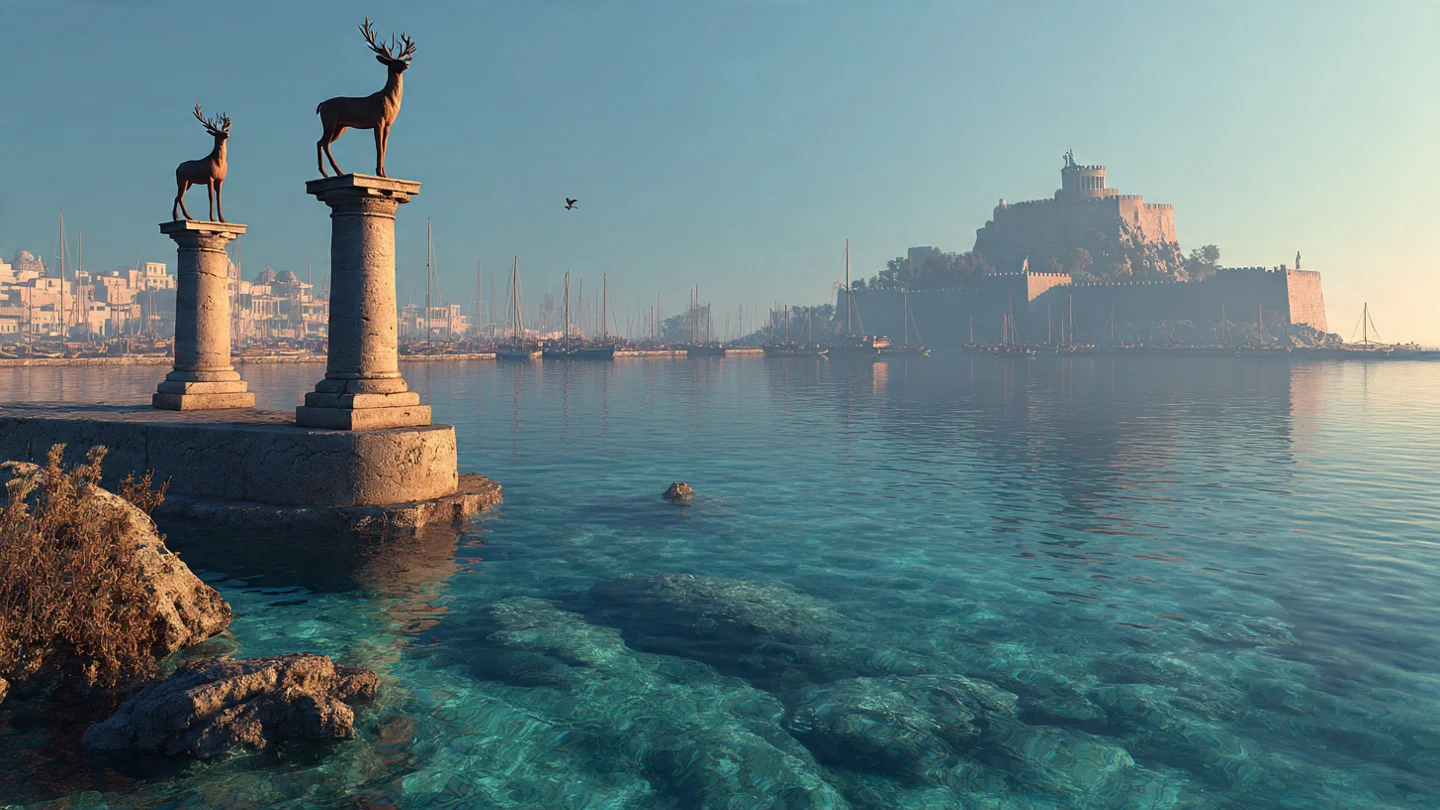
The approach to the island of Rhodes by sea offers a specific sensory transition, moving from the open, rolling sapphire of the Aegean into the protected stillness of the Mandraki harbor. At dawn, the air carries a mineral sharpness, a scent of salt mingling with the dry, resinous perfume of wild thyme plus sage drifting from the inland hills. Two limestone columns stand at the harbor entrance, topped by the bronze stag plus hind serving as the modern symbols of the island. These figures occupy a space once defined by a far more imposing presence. The water here possesses such startling clarity that the sandy floor, many fathoms below, appears reachable, inviting a gaze seeking the remains of the Colossus, one of the Seven Wonders of the Ancient World. This harbor remains a landscape shaped not by what remains visible, but by the profound weight of what has been lost to the sea plus the soil over the millennia.
Foundations of the Rhodian Giant
The creation of the Colossus was the ultimate expression of Arete plus communal resilience following the Great Siege of 305 BCE. After successfully repelling the forces of Demetrius Poliorcetes, the citizens of Rhodes gathered the abandoned siege engines—massive towers of wood plus iron—repurposing them as the raw materials for a monument to their patron deity, Helios. The sculptor Chares of Lindos was tasked with this monumental undertaking, a project requiring twelve years of relentless labor plus a revolutionary understanding of structural Techné. Standing over thirty meters in height, the statue was a marvel of the Bronze Age, constructed from a sophisticated iron framework clad in hammered bronze plates. The sheer scale of the figure aimed to bridge the human with the divine, a solar sentinel greeting every vessel entering the most prosperous maritime hub of the eastern Mediterranean.
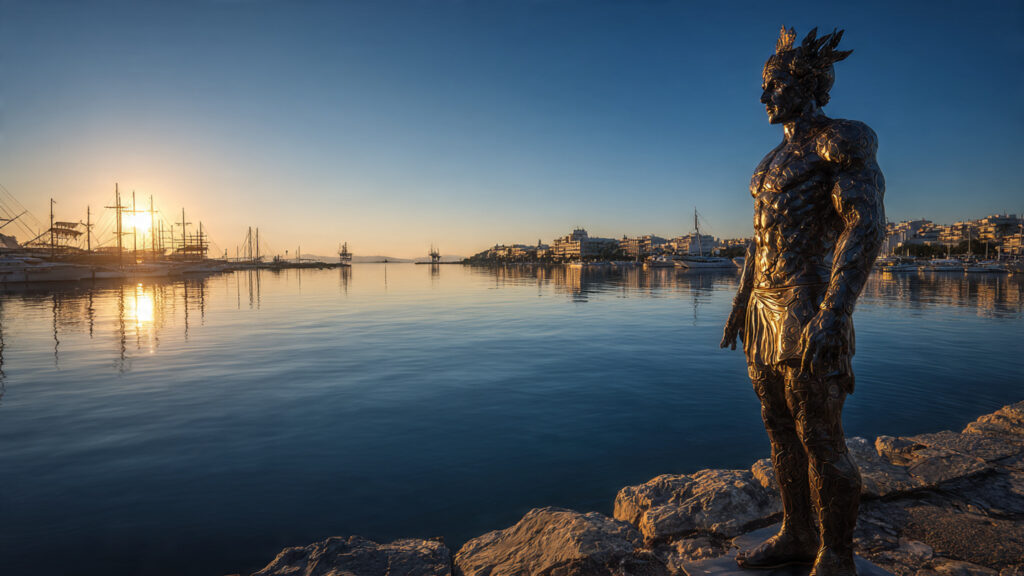
Geologically, the harbor of Rhodes provided the necessary bedrock of solid limestone to support such a localized concentration of weight. Chares built more than a statue; he engineered a vertical fortress of metal plus stone. The bronze skin, polished to a mirror finish, was designed to catch the first rays of the sun, making the god appear as if emerging from the light itself. This was the pinnacle of Classical Athens’ influence on artistic scale, yet it remained uniquely Rhodian in its focus on the sun as a source of both physical protection plus civic identity. The construction process involved the building of massive earthen ramps growing alongside the statue, allowing the workers to pour the bronze while securing the iron rivets at heights previously unimagined by the architects of the era.
The Architecture of the Descent
The reign of the Colossus was famously brief, lasting only fifty-four years before a cataclysmic earthquake in 226 BCE struck the island. The force of the tremors was so great that it broke the giant at its knees, causing the massive torso to collapse upon the land plus the sea, as recorded by the geographer Strabo. This event provided a profound lesson in Stoic discipline—a reminder that even the most enduring expressions of human ambition are subject to the volatile rhythms of the earth. Unlike many other wonders dismantled by war, the Colossus lay in its shattered state for nearly eight hundred years, becoming a site of pilgrimage for travelers like Pliny the Elder. He noted that even in its fragmented form, few men could wrap their arms around its thumb, while the hollow cavities of its broken limbs resembled vast caverns.
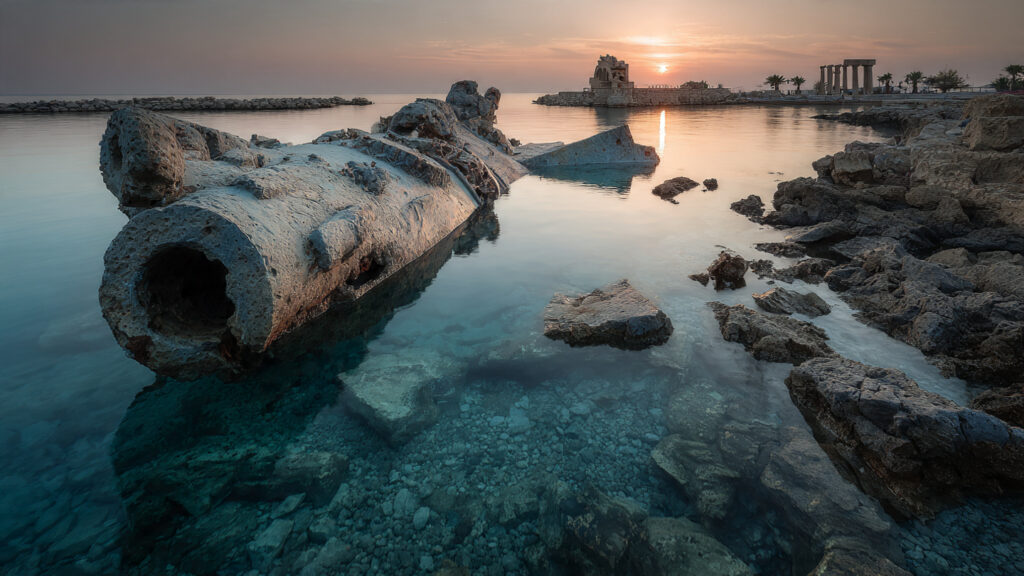
The mystery persisting into the modern era concerns the exact location of the descent. While later medieval legends plus popular illustrations imagined the statue straddling the harbor entrance, such a feat would have been an engineering impossibility blocking the harbor during its decade-long construction. Historical evidence suggests the Colossus stood on a massive pedestal near the current site of the St. Nicholas Fortress—a location offering the structural stability of the natural reef. When the bronze was eventually sold for scrap in the 7th century, it was said to have required nine hundred camels to transport the fragments away. The sheer volume of the statue plus the speed of the Arab conquest suggest that significant portions of the iron framework plus the heavy stone ballast within the legs may have been swallowed by the shifting silts of the harbor floor, remaining hidden beneath centuries of maritime traffic.
Marine Archaeology and the Lithic Ghost

The search for the “Ghost of the Colossus” today remains an exercise in archaeological patience plus the precise use of sub-bottom profiling. The harbor of Rhodes is a complex archaeological site, layered with the wrecks of Mycenaean galleys, Roman merchant ships, plus Ottoman vessels. Marine researchers must navigate the natural sedimentation of the Aegean, where the seabed is a moving tapestry of sand plus Posidonia seagrass obscuring massive artifacts within a few decades. The search is not merely for bronze—rare due to its historical value as scrap—but for the “negative space” in the harbor’s history—the heavy stone blocks of the pedestal or the iron rivets surviving the centuries of corrosion.
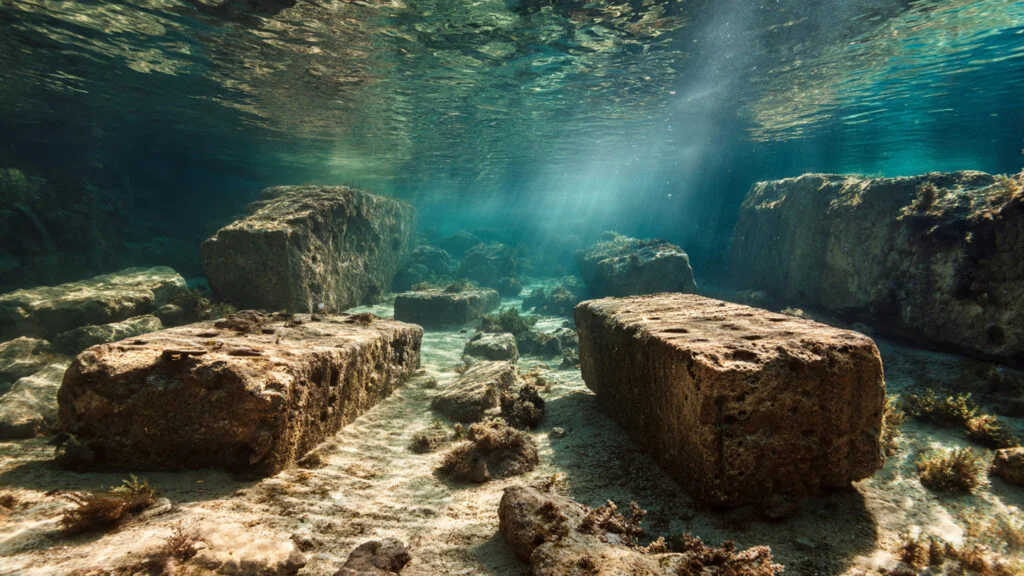
For those who explore the waters around the Mandraki, the continuity of the environment remains striking. The seasonal light hits the seabed at the exact angle it did when the giant’s shadow fell across the waves. The silence of the deep water preserves the memory of the Titans plus the gods who once dominated the Hellenic imagination. Even without the physical presence of the bronze, the harbor maintains its status as a sacred space, a repository of heritage and continuity transcending the need for tangible proof. The search itself becomes a ritual, a way of acknowledging that the most significant aspects of a culture often lie just beneath the surface of our immediate perception.
Modern Reflections on the Sun’s City
To walk the medieval fortifications now ringing the harbor of Rhodes is to encounter a city that has never truly let go of its solar identity. The modern inhabitant lives in a landscape where the past is not a museum piece but a foundational layer of daily existence. The seasonal rhythms of the island—the harvest of the grapes, the pressing of the olives, plus the preparation for the winter winds—still follow the patterns established during the time of Chares. There is a calm, grounded clarity in recognizing that we occupy the same geography as the giants of the past. The harbor remains a sanctuary of light, where the absence of the Colossus serves as a powerful reminder of the human capacity to build toward the heavens, even in the face of inevitable collapse.


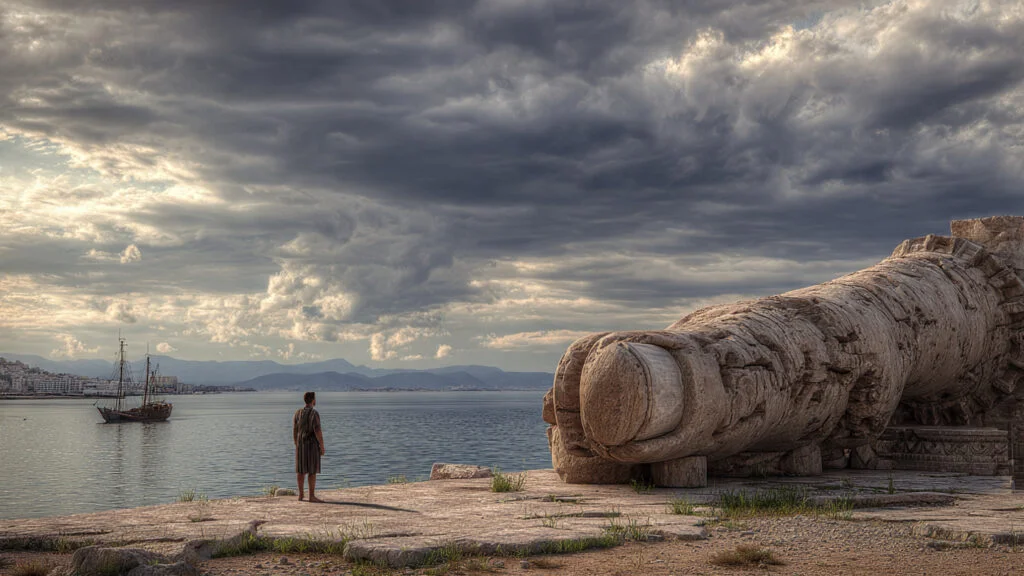
Observing the movement of the fishing boats today, one sees the same colors while hearing the same sounds familiar to the ancients. The persistence of the Hellenic spirit is found in these small, unhurried moments—the repair of a net, the taste of salt on the wind, plus the patient wait for the sunrise over the Aegean Sea. The true mandate of the Mandraki is to look beyond the immediate while finding stability in the enduring nature of the land plus the sea.
Across Greece, the traces of older rhythms remain visible to anyone who pays attention to the geological plus mythic layers of the environment. Whether in a mountain path in the Pindus Mountains, a seasonal custom in Crete, or the profound silence of a harbor once hosting a giant, the past continues to shape the present in subtle plus enduring ways. The sun rises over Rhodes today with the same intensity it did when it first illuminated the bronze face of the god, ensuring that the legacy of the Colossus remains anchored in the light.