



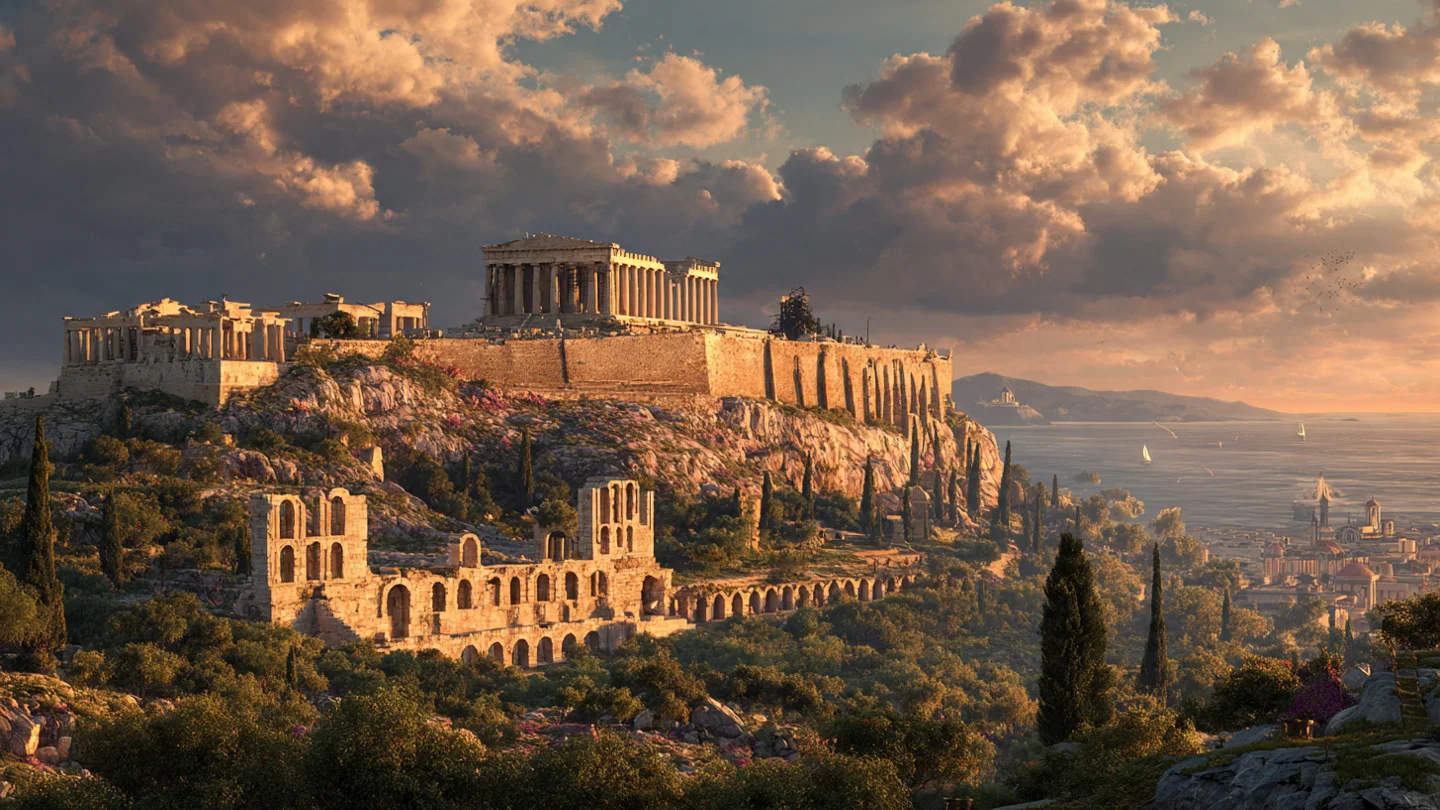
Few places on earth allow you to walk through landscapes where mythology, nature, and living tradition blend as seamlessly as they do in Greece. Here, every mountain has a deity, every forest whispers an ancient tale, and every creature, whether winged, scaled, or sacred, seems to carry the fingerprints of the gods.
In this guide, we uncover the Greek animals and plants whose presence in the country today still echoes the legends written thousands of years ago. These living beings are not just fauna and flora, they are the biological descendants of the ancient stories that shaped an entire civilization.
The Dolphin: Poseidon’s Trusted Messenger

In ancient Greece, the dolphin was not simply a sea creature; it was considered a divine guide. Myths describe dolphins carrying heroes, rescuing sailors, and even escorting souls to the Blessed Isles. Apollo himself shape-shifted into a dolphin to guide his first priests to Delphi, forever linking the marine mammal to prophecy and music. To harm a dolphin was considered a crime against the gods themselves, punishable by misfortune or death.
Where to See Dolphins Today
If you want to encounter the “messengers of Poseidon,” head to the Ionian Sea near Zakynthos and Kefalonia, where populations thrive in deep blue waters. The Saronic Gulf, especially around the island of Aegina, offers frequent sightings for sailors. The protected waters of the Amvrakikos Gulf in western Greece are home to one of the densest populations of bottlenose dolphins in the Mediterranean. Modern dolphins glide through these same waters where myths were born, playing in the wake of ferries just as they once did for triremes.
The Owl: Athena’s All-Seeing Symbol of Wisdom
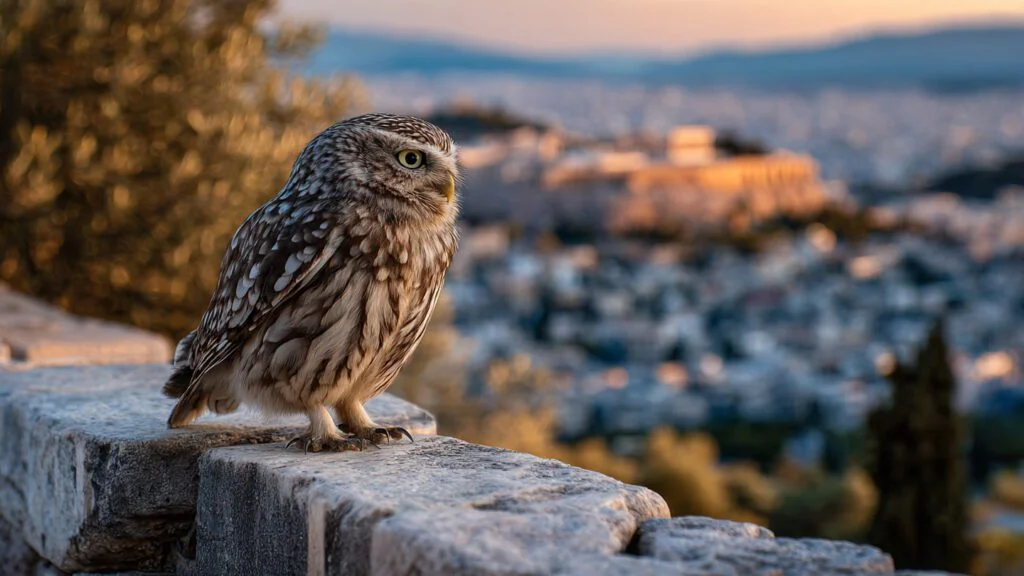
The little owl (Athene noctua), often perched on ancient coins and temple friezes, symbolized Athena, the goddess of strategic wisdom. Its steady, unblinking gaze was believed to reveal truth, clarity, and inner sight. The ancients believed the owl possessed an internal light that allowed it to see through the darkness of ignorance. If an owl flew over a Greek army before battle, it was taken as a sign of certain victory.
Where Owls Still Reign
Athena’s silent guardians can be spotted around the Acropolis, especially at dusk, watching over the Parthenon as they have for millennia. In rural stone walls of Peloponnese villages, they nest in the crevices, their calls echoing through the olive groves throughout Attica. Locals still consider the owl a bearer of good luck and a protector against evil spirits, an old belief that refuses to fade even in the modern era.


The Bee: Nature’s Priestess and the Legacy of the Minoans

Bees were sacred to Artemis and linked to the legendary Melissa, the nymph who nourished baby Zeus with honey when he was hidden from his father Cronus. In Minoan Crete, priestesses were called “Bees of the Goddess,” and honey was seen as a divine food, a substance that could grant longevity and eloquence. The complex society of the bee was seen as a model for the ideal human civilization.
Where to Follow the Bee’s Sacred Trail
Experience ancient apiculture in Crete, especially near Heraklion and Rethymno, where traditions have remained unchanged for centuries. Rhodes, known since antiquity for its aromatic thyme honey, continues to produce some of the world’s finest. On the slopes of Mount Hymettus in Athens, beekeepers have been producing honey since classical times, famed for its distinct flavor derived from wild herbs. Taste modern Greek honey and you are tasting the same sweetness Zeus once did.
The Goat: Amaltheia and the Birth of Kings

Before Zeus ruled Olympus, he was an infant hidden in a Cretan cave and fed by Amaltheia, the divine goat. Her horn—the cornucopia or “Horn of Plenty”—symbolized infinite nourishment and abundance. The goat is perhaps the most ubiquitous animal in the Greek landscape, a symbol of resilience, independence, and the rugged nature of the terrain itself.
Where to Encounter Mythical Goats Today
You can meet their modern descendants in the form of the Kri-Kri wild goats of Crete’s Samaria Gorge, a protected species that roams the steep cliffs. Mountain goats are frequently seen scaling the vertical rocks around Meteora and Zagori, defying gravity with ease. On rural farms in the Cyclades, goats roam freely across windswept hills, their bells creating a timeless pastoral soundtrack that defines the Greek countryside.
The Lion: The Legacy of Heracles and Ancient Wild Beasts

Though lions no longer roam Greece, they once did—and inspired the Nemean Lion, one of the most famous creatures in Greek mythology. The beast’s golden fur was said to be impenetrable, challenging Heracles to use strength instead of weapons during his First Labor. The memory of the European Lion, which went extinct in the region around 100 AD, is etched into the cultural memory of the land.
Where the Spirit of the Lion Lives On
You can still trace its presence at the Lion Gate of Mycenae, the oldest monumental sculpture in Europe, where two lionesses stand guard over the ancient citadel. In Macedon, the massive Lion of Amphipolis monument speaks to the animal’s significance in royal iconography. Countless Greek place names containing “leon,” meaning “lion,” serve as geographical echoes of the predators that once stalked these hills. These stone guardians symbolize ancient might and heroic courage.
The Serpent: From Oracle Guardians to Healing Symbols

Serpents appear throughout Greek mythology—as protectors, monsters, or symbols of rebirth. Because they shed their skin, they represented regeneration and immortality. The serpent of Asclepius, the god of medicine, wound around a staff remains the universal symbol of healing today. They were often kept in temples and allowed to slither freely among the sleeping patients hoping for a cure.
Where Serpents Still Shape Sacred Spaces
Their presence lingers in the ruins of Epidaurus, the healing sanctuary of Asclepius, where non-venomous snakes were once part of the therapy. On the island of Kefalonia, harmless “festival snakes” appear every August near a church dedicated to the Virgin Mary, a phenomenon locals treat with reverence. The forested paths of Pelion are rich in folklore of serpentine guardians protecting hidden treasures. In myth, serpents walk the boundary between the earthly and the divine.
Plants with Mythological DNA Still Growing in Greece
Animals were not the only carriers of mythic symbolism. Many plants thriving in Greece today descend directly from ancient ritual and sacred usage, their roots drinking from the same soil that nourished the ancients.
The Olive Tree: Athena’s Everlasting Gift

When Poseidon offered the Athenians a saltwater spring, Athena offered an olive tree. Her gift symbolized peace, endurance, and nourishment—and won her the patronage of the city. The olive tree is the soul of the Greek landscape, capable of surviving drought, fire, and the passage of centuries, often regenerating from its own burnt stump.
You can still see the “Sacred Olive Tree” at Plato’s Academy in Athens, a living connection to the birth of philosophy. Millennia-old olive groves in Kalamata, Crete, and Lesvos stand as gnarled, living monuments to agricultural history. Every olive branch carries a spark of Athena’s wisdom.
The Laurel: Apollo’s Eternal Symbol

The laurel became sacred when Apollo’s love, Daphne, transformed into the tree to escape his advances. Heartbroken but reverent, Apollo declared the tree sacred. Crowned victors in ancient games and poets wore laurel wreaths as a symbol of divine recognition and artistic excellence.
Visit the Temple of Apollo at Delphi to see these trees framing the sacred way. In the mountainous regions of Arcadia and Phocis, wild laurel still grows in abundance, scenting the air with its sharp, clean fragrance. Even today, laurel crowns remain a global symbol of talent, triumph, and academic achievement.
The Pomegranate: Persephone’s Fruit of Seasons

A few seeds of a pomegranate bound Persephone to the underworld and created the rhythm of the seasons. Its crimson seeds represent life, death, rebirth, and feminine power. It is a fruit of duality, signifying both the darkness of Hades and the fertility of the earth.
Find pomegranates in every Greek household during New Year traditions, where the fruit is smashed on the threshold for good luck. Farmers’ markets across the Peloponnese and Thessaly pile them high in autumn. In rural gardens, the fruit grows as naturally as myth itself, hanging heavy and red like ornaments.
Why Mythological Nature Still Matters Today
Greece’s landscapes are more than scenery, they are living mythscapes. Dolphins still leap where gods once intervened. Owls still guard ancient temples. Bees still create the “nectar of the gods.” Goats still echo the story of Zeus. Plants still bloom with sacred symbolism.
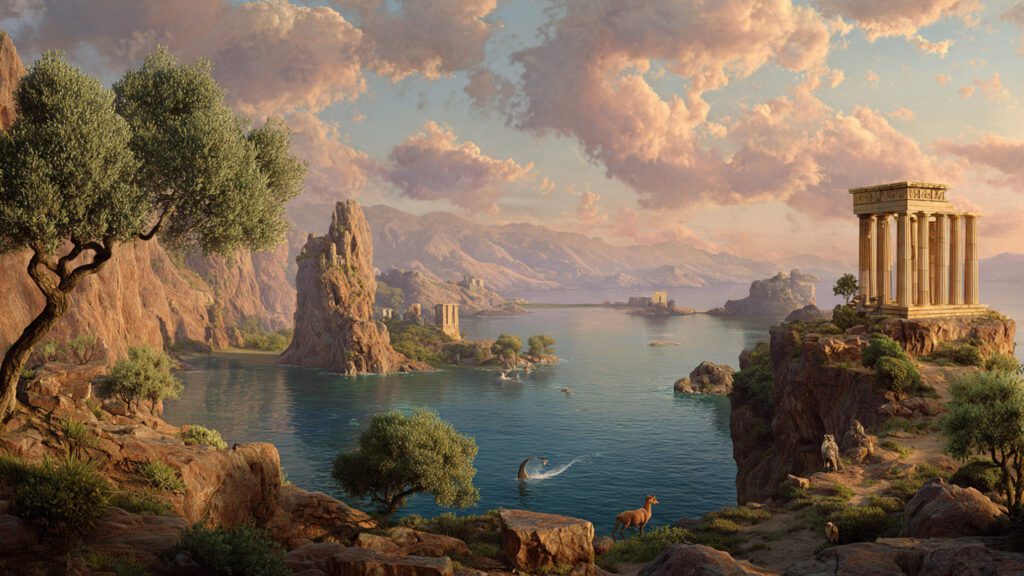
Travelers who seek authentic Greece are not just exploring beaches, ruins, or villages. They are stepping into the continuation of mythology, written into the wings, fur, and roots of the natural world. To walk in Greece is to walk through a land where biology and mythology share the same heartbeat.