



Historical evidence confirms the worship of Artemis Apanchomene in the village of Condylea, situated on the northern perimeter of the Caphyan plain in Arcadia. The second-century geographer Pausanias identified the sanctuary as a response to a specific civic trauma involving the death of local children. The epithet Apanchomene translates directly to the strangled one and represents a chthonic aspect of the goddess who traditionally protected wildlife and the process of childbirth. Archaeological surveys of the Peloponnese indicate that the local geography, specifically the karst drainage systems known as katavothres, influenced the religious conceptualization of stagnation and release.
The Oracle at Delphi provided the authoritative decree to establish the cult, which functioned as a biological and social corrective for the community. The cessation of reproductive failures followed the formal adoption of the name and the institution of funerary rites for the deceased children. This cult persists as a primary example of how ancient Greek societies managed trauma through ritual nomenclature and environmental law.
The air at this elevation is thin and smells of wet limestone and the heavy, balsamic resin of the black pine trees. In the winter, the mist pools in the low basins of the Caphyan plain and obscures the jagged edges of the grey rock. The sound of the wind is constant but there is no bird song in the thickest part of the grove.

The ground is cold. The soil is a mix of mineral ash and decomposed needles. A single hand-woven cord lies on the stone altar, damp from the humidity. The texture of the stone is abrasive against the skin.
The Geographical Isolation of Condylea
The village of Condylea was positioned on a rugged limestone ridge overlooking the Caphyan basin, where the seasonal waters of the Arcadian Mountains would gather and form a vast, stagnant lake during the heavy rains. The residents lived in an environment defined by the physical boundaries of the rock and the unpredictable nature of the water table. This isolation preserved a version of Greek Heritage that was darker and more elemental than the urban cults of Athens or Corinth. The people depended on the clarity of the underground channels to drain the plain and allow for the cultivation of grain. If the water remained, the community faced starvation. The physical world was a series of passages that had to remain open.
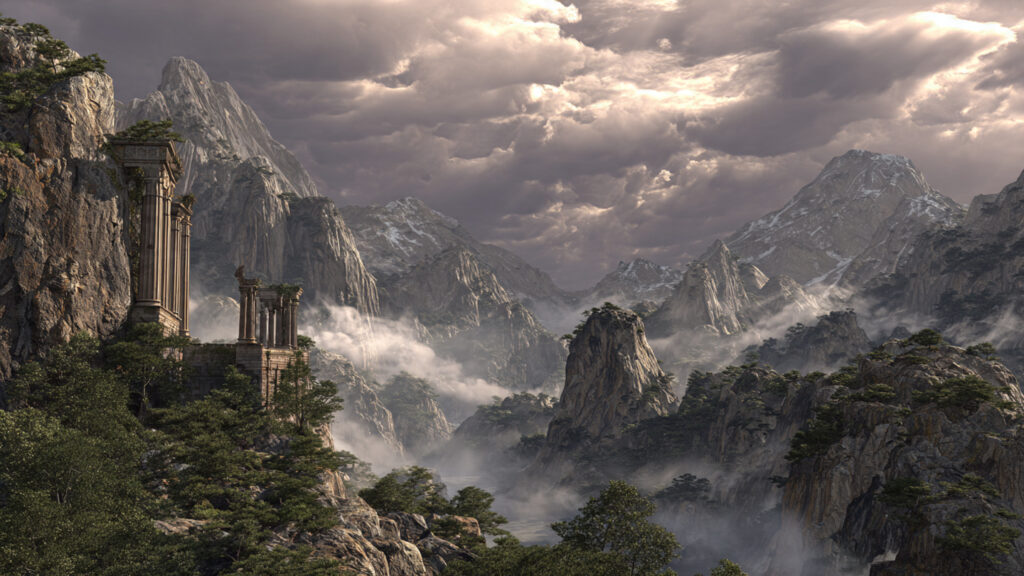
Pausanias noted that the sanctuary of Artemis stood within a grove of ancient trees that had seen the rise and fall of several civilizations. The trees were massive and their roots gripped the fractured limestone with a strength that seemed to defy the wind. This was the setting for the cult of the Strangled Goddess. The geography of the region dictated a life of intense physical labor and constant observation of the natural cycles. The people knew the sound of every spring and the movement of every shadow across the valley floor. They were part of a landscape that did not offer comfort but demanded a precise level of attention to the sacred laws of the land.
The city of Caphyae itself was a hub for the trade of timber and mountain herbs, which connected the mountain dwellers to the wider Mediterranean world. The proximity of the Peloponnese trade routes meant that the local myths were occasionally exported, yet the specific cult of Artemis Apanchomene remained tied to the soil of Condylea. It was a site-specific religious response to a unique set of circumstances. The grey stone of the temple was quarried from the same ridge it sat upon. The architecture was an extension of the mountain.
Act of Imitation and the Sacred Statue
The mythic history of the site began with a group of children who entered the sacred grove during the heat of the afternoon. They found the ancient wooden or stone statue of Artemis and, in a moment of thoughtless imitation, tied a cord around its neck. They began to pull the rope and shouted that the goddess was being strangled, which was an act that mirrored the way they might have seen adults handle livestock or prisoners. This was a direct physical interaction with the divine image that broke the established protocols of the Sanctuary. The children did not recognize the statue as a vessel of power but as a toy for their own amusement.


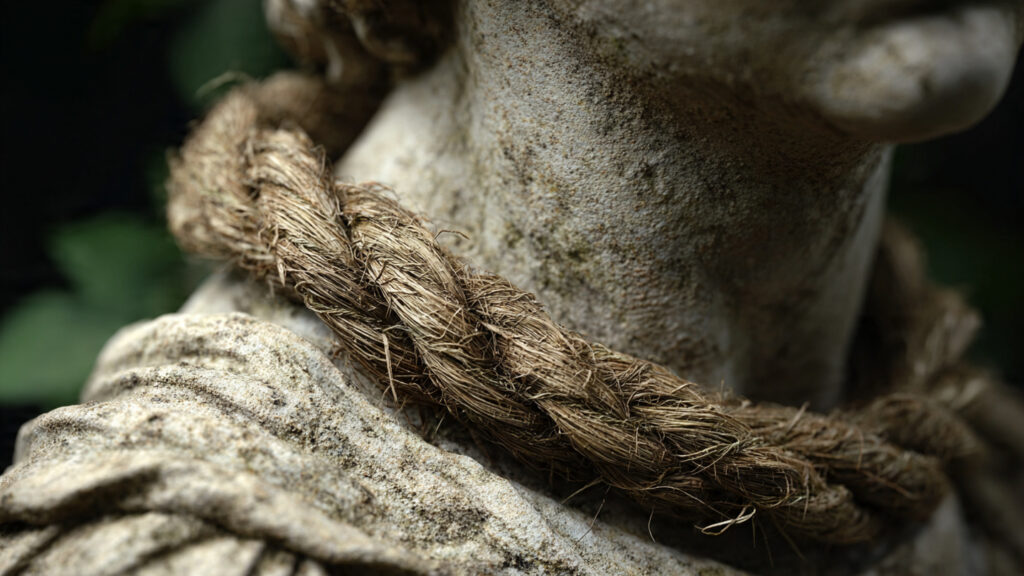
When the citizens discovered the children and the rope, the reaction was immediate and violent. The adults did not view the incident as a harmless prank but as a desecration that threatened the safety of the entire village. They feared that the goddess would withdraw her protection or strike the community with a plague. In their collective hysteria, they pursued the children and stoned them to death on the rocky slopes outside the grove. This act of violence was intended to cleanse the insult by removing the perpetrators. The limestone of the ridge became the weapon used to enforce the religious boundary.
The death of the children introduced a new level of trauma into the history of Condylea. The citizens had successfully removed the perceived threat, but they had also committed a crime that would soon manifest in the physical health of the population. The grove was no longer a place of quiet devotion but a reminder of the stoning. The silence of the mountain became heavy with the weight of the missing generation. The people had chosen the preservation of the image over the preservation of the living, and the consequences of this choice were immediate and biological.
Biological Crisis and the Strangling of the Future
Following the death of the children, the women of the region began to experience a series of reproductive failures that threatened the Continuity of the population. The babies were born dead, often with the umbilical cord wrapped around their necks in a way that mimicked the cord on the statue. This was the aponia, a condition of physical and spiritual stagnation that prevented the birth of a new generation. The community was literally being strangled from within. The future of the village was suspended in the same state of tension as the children’s rope.

The ancient Greeks understood that the health of the community was inextricably linked to the moral order of the land. The strangling of the infants was not a medical mystery to them but a clear message from the divine. Artemis, who was the patroness of childbirth and the protector of the young, had turned her face away from Condylea. The physical reality of the dead infants was the evidence of a broken contract. The citizens had sought to protect the goddess by killing her children, and in response, she had stopped the flow of life.
This period of stagnation lasted for several years, during which the village fell into a state of deep despair. The fields were still productive and the springs still flowed, but the human life of the town was disappearing. The elders realized that no amount of animal sacrifice or traditional prayer would resolve the crisis. They needed an external authority to interpret the will of the goddess and provide a path toward resolution. The delegation was sent to the most powerful religious center in the world to find an answer for their dying village.
The Command of the Delphic Oracle
The delegation from Condylea traveled to the Delphic Oracle to seek a remedy for the curse. The journey took them across the rugged interior of the Peloponnese and over the water to the slopes of Mount Parnassus. The Pythian priestess did not offer a ritual of purification or a demand for further punishment. Instead, she issued a decree that challenged the citizens’ understanding of their own actions. She commanded them to honor the murdered children with a formal hero cult and to officially adopt the title of Artemis Apanchomene for their goddess.

This was a radical shift in the religious landscape of the village. By naming the goddess the Strangled, the community was forced to live with the memory of their crime. The title was a permanent admission of guilt and a recognition of the goddess’s power over life and death. The children were elevated to a state of sacred status, and their graves became points of ritual focus. This was the only way to loosen the knot that had been tied by the stoning. The Oracle understood that the only way to move forward was to integrate the shadow into the history of the town.
The citizens returned to Arcadia and followed the instructions of the Oracle with exact precision. They built tombs for the children and instituted yearly rites that involved the symbolic use of the cord. The adoption of the new name for the goddess marked the beginning of a new era for the village. The tension began to dissipate, and for the first time in years, a child was born healthy and breathing. The name Artemis Apanchomene became the anchor of a new, more sophisticated form of Greek Mythology that accepted the dark reality of human error.
The Architecture of Ritual Release
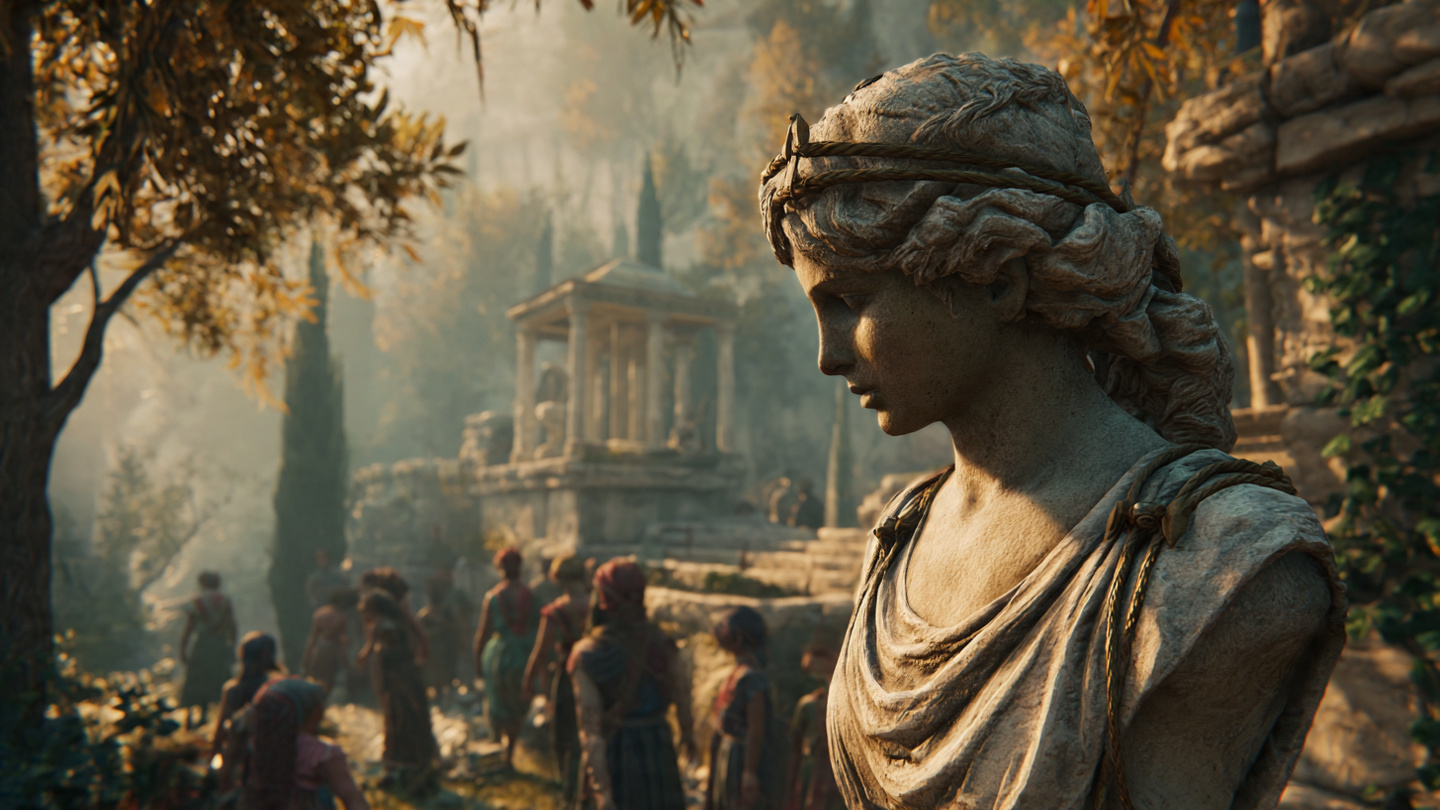
The yearly festival of the release became the central event in the religious calendar of Condylea. During this ceremony, the priestesses of Artemis would lead a procession into the grove where the original incident had occurred. They would carry a cord woven from local flax and, in a brief but solemn act, place it around the neck of the statue. This was followed by the formal removal of the cord, which symbolized the untying of the curse and the restoration of the flow of life. This was the Ritual Release that allowed the community to breathe.

The movement of the cord was a physical performance of the village’s history. It reminded the participants that their existence was dependent on the mercy of the goddess and their own willingness to remember the past. The ritual was not meant to be comfortable. It was meant to be an honest accounting of the cost of religious zeal. The participants included the families of those who had carried out the stoning, and the act of untying the rope was a form of collective penance.
The archaeology of such mountain sanctuaries often reveals small, dedicated areas for these specific rituals. At Condylea, the layout of the grove would have included an altar for the children and a central space for the statue of Artemis. The materials were simple and durable. The ritual was a part of the Lifestyle of the people, as essential as the harvest or the hunt. It was a mechanism for maintaining social and biological stability. The goddess was no longer an abstract force but a direct participant in the health of the village.
Chthonic Shift in Arcadian Religion
The worship of Artemis Apanchomene represents a significant shift in the Chthonic understanding of the goddess in Arcadia. While Artemis is usually associated with the upper world of the hunt and the moon, in this mountain sanctuary, she took on the characteristics of the earth’s deeper forces. She was the one who could block the entrance to life and the one who could open it. The cord was her instrument of justice. This version of the goddess was closer to the realities of the mountain people, who saw death and birth as two sides of the same unyielding stone.

This dark aspect of the goddess was not viewed as evil by the ancient Greeks. It was viewed as necessary. The world required a balance between the light and the dark, the growth and the decay. Artemis Apanchomene was the guardian of this balance. She taught the people that every action had a physical consequence and that the divine would not be mocked by the thoughtless destruction of life. The sanctuary became a place of profound respect and fear. The hunters who entered the grove would do so with their heads bowed, aware of the power that resided in the silence of the trees.
The influence of this chthonic Artemis can be seen in other Arcadian myths where gods take on animal forms or engage in dark transformations. The landscape itself, with its hidden caves and subterranean rivers, suggested a world that was not entirely visible to the human eye. The Strangled Goddess was the interface between the seen and the unseen. She was the mistress of the threshold. Her cult provided a way for the people to navigate the dangers of their environment and their own human nature.
The Katavothres and the Hydraulic Myth
The geography of the Caphyan plain is defined by its drainage system. The water that pools in the basin has no surface outlet and must drain through the limestone sinkholes known as katavothres. If these passages become blocked by silt or debris, the plain floods and the community is destroyed. The myth of Artemis Apanchomene mirrors this hydraulic reality. The “strangling” of the children and the subsequent curse was a blockage in the spiritual drainage of the village. The ritual of the release was the clearing of the passage.
The ancient Greeks were master observers of their environment. They saw the connection between the physical movement of water and the spiritual health of the people. The goddess was the one who controlled the katavothres of the soul. By honoring her as Apanchomene, the people were ensuring that the passages remained open. The Peloponnese is filled with these geological features, and each one has a corresponding local myth that explains its function. At Condylea, the myth was as sharp and abrasive as the limestone itself.

Modern geological studies of the area confirm that the drainage of the Caphyan plain is still a fragile system. A heavy storm can still cause the water to rise and threaten the local agriculture. The ancient people lived with this threat every day. They understood that their survival depended on the grace of the earth. The myth of the Strangled Goddess provided a narrative framework for this environmental reality. It was a story about the necessity of maintaining the flow.
The Archaeological Survey of Caphyae
Archaeological investigations in the vicinity of Caphyae have uncovered the remains of a city that was once a significant center of Arcadian life. The city walls were constructed from large, irregular blocks of stone in the Cyclopean style, which indicates a very early origin. The theater and the public buildings show a high level of civic organization. The village of Condylea, although smaller, was a vital part of this urban network because it held the primary religious authority for the region.

The discovery of bronze votive offerings and small clay figurines near the site of the sanctuary suggests a long history of devotion. These objects were left by the common people as prayers for health and fertility. The material evidence confirms that the cult of Artemis Apanchomene was not a passing fad but a deep-seated part of the local History. The people returned to the grove generation after generation to perform the release. The stone of the altar shows signs of heavy use, with the surface worn smooth by the hands of the priestesses.

The tombs of the children, mentioned by Pausanias, have not been definitively identified, but the surrounding hills are filled with ancient burial sites. The presence of these graves would have turned the landscape into a map of the village’s conscience. Every time a citizen walked past the tombs, they were reminded of the cost of their heritage. The archaeology of the site is a record of a community that was willing to face its own history in order to survive.
Modern Sensation of Arcadian Air
Today, the site of Condylea is a place of absolute stillness. The village is gone, and the sanctuary has been reclaimed by the forest and the rock. The air still carries the cold of the mountain and the scent of the pine. The mist still pools in the basin of the plain, and the jagged peaks of the Arcadian Mountains still dominate the horizon. To stand in this place is to experience the same physical reality that shaped the myth of the Strangled Goddess. The silence is not empty but a presence that demands recognition.

The story of Artemis Apanchomene is a reminder that the past is never truly buried. It lives in the names we give to our gods and the rituals we perform to maintain our health. The ancient Greeks did not seek to escape their trauma but to transform it into a source of strength. They understood that a community that forgets its errors is a community that is destined to repeat them. The release of the cord was an act of courage. It was the refusal to be defined by a moment of violence.
The modern traveler who wanders into the mountains of Arcadia will find a landscape that is both beautiful and terrifying. The rock is hard, the water is cold, and the history is deep. The myth of the Strangled Goddess is the most honest expression of this reality. It is a story about the fragility of life and the necessity of mercy. It is a heritage that continues to resonate in the silence of the pine trees.
The Technicality of the Divine Release

The process of naming the goddess Apanchomene was a technical solution to a biological problem. It was not an emotional act but a strategic one mandated by the Oracle. By changing the name, the people changed their relationship to the divine. They moved from a state of fear to a state of integrated memory. This is the ultimate lesson of the cult at Condylea. Healing is a matter of nomenclature and recognition. The knot is loosened when the truth is told.
The cult survived until the end of antiquity, when the old gods were slowly replaced by new ones. Yet even then, the memory of the Strangled Goddess persisted in the local folklore of the region. The people of Arcadia never quite forgot the lesson of the cord. They remained a people who were deeply connected to the chthonic forces of the earth. They knew that the breath of the children was the breath of the future.
The sun sets behind the limestone ridges and the shadows finally consume the grove. The mist thickens and the sound of the wind becomes a low, rhythmic pulse. The goddess remains in the stone. She is the one who watches the passage. She is the one who ensures that the future is never strangled by the errors of the past. The release is a permanent state of being.
The mountain is cold. The rock is silent. The goddess is there.