



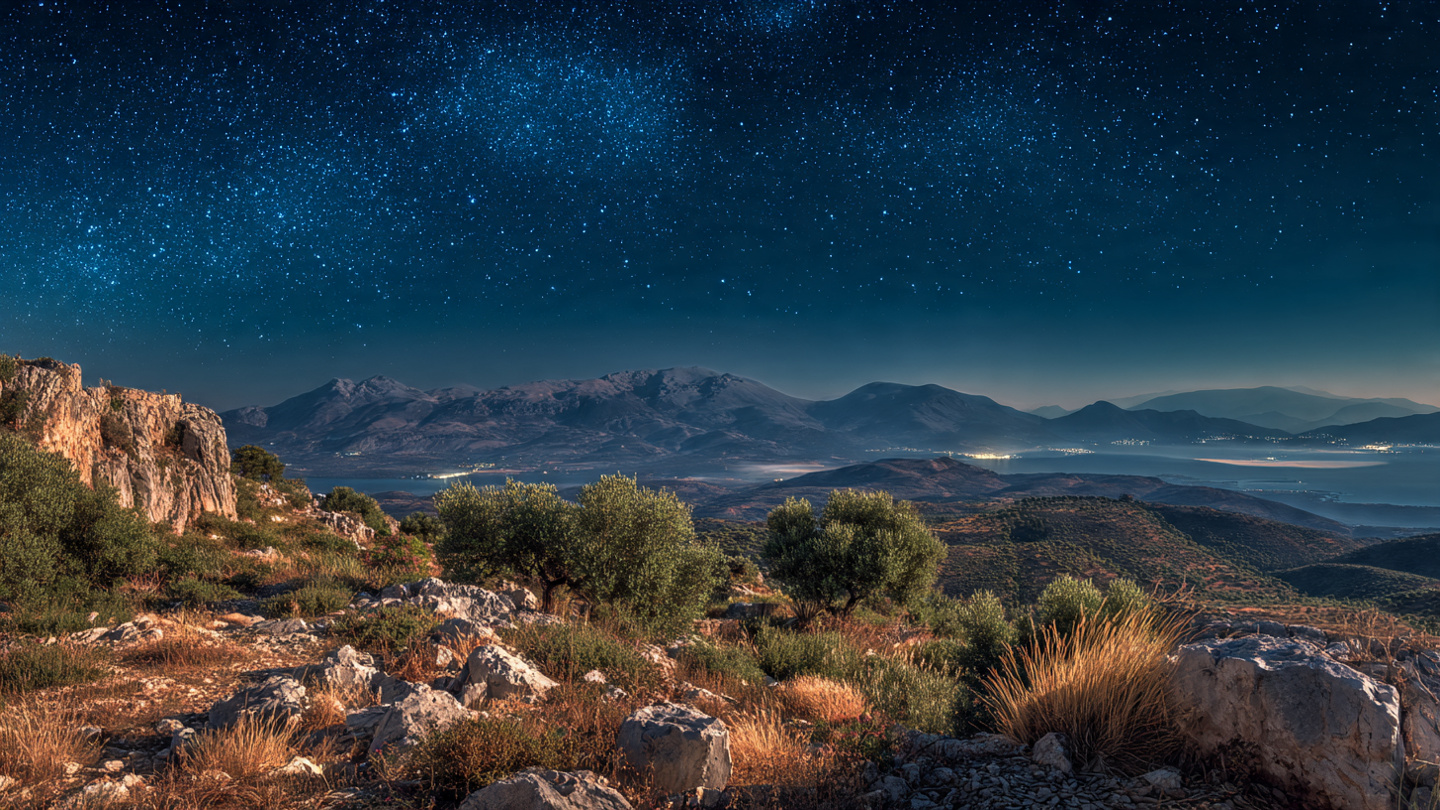
The air in the high altitudes of the Pindus range or the deep valleys of the Mani carries a specific, heavy silence once the sun retreats. It is a silence filled with the scent of dried sage and the cooling of limestone. As the indigo depth of the Mediterranean night takes hold, the sky begins to reveal a structural reality that has guided the Greek soul for three millennia. This is not the distant, cold space of modern science, but a living archive of Greek mythology where every flicker of light corresponds to a hero, a god, or a lesson in the nature of existence. To stand beneath the night sky in Ancient Greece was to stand in the presence of a celestial library, a place where the most important values of a civilization were projected onto the darkness so they could never be forgotten or erased by the passage of time.
This relationship between the land and the cosmos is one of the most enduring elements of Greek culture. The ancient mind did not see a separation between the physical world and the divine. The mountains were the thrones of the gods, the springs were the breath of the nymphs, and the stars were the eternal resting places of those who had shaped the destiny of the world. To look up from a terrace in a village on Naxos or from the slopes of Mount Olympus is to engage in a form of reading. You are not just looking at light, you are tracing the roots of mythology through a medium that remains exactly as it was when the first poets began to sing of the Trojan War.
The Celestial Archive of the Aegean and the Birth of Observation
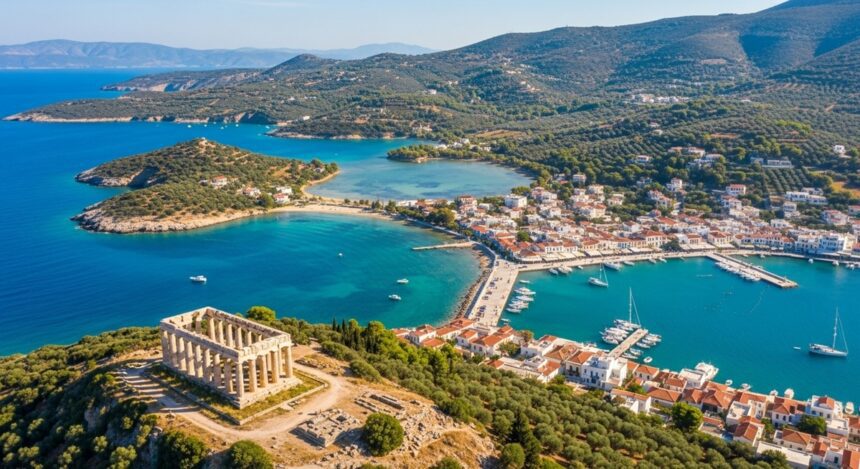
The geography of the Greek world provided the perfect theater for the birth of both astronomy and myth. The clarity of the Mediterranean atmosphere, combined with the dramatic silhouettes of the islands and the high mountain plateaus, created an environment where the movements of the stars were impossible to ignore. For the early inhabitants of the Aegean Sea, the sky was the only map that truly mattered. It was a reliable compass for the sailor navigating the treacherous currents between the Cyclades and a clock for the farmer waiting to plant his grain in the valleys of Thessaly. This practical necessity quickly merged with the spiritual life of the people, turning the night sky into a mirror of their collective history.
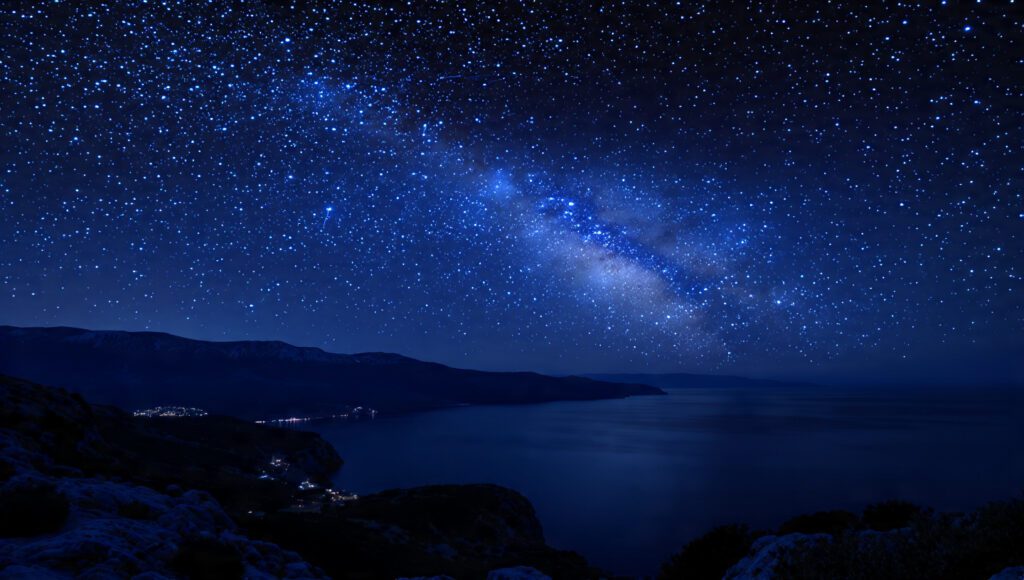
The constellations were not seen as random clusters of light. They were viewed as the final reward or the ultimate punishment of the gods. In the Greek worldview, to be placed among the stars was to achieve a form of immortality that transcended the decay of the body. It was an act of katasterismos, the transformation of a being into a stellar pattern. This process allowed the stories of Ancient Greece to remain visible to every generation, providing a sense of continuity that linked the past, the present, and the future in a single, glowing narrative.
The Science and Spirit of the Greek Cosmos
While we often separate the technical study of the stars from the stories of the gods, the ancient Greeks saw them as two sides of the same coin. The mathematical precision of the celestial movements was proof of a divine order. When a philosopher like Thales or Anaximander looked at the heavens, they were looking for the arche, the fundamental principle of the universe. Yet, they did not discard the mythic framework that gave those movements meaning. The sky was the place where the laws of nature and the laws of morality met.
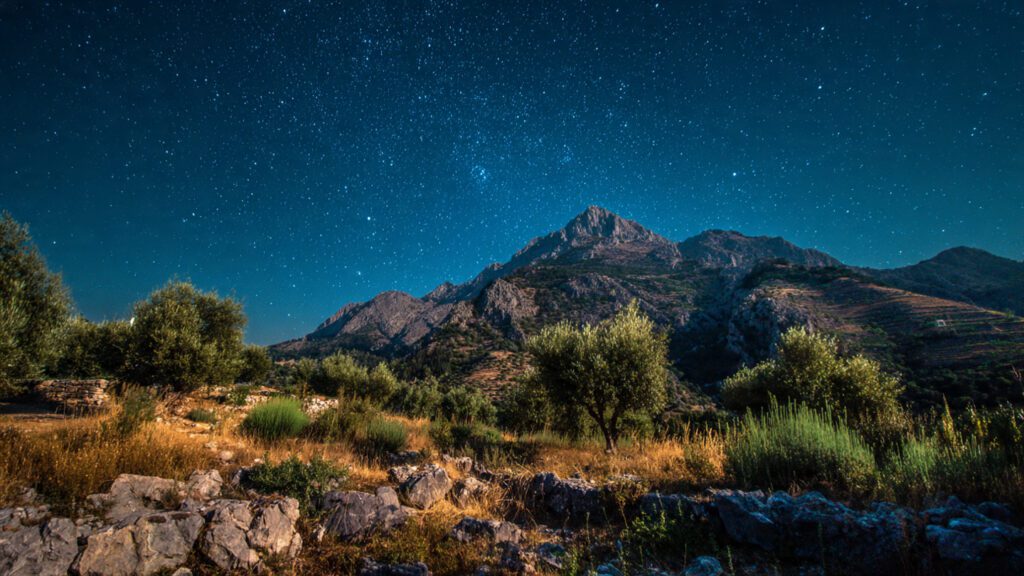
This duality is why stargazing in Greece remains such a profound experience today. You are participating in a tradition that values both the intellect and the imagination. The stars provide the data, but the mythology provides the wisdom. In the modern world, we have gained a great deal of knowledge about the distance and composition of the stars, but we have lost much of the intimacy that the ancients felt with them. To return to the Greek sky is to reclaim that intimacy and to remember that we are part of a larger, meaningful story.
Orion the Hunter and the Eternal Lesson of Hubris
One of the most dominant features of the Greek winter sky is the figure of Orion. He rises in the east with a presence that is impossible to ignore, his belt of three bright stars serving as a primary marker for anyone looking upward. In the mythic tradition of Ancient Greece, Orion was a hunter of legendary beauty and strength, a man who believed he could conquer the natural world through force alone. His story is one of the most powerful explorations of hubris, the overweening pride that leads to a fall.
Orion claimed that he would kill every beast upon the earth, a boast that deeply offended Gaia, the personification of the earth itself. To humble the hunter, she sent a small, deadly scorpion to strike him down. The gods eventually placed both the hunter and the scorpion in the sky, but they arranged them in a way that reflects their eternal conflict. When the constellation of the scorpion rises in the heat of a Greek summer, the hunter sets in the west, fleeing from the creature that caused his death. They are never visible at the same time, a celestial reminder that there is a limit to human power and that the earth will always have the final word.



The Hunter Above the Peloponnese
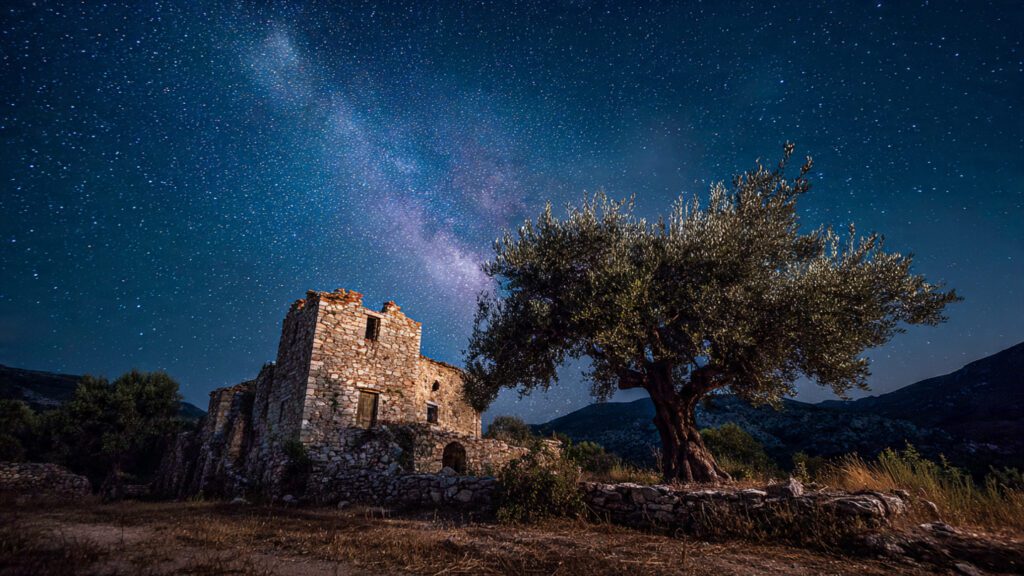
Seeing Orion rise over the dark ridges of the Peloponnese in January is a transformative experience. The stars seem to sharpen in the cold air, casting a soft glow on the stone houses and the silver leaves of the olive trees. For the people who live in these rural landscapes, the appearance of the hunter is a signal of the changing of the season and the need for internal reflection. The myth of Orion teaches us that our greatest strengths can also be our greatest weaknesses if they are not balanced with humility. This is a lesson that is as relevant today as it was three thousand years ago, and it is written in the very fabric of the night sky.
The red star Betelgeuse marks the hunter’s shoulder, while the brilliant Rigel marks his foot. Between them, the stars of the belt point the way to other mythic figures, creating a network of stories that covers the entire horizon. To follow the gaze of the hunter is to begin a journey through the heart of Greek mythology, a journey that moves through the forests, across the seas, and into the deepest parts of the human psyche.
The Royal Tragedy of the Northern Sky
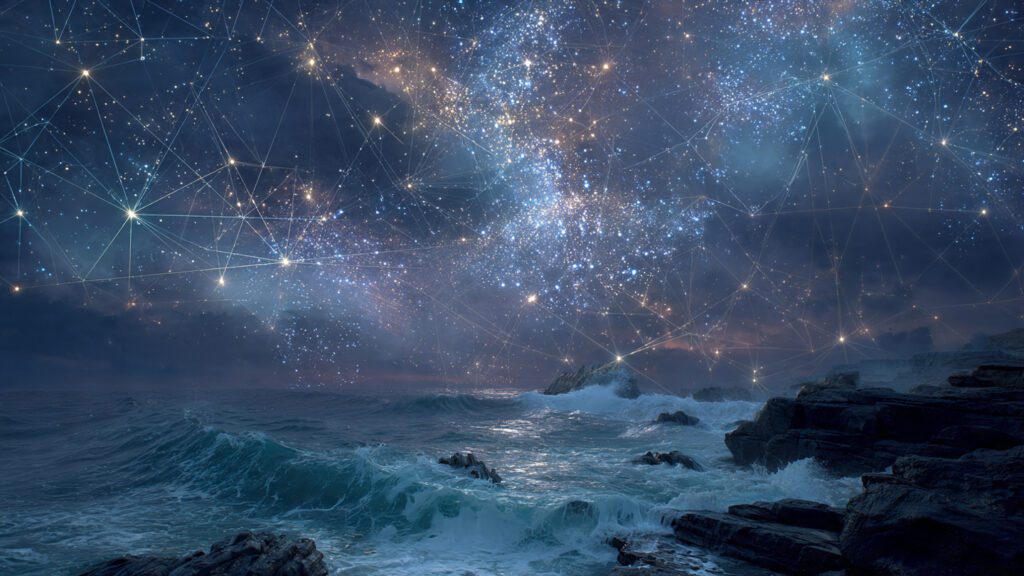
While the winter belongs to the hunter, the northern sky is occupied by a drama that involves an entire royal family. The stories of Perseus, Andromeda, Cassiopeia, and Cepheus unfold across the heavens in a series of interconnected constellations. This narrative is one of sacrifice, rescue, and the consequences of vanity. Cassiopeia, the queen, was famously proud of her beauty, claiming that she was more lovely than the Nereids, the sea nymphs who attended the god Poseidon. This offense against the divine order brought a sea monster to the shores of her kingdom, and the only way to save the people was to sacrifice her daughter, Andromeda.
The figure of Andromeda is visible as a long line of stars, often depicted as being chained to a rock in anticipation of her fate. But the story turns on the arrival of Perseus, the hero who had recently defeated the Gorgon Medusa. Using the tools given to him by the gods, Perseus rescued the princess and secured his place in the history of Ancient Greece. In the sky, these figures are clustered together, forever reenacting their story for anyone who cares to look.
The Hero and the Mirror of the Aegean
The placement of these stars is particularly meaningful when viewed from the coast of the Aegean Sea. The myth of the sea monster and the hero feels remarkably close when you can hear the waves crashing against the rocks below. The ancients used these stars to discuss the nature of justice and the role of the gods in human affairs. Perseus did not save Andromeda through brute strength alone, he used the mirror-shield of Athena and the winged sandals of Hermes. He represents the triumph of intelligence and divine favor over the chaotic forces of the deep.
For the modern traveler, finding the great square of Pegasus, which is connected to the story of Perseus, is a way of anchoring oneself in the geography of the myth. The horse, born from the blood of Medusa, carried the hero through the sky, and its constellation remains one of the most recognizable features of the autumn night. It is a symbol of the creative spirit and the ability of the soul to rise above the earthly plane, a theme that resonates deeply with the artistic and philosophical traditions of the Greek world.
The Pastoral Wisdom of the Stars and the Seasons
Beyond the grand tragedies of kings and heroes, the night sky provided a practical guide for the daily life of the Greek people. This was especially true for the shepherds in the mountains and the farmers in the plains. The stars were their calendar, a reliable way to track the passage of time in a world without digital clocks or paper schedules. The rising and setting of specific constellations dictated the rhythm of the year, from the time of shearing the sheep to the moment of the harvest.
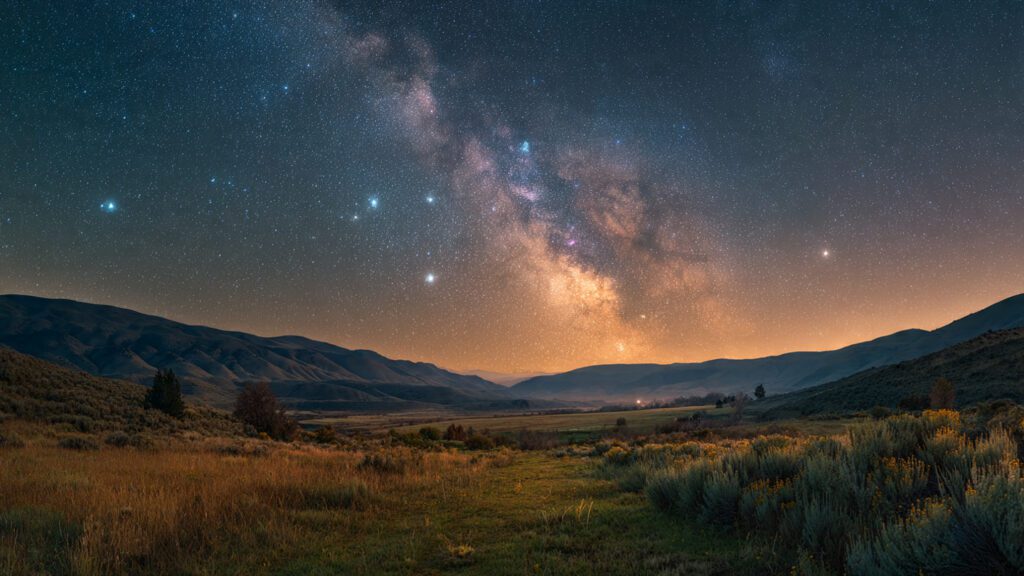
The Pleiades, a cluster of seven bright stars known as the daughters of Atlas, were perhaps the most important agricultural markers in Ancient Greece. Their appearance in the dawn sky in May signaled the start of the summer harvest, while their setting in the late autumn warned the farmers that it was time to plow the fields before the winter rains. This connection between the celestial movements and the needs of the earth created a deep sense of harmony. The people felt that they were working in concert with the universe, their labor blessed by the same forces that moved the sun and the moon.
The Milky Way as the Path of the Gods
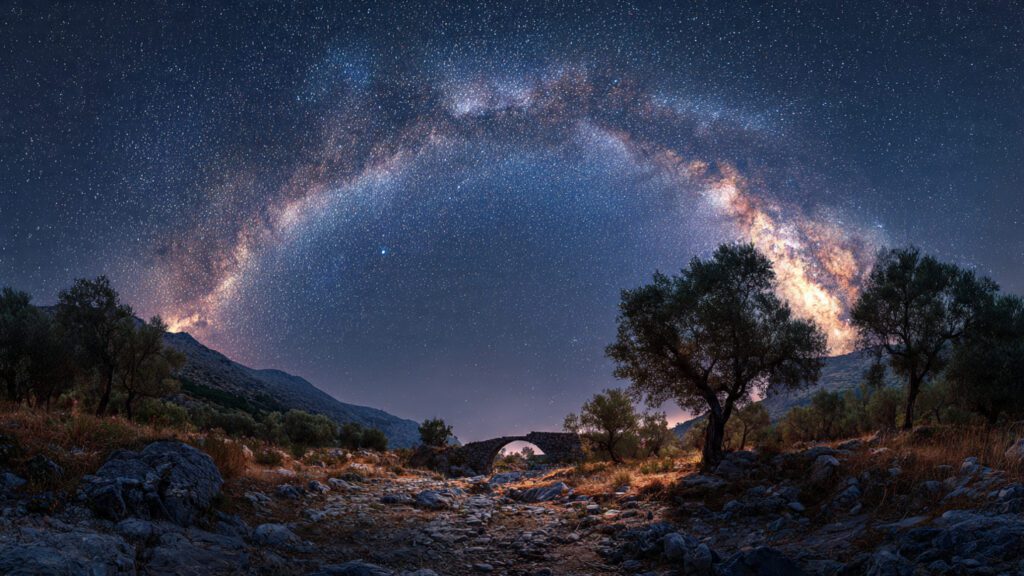
Across the center of the sky stretches the brilliant band of the Milky Way, known to the ancients as the Galaxias Kyklos. In their mythology, this was the milk of Hera, spilled across the heavens during the infancy of Heracles. But it was also seen as the path that the souls of the dead traveled to reach the underworld, or the road that the gods took to reach their palaces on Olympus. It provided a physical bridge between the mortal and the divine, a reminder that the world we see is only a small part of a much larger reality.
In the dark skies of the Mani or the high plateaus of Crete, the Milky Way is so bright that it casts a subtle shadow on the ground. To walk beneath it is to feel the weight of thousands of years of human wonder. It is a sight that has inspired poets from Homer to Elytis, and it continues to provide a sense of perspective for anyone who takes the time to sit in the darkness and wait for the stars to appear. This is the ultimate gift of the Greek night, the realization that we are part of an ancient and ongoing story.
Mount Olympus and the Sanctuary of the Stars
No exploration of the Greek sky would be complete without a reference to Mount Olympus. As the highest peak in Greece and the mythic home of the gods, it represents the physical point where the earth meets the heavens. The ancient Greeks looked to the summit of the mountain not just as a geographic landmark, but as a spiritual axis. The clouds that often shroud the peak were seen as the veil that separated the world of men from the world of the immortals.
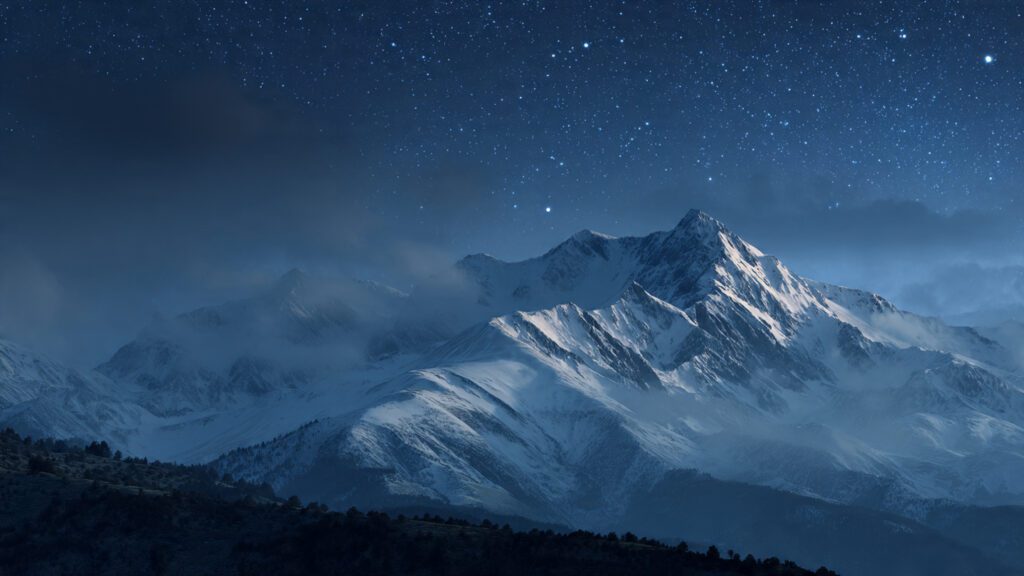
Today, Mount Olympus remains one of the premier locations for stargazing in Greece. The air at the higher elevations is incredibly clear, and the lack of light pollution allows for a view of the cosmos that is nearly identical to what the ancients experienced. Standing on the slopes of the mountain at night, looking up at the stars of Zeus and Hera, one can almost feel the presence of the old gods. The mountain serves as a reminder that the myths were not just stories told in books, they were responses to a landscape that demanded awe and reverence.
The Continuity of Tradition in the Modern Night
Modern Greece is a living culture that continues to respect its ancient roots while moving forward into the future. You can see this in the way that local festivals are still aligned with the solar and lunar cycles, or in the way that sailors still refer to the stars when they are out on the open sea. At Olympus Estate, we recognize that the heritage of the land includes the sky above it. The preservation of the night is as important as the preservation of the ruins or the forests.
When we invite guests to experience the night sky, we are inviting them to join a conversation that has been going on for millennia. It is a conversation about who we are, where we come from, and what our place is in the universe. By protecting the darkness and honoring the stories of the stars, we ensure that the wisdom of Ancient Greece remains a living part of our daily lives.
A Reflective Gaze into the Starlit Future
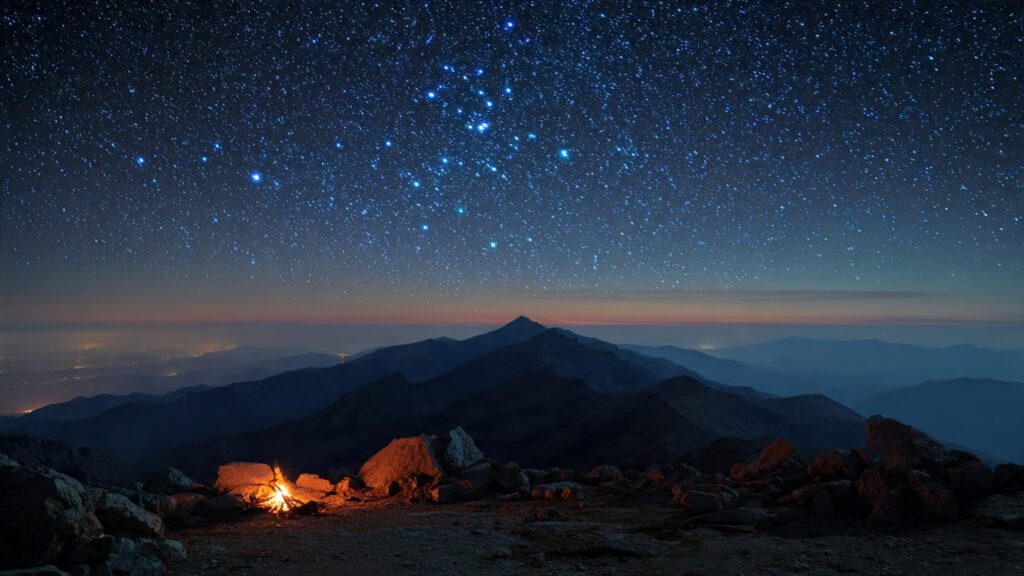
The stars do not change, but the way we look at them does. For the ancient Greeks, the sky was a place of certainty and divine order. For the modern observer, it can sometimes feel like a place of vast, empty distance. But when we look at the stars through the lens of mythology, we find a way to bridge that gap. We find a way to make the universe feel like home.
As the constellations continue their slow, eternal rotation over the mountains and the sea, they offer us a sense of perspective that is hard to find in our busy, digital lives. They remind us of the value of silence, the power of a well-told story, and the importance of looking upward. The night sky over Greece is a treasure that belongs to everyone, a celestial manuscript that is always open for those who are willing to read it. It is a reminder that the light of the past is still here, guiding us through the darkness of the present and into the mysteries of the future.