





The year 416 BC stands in the Athenian record as a moment when artistic triumph, civic pride, and philosophical inquiry converged in a single evening that would outlive its participants by millennia. Agathon’s victory at the Lenaia drew the city’s most brilliant minds into his home, where the gathering later known as the Symposium unfolded with a clarity of purpose that still feels astonishing. The wine—likely from Thasos or Chios—was mixed with cool spring water in a broad krater, creating a balance that sustained thought without surrendering to excess, a harmony that shaped the rhythm of the night.
The Night That Entered the City’s Memory
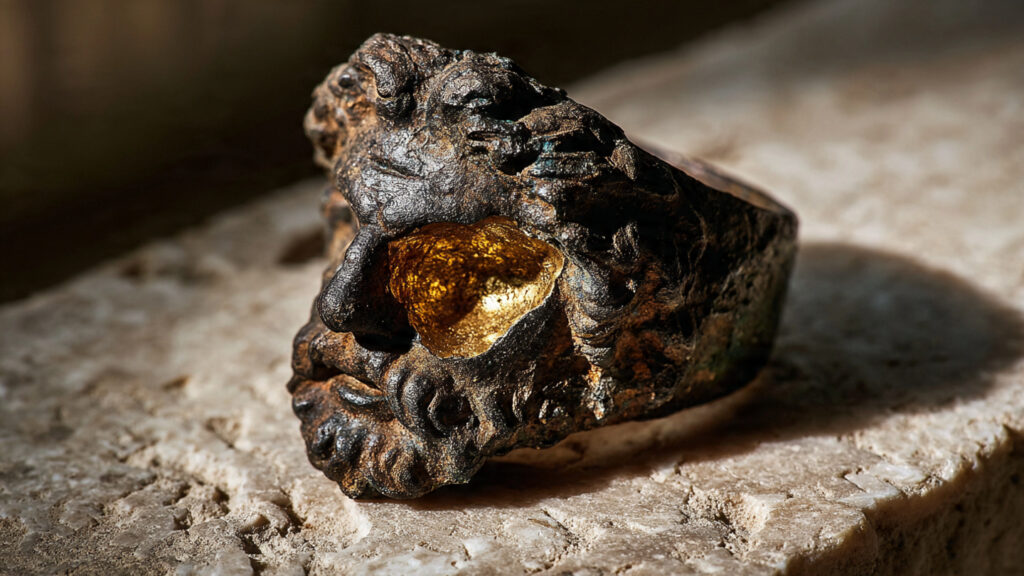
When Alcibiades entered, crowned with ivy and violets, the atmosphere shifted. His presence carried the restless ambition of the Athenian streets, the confidence of a man accustomed to admiration, and the volatility of someone who had never been denied anything except the one thing he desired most. His confession regarding Socrates revealed the tension between inherited privilege and the inner steadiness cultivated by the philosophical life, turning the abstract discussion of Eros into a confrontation with the limits of one’s own character.
The House on the Southern Slope
Spring in Athens carried the scent of wild thyme, olive pollen, and the salt breath of the Saronic Gulf. Agathon’s house on the southern slope of the Acropolis offered a sanctuary of ordered simplicity. The couches were arranged with deliberate symmetry, the floor swept clean of the earlier meal, and the lamps cast long, contemplative shadows across the plaster walls. This was a space shaped by hospitality and the presence of the Muses, where conversation was not diversion but a form of devotion, a shared ascent toward understanding.
Rituals of the Shared Cup
The Symposiarch guided the evening with quiet authority. His choice of dilution ratio determined the intellectual altitude of the night. Wine flowed into kylix and kantharos only after libations to Apollo and the civic gods, marking the beginning of a dialogue that rose from the spark of physical attraction to the search for the soul’s missing half. The structure of the conversation formed a deliberate ascent, a movement toward understanding love as a force that binds the human and the cosmic, shaping the order of the world as surely as it shapes the heart.
The Disruption: Alcibiades Enters
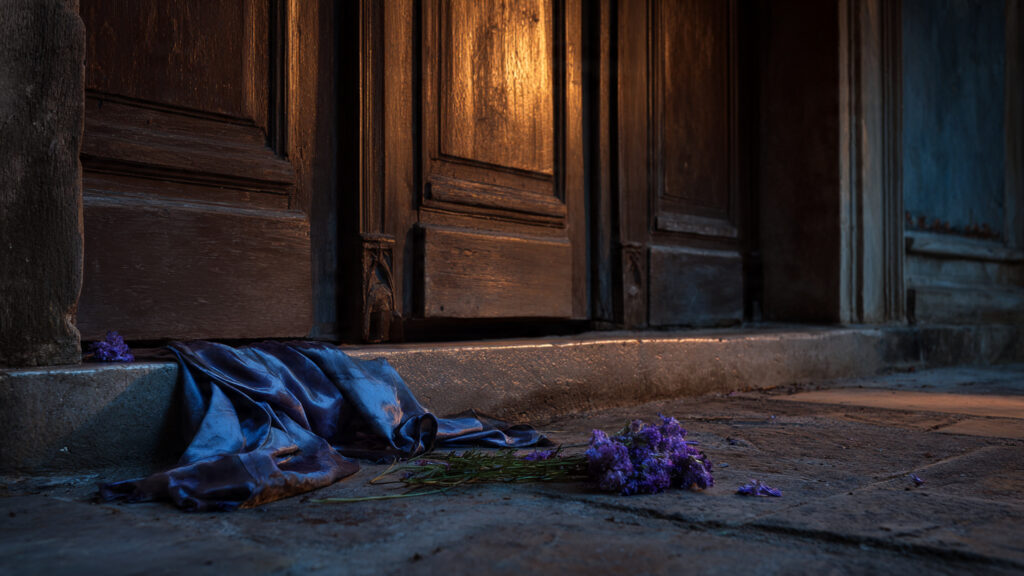
The door burst open and Alcibiades appeared, his voice carrying the intoxicated electricity of the city night. He did not come to theorize. He came to confess. His speech broke the symmetry of the evening, shifting the focus from the nature of desire to the experience of being undone by it. His attempts to win Socrates through beauty and charm had failed, not through indifference but through the philosopher’s unshakable composure. For a man celebrated in the gymnasia and applauded on the Pnyx, this was a revelation that cut deeper than rejection. It exposed the fragility beneath his brilliance.
The Weight of Internal Beauty
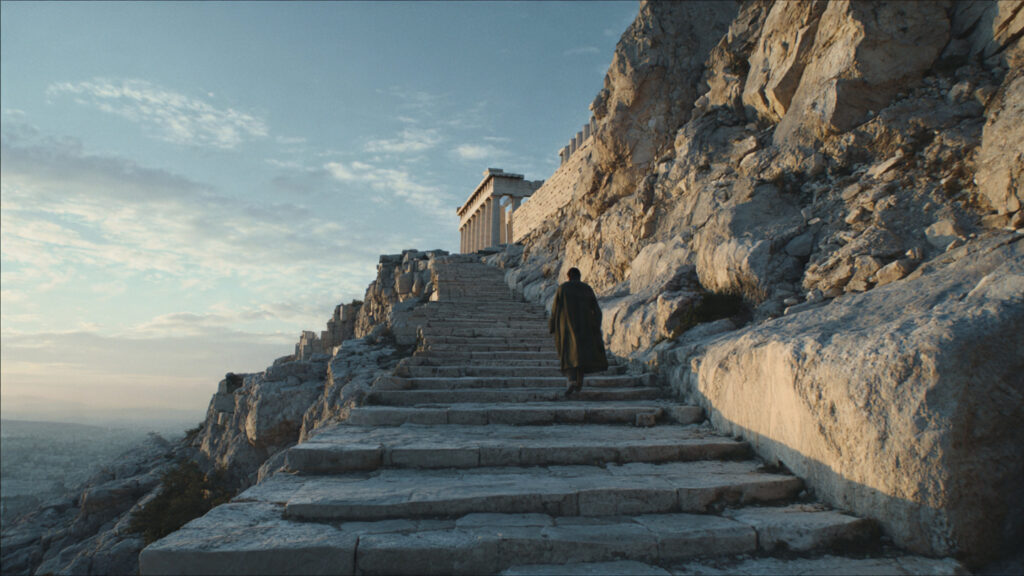
The loss he described was the moment he recognized that external nobility—lineage, beauty, political promise—held no weight before a soul shaped by discipline. Socrates became a mirror in which he saw the instability of his own nature. The marble of the Parthenon and the statues of Phidias reflected an inner order he had never cultivated, a harmony he had never pursued. His lament was not romantic; it was existential. It marked the first fracture in the shell of his youth, the beginning of a maturity he could not yet name.
Dawn Over the Peloponnese
The night ended without resolution. Dawn crept over the hills of the Peloponnese as the guests stepped into the cool morning air, leaving behind empty cups and a hearth losing its glow. Yet the dialogue did not remain in Agathon’s house. It entered the memory of Athens, where it continued to shape the city’s understanding of desire, virtue, and the work of becoming oneself.
Evening Shadows Over the Agora

Walk today through Plaka or stand on the heights of the Pnyx, and the echo of that night feels close. The limestone ridges, the persistent ruins, the slow descent of the sun behind Hymettus—Athens still resists the acceleration of the modern world. The long evening, the shared table, the unhurried conversation, the respect for the guest, the search for internal clarity: these remain woven into the city’s rhythm.


To share a meal at dusk in Athens is to participate in the same cultural pulse that shaped the Symposium. The past rises beneath the present as foundation, steadying the spirit against the volatility of the age. The Night of the Shared Cup still echoes, not as nostalgia but as inheritance.