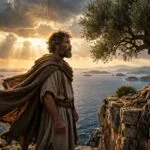

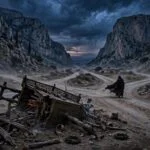

You already know the gods of Olympus.
Zeus with his thunder. Athena with her cold brilliance. Apollo dragging the sun across the sky with the casual authority of someone who has never once doubted himself. We inherited these gods through art and epic, through school and cinema, through two and a half millennia of Western culture doing its best to keep them alive.
But here is what nobody tells you at the beginning.
The Olympians were not the oldest gods. They were not the most powerful. And they were not, by a considerable distance, the most honest account the Greeks ever gave of the forces that actually govern a human life.
Beneath Mount Olympus, beneath the radiant, vertical, sky-reaching theology we were handed, there was another current of belief. Older in places, less comfortable to approach. The Greeks called these deities chthonic, from χθών: the earth, the ground, the dark substance of the world below the surface.
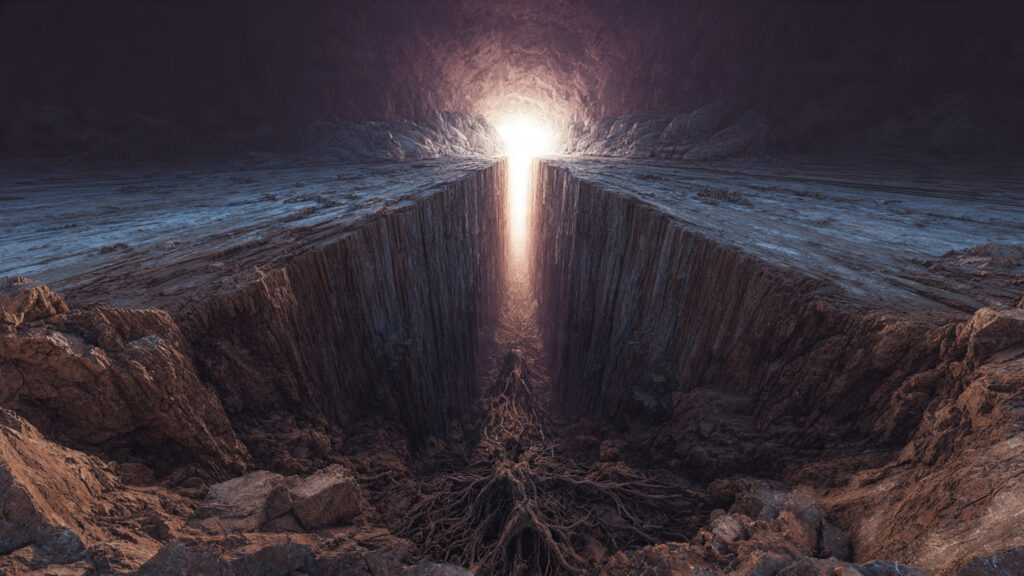
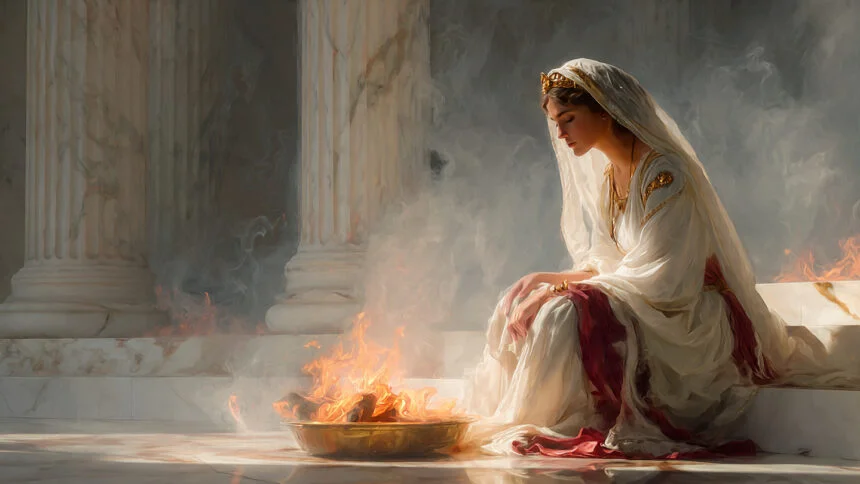
These were the gods who never sat on Olympus. The gods who pressed downward rather than upward. The gods of the cave mouth, the crossroads, the seed buried in winter darkness, the moment the thread of a life is cut. The sacred spaces associated with these deities belong to the tradition of the Night Sanctuaries, the nocturnal and subterranean sites where the Greeks approached the below.
They were not the gods of glory. They were the gods of what is real.
Why the Greeks Needed Two Currents of Belief
Ask yourself this: what does a religion of pure light actually explain?
It can account for victory, for harvest, for the beauty of a summer coastline when the Aegean is flat and the cicadas are loud in the maquis. It can give you Apollo for music and reason, Aphrodite for desire, Poseidon for the sea that feeds and occasionally destroys. These are the experiences of life that feel like gifts, the ones you want to thank someone for.
But what about the other half?
What about winter, when the earth closes itself and the cold comes off the mountains like a judgment? What about the weight of grief, the kind that does not lift after the prescribed period of mourning but simply moves in and rearranges the furniture? What about the moment you stand at a choice that cannot be undone?
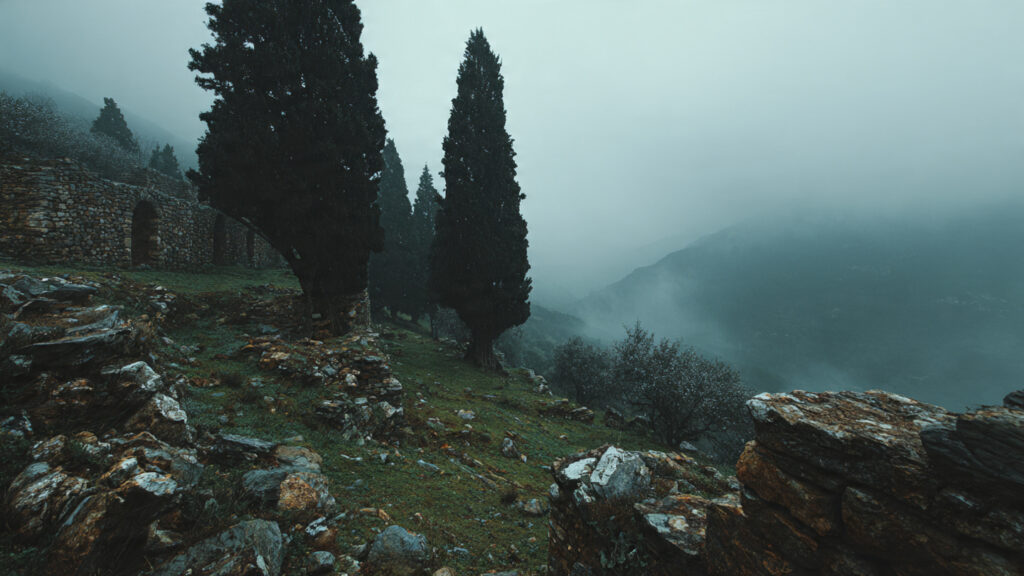
The Olympians, for all their brilliance, could not account for these. Not fully.
So a second strand of religious imagination grew alongside the first, rooted in older layers of belief and never fully absorbed into it. It was not a systematic counter-theology deliberately constructed to balance the Olympian one. It was, rather, the persistence of cult practices, local traditions, and ways of honoring the earth that predated the bright sky-gods and continued alongside them, never displaced because the experiences they addressed never went away. The chthonic tradition was not primitive religion waiting to be replaced. It was the other half of a complete picture, the below without which the above has no foundation.
Hades | The God You’ve Been Misreading
Let’s begin with the most misunderstood deity in the entire Greek pantheon.
Hades did not murder anyone. He did not spread disease. He did not cause war or famine or the misery of a bad harvest. He never once, in the surviving mythological record, acted with cruelty toward a soul that had not earned it. He ruled his kingdom with the severe, impartial authority of a judge who has no personal stake in the verdict.
And yet we gave him the reputation of the villain.
The confusion is understandable. Hades governs the realm of the dead, and we fear death, so we fear him, the way a patient fears a surgeon who happens to carry sharp instruments. The fear is displaced. The instrument is not the wound.
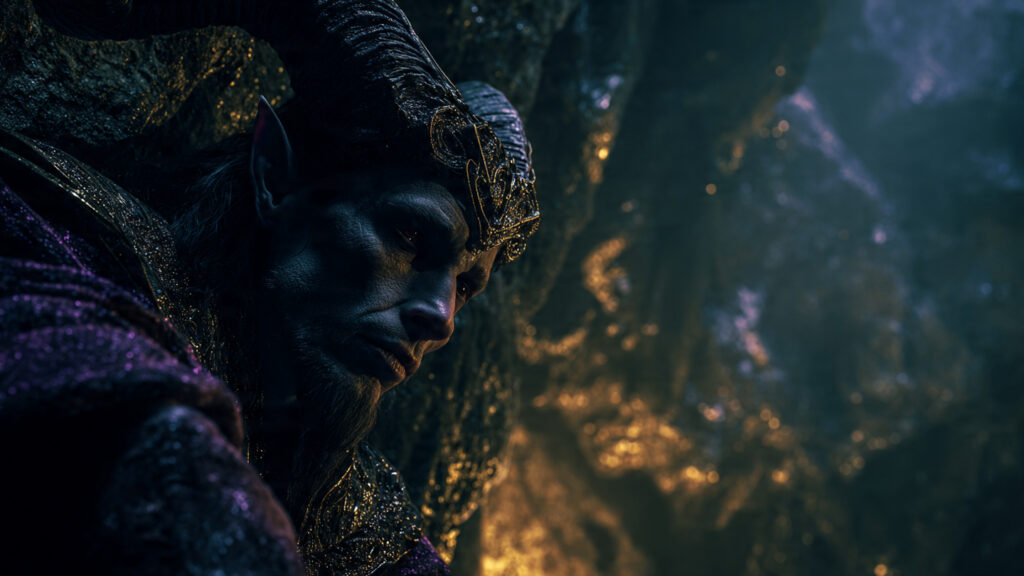
When the three sons of Cronus divided the cosmos after their victory over the Titans, Hades drew the underworld by lot. Zeus took the sky. Poseidon took the sea. Hades received the below. Later traditions read this as a defeat, as though the eldest brother had been maneuvered out of his inheritance.
This too is a misreading. Hades was the wealthiest of all the gods. The Greeks understood this and honored it in his other name, Plouton, the Rich One. Every mineral vein in every mountain was his. Every gem pulled from the earth, every seam of ore, every piece of gold ever hammered into a god’s image, his. And more than this: every seed that vanished into winter soil and returned as wheat was under his governance. He was not the destroyer. He was the receiver and the transformer.
He appears rarely in the myths because he had no need to intervene in the affairs of the living. He did not need to seek out attention or assert himself or compete for worshippers. Everyone, without exception, came to him in the end. There was a peculiar honesty in his role that no Olympian could claim. Zeus could be escaped, bargained with, occasionally deceived. Hades could not.
Persephone | She Didn’t Just Survive Her Descent, She Became Its Queen
Here is the version of the Persephone myth that most people know. A young goddess gathering flowers in a sunlit meadow. The earth splitting open. Hades emerging, seizing her, dragging her below. Her mother Demeter’s grief withdrawing the fertility of the world. Zeus negotiating a compromise: Persephone divided between the upper and lower worlds, spending a portion of each year in each, and from this division, the seasons.
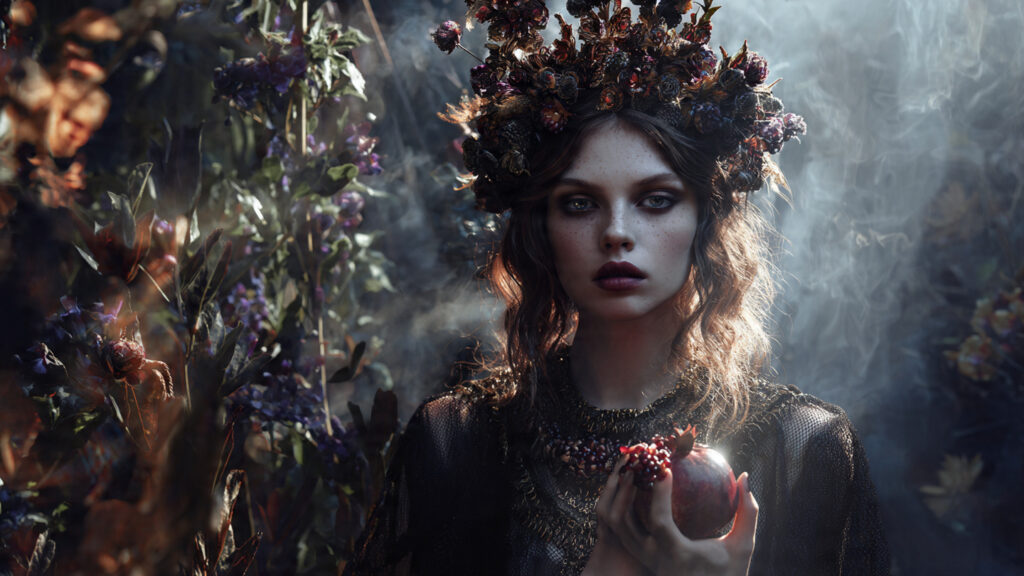
But stop at the moment she becomes queen of the underworld and ask: what kind of queen was she?
Not a captive, and not merely a figure of passive suffering waiting for her annual release. In the literary tradition, the shades of the dead are approached with the same reverence shown to Hades and Persephone together. When Orpheus descended with his grief and his impossible music, he made his plea before both of them, and several ancient retellings suggest it was Persephone’s mercy that turned the judgment. She was the only Olympian-born deity who held sovereignty in both worlds simultaneously.
Think about what that actually means. She knew the warmth of the upper world and the cold of the lower. The Greeks who reflected on this myth did not entirely pity Persephone. There is, in the surviving tradition, a recognition of the particular authority that belongs to those who have descended and remained present to what they found, rather than flinching away from it.
Hecate | The Goddess of the Threshold
Stand at a crossroads after dark in rural Greece, a real one, where three roads meet in open country with no streetlights and the hills black against a darker sky, and you will sense, without needing mythology to explain it, why Hecate was placed there.
The crossroads is a place of suspended direction. The Greeks named this quality and gave it a face. Hecate is among the oldest deities in the Greek system, older than the Olympians by most genealogies, a Titaness, daughter of Perses and Asteria. Zeus did not depose her when the Titans fell. According to Hesiod, he preserved her ancient privileges across all three realms, earth, sea, and sky, an honor Hesiod presents as exceptional.
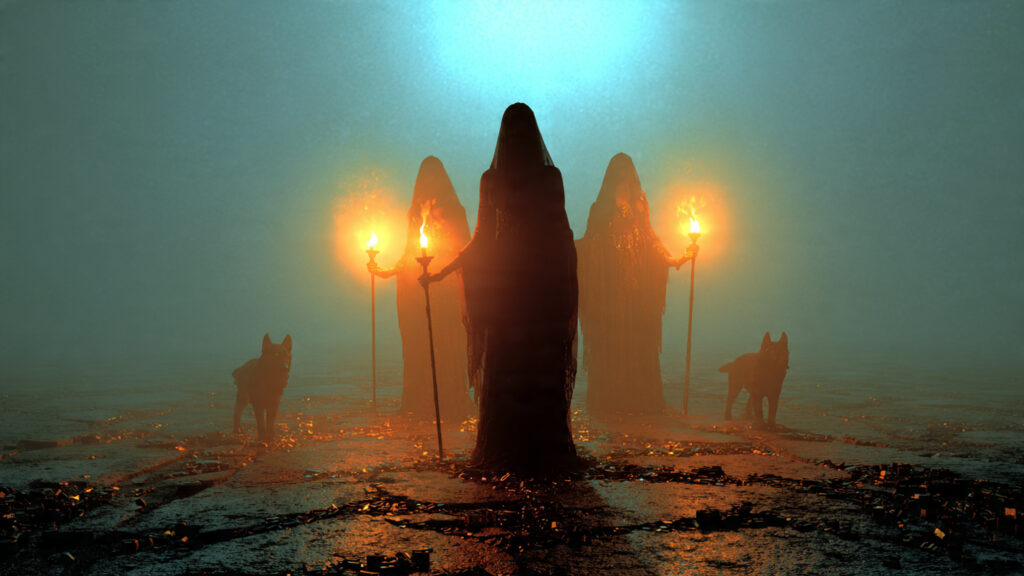
She is the goddess of thresholds: not just crossroads, but doorways, birth, the moments between sleep and waking. She carried torches, the light that works at the boundary between worlds. She was depicted in triple form, three faces looking down three roads simultaneously. She accompanied Persephone between worlds, lighting the passage.
Her knowledge was double-edged. She was associated with the deepest botanical and herbal knowledge in the Greek imagination, the kind that heals and the kind that harms, depending on the hand that uses it. Circe and Medea, the great sorceresses of Greek myth, are both linked to her tradition, not because she was sinister but because she held the knowledge that exists at the edge of what daylight reasoning prefers to acknowledge.
She frightens, when she frightens, because she cannot be assigned a single clear function. She is the goddess of the in-between, and the in-between is where most of the significant things actually happen.
Nyx | The One Who Frightened Zeus
There is a moment in the Iliad, easily missed, that tells you something about the true hierarchy of the Greek cosmos. Hypnos, the god of sleep, has done Hera a favor, putting Zeus to sleep at her request so that Poseidon could intervene in the Trojan War without the king of the gods noticing. When Zeus woke and understood what had happened, he was, as might be expected, furious. He would have thrown Hypnos into the sea.
Hypnos fled to his mother. And Zeus stopped.
The mother was Nyx, Night, one of the first primordial entities to emerge from Chaos before the gods had taken their shapes or the world had taken its form. Zeus, who had overthrown his father Cronus and chained Titans in Tartarus, did not want to anger her.
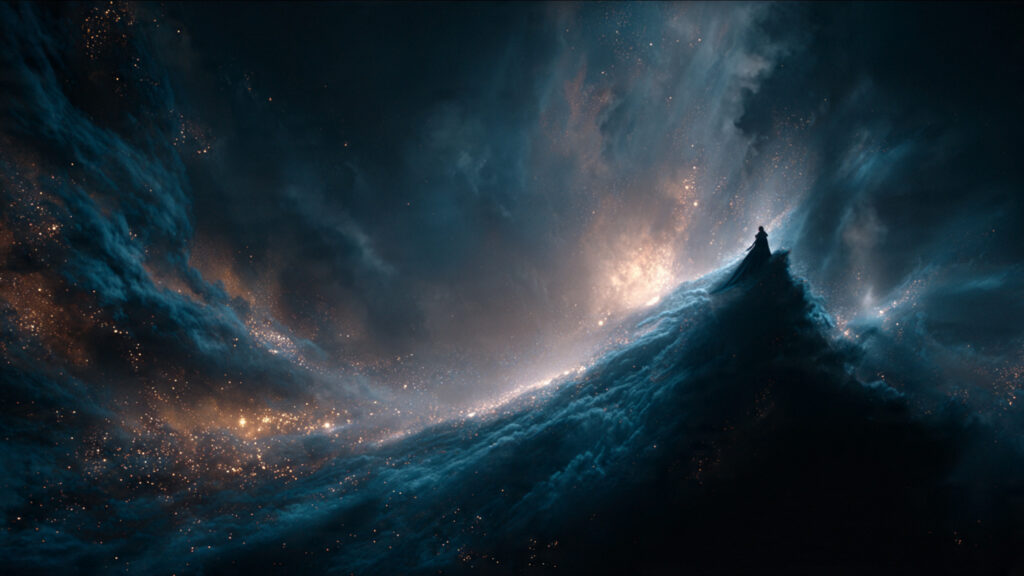
Nyx did not need temples or myths of her own adventures. She simply was, the darkness before light was a concept, the condition that made light possible by contrast. Her children are among the most psychologically honest figures in all of Greek mythology: Hypnos and Thanatos, Sleep and Death, twins who shared a cave in the deep underworld. Nemesis, divine retribution. Eris, strife. The Keres, spirits of violent death. The Moirai, Clotho, Lachesis, and Atropos, the three Fates who spun and measured and cut the thread of every mortal life.
The authority of this lineage is marked most clearly by the Styx, the chthonic river whose oath bound even the Olympians and whose power belonged entirely to the world below.
She did not produce these forces because she was malevolent. She produced them because they are real.
The Erinyes | Justice That Does Not Negotiate
Most gods in the Greek tradition could be persuaded. Sacrificed to. Appealed to through intermediaries. Not the Erinyes.
They were born from the blood of Uranus, drops that fell upon the earth when Cronus wounded his father at the beginning of cosmological time. Three figures, fully formed and implacable. Alecto, who does not relent. Megaera, the jealous one. Tisiphone, the avenger of murder.
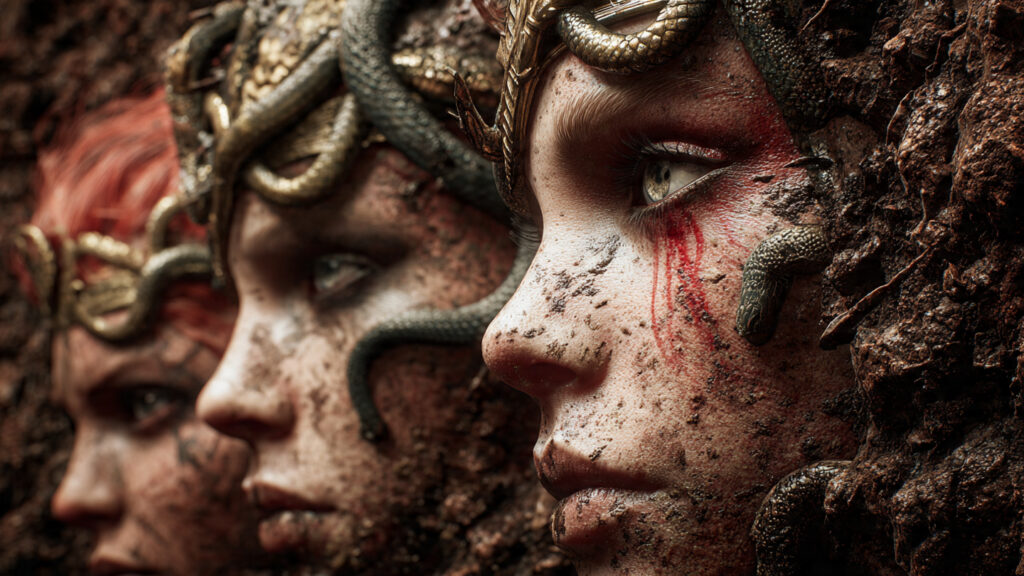
Their jurisdiction was the violations that civilization requires us to pretend do not have permanent consequences: the murder of kin, the breaking of sworn oaths, the violation of the sacred bond of hospitality. Orestes killed his mother to avenge his father Agamemnon’s murder, and by the emerging standards of Olympian law he had some claim to justification. The Erinyes did not operate on Olympian law. They pursued him anyway.
Aeschylus made this confrontation the subject of the Oresteia, the collision between an older, absolute form of justice and the new negotiated law of the city. Athena intervened, transformed the Erinyes into the Eumenides, the Kindly Ones, and gave them a sanctuary beneath the Areopagus in Athens. The new civic law did not replace the old law of blood. It was built on top of it, permanently aware of what lay beneath.
How the Greeks Approached the Below
Here is the difference between praying to an Olympian and approaching a chthonic deity. When you prayed to Zeus or Apollo or Athena, you looked up. The altar was raised. The sacrifice burned and the smoke ascended. You kept a portion. You were in relationship, petitioner and patron, each giving something, each receiving something.
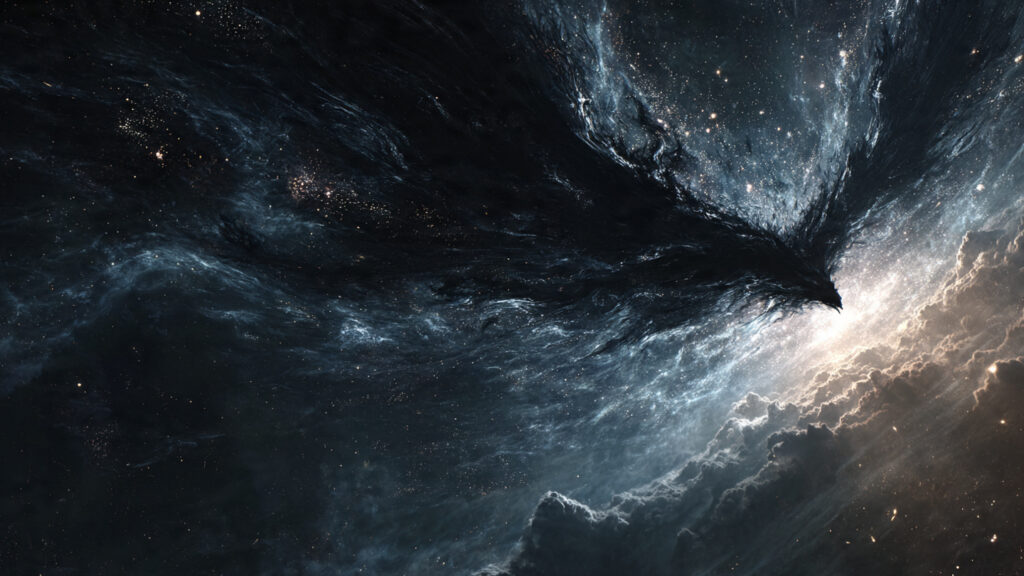
When you approached the chthonic, you looked down. Offerings were poured into the earth through a trench called a bothros, dug into the ground and opened specifically for the purpose, receiving libations of honey, milk, water, and sometimes blood. The offerings did not rise. They descended, and they were not shared. What went to the chthonic gods went entirely.
This is the logic of acknowledgment rather than petition. You do not negotiate with Hades. You make offerings to the below in recognition of what the below holds.
The sanctuaries of the chthonic deities cluster around the places where the earth opens itself: volcanic vents, cave mouths, rivers that vanish underground. The Necromanteion at Acheron in Epirus, where pilgrims descended through underground passages to consult the dead, was built at the confluence of the Acheron, Cocytus, and Pyriphlegethon, names that later tradition came to associate with the rivers of the underworld described in Homer’s Odyssey. The site’s connection to Odysseus’s own descent to consult the dead is a later interpretive tradition layered onto the place rather than something the Homeric text itself locates there, but the association has held for centuries, and standing in the gorge, where the water runs dark and cold even in summer, it is not difficult to understand why.
What the Chthonic Still Means
The reason the chthonic tradition matters is not archaeological curiosity. It is that it describes something true.
The forces these deities govern, death, transformation, the consequences of transgression, the darkness in which seeds become wheat and grief becomes something you can carry, are not ancient problems. They are the permanent conditions of being alive.
Every version of the Persephone story that ends with her rescue, with the upper world restored and the season turned, is missing its own point. The descent happened. The queen was made. These things do not un-happen.

This is not a counsel of despair. It is, in the spirit the Greeks brought to these practices, closer to the opposite. To acknowledge the chthonic is to be honest about the whole of existence, to inhabit the full range of what it means to be alive rather than only the sunlit portion.
Where to Feel It in Greece Today
The landscape has not been smoothed into abstraction. The limestone is specific. The caves are specific. The rivers that vanish underground and reappear miles away carry a cold that has nothing to do with air temperature.
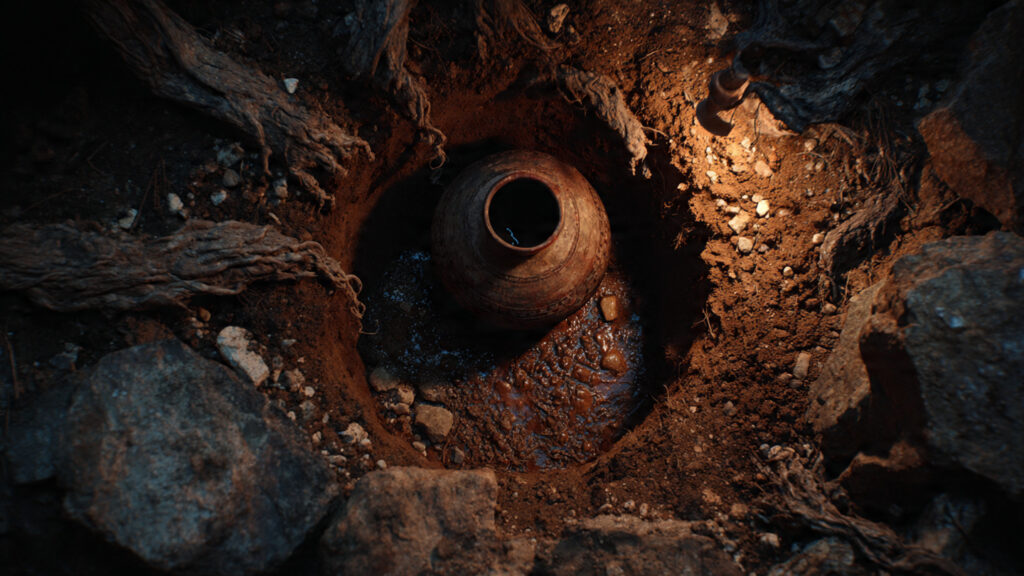
The Necromanteion at Acheron, in Epirus, stands at the junction of rivers whose names became, in later tradition, synonymous with the underworld itself. Standing there on a winter afternoon, when the gorge is in full shadow and the air rises cold from the water, the place does not require explanation.
The Diktaion Cave on Crete, on the slopes of Mount Dikti, where Zeus was said to have been hidden as an infant, holds a darkness that is total, with the residue of millennia of votive offerings still present in its depths.
The Enipeas Gorge below Mount Olympus, where the river cuts through the eastern flank of the mountain and the light disappears by midday, holds both theologies at once. Its peak belongs to the Olympians. Its roots belong to something older.
The crossroads of any village after dark, unmarked and ordinary, still carries the quality that gave rise to Hecate’s tradition. Stand still at the junction of three roads when there is no traffic and no light from a phone in your hand, and the silence has a texture that explains, better than any text can, why the Greeks placed a goddess there.
The Complete Picture
A theology built entirely on light explains what we want and celebrates what we have. It cannot, on its own, account for what transforms in the dark: the grief that becomes wisdom, the winter that becomes spring, the descent that becomes its own form of sovereignty.
The chthonic deities are not the shadow side of Greek religion. They are its depth. Hades waits without malice. Persephone rules with an authority earned by descent. Hecate lights the crossing. Nyx returns without invitation, bringing with her everything her children carry. The Erinyes sleep until a transgression wakes them, and then they do not stop.
These are not forces to be feared in the way one fears the capricious and the powerful. They are forces to be acknowledged, with the respect owed to things that were here before us and will be here after us, governing the portions of experience that no amount of sunlit optimism will ever fully illuminate.
The gods of Olympus are magnificent. Radiant, dramatic, humanly compelling in their jealousy and desire and terrible beauty. But they are only half the story. The other half is beneath your feet.
At Olympus Estate, Mythic Essays traces the deeper currents of Greek myth. Hades, Persephone, Hecate, Nyx, and the Erinyes governed the forces the Olympians could not account for: death, transformation, the consequences that do not negotiate. Honored through libations poured into the earth rather than smoke sent upward, the chthonic deities were not the shadow side of Greek religion but its depth, the ground the bright Olympian mountain stood on.