


Prologue: Where Silence Remembers
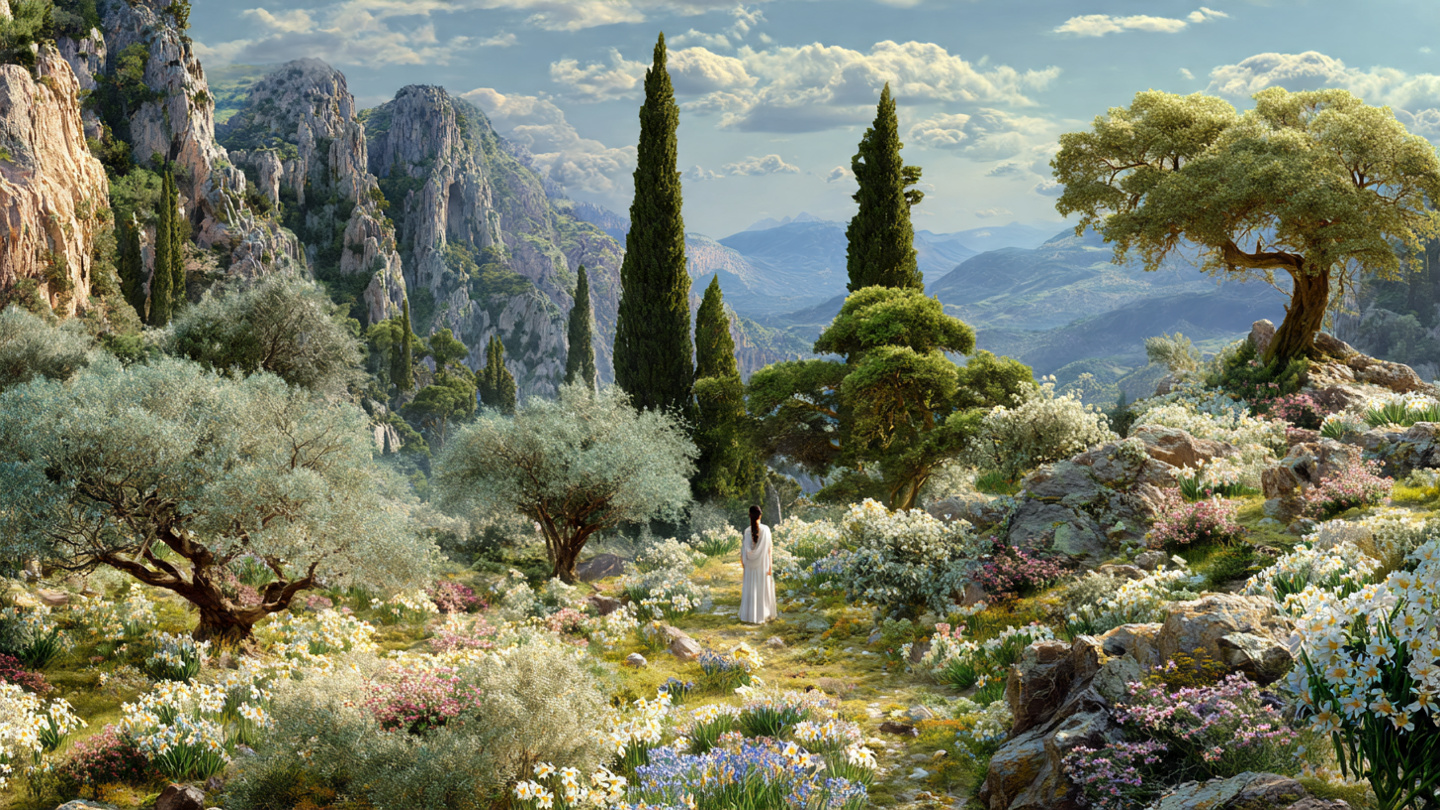
In the high, sun‑bleached stillness of the Aegean landscape, nature acts as a primary vessel for memory and divine encounter. Every gnarled trunk and every blooming petal across the hills of Attica and the valleys of Thessaly remains a physical residue of a transformation the ancients understood as sacred. This mythological garden is not metaphor but breathing continuity—a living architecture that links the modern traveler to the spiritual grammar of the ancient world.
To walk through Greece is to move through a landscape that remembers. The silver‑green groves of Athens, the narcissus fields of Helicon, the cypress shadows of Olympia—each is a chapter of a story written not in ink but in chlorophyll and limestone. These plants form the structural foundation of a heritage that survives in the very soil where heroes once walked.
The Landscape as Living Text
When we look at the Greek landscape, we are not looking at a static painting but at a living manuscript. The flora of this land was never considered separate or inert; it was the skin of the earth, sensitive to the presence of the gods. To the ancient mind, a tree was not merely biological matter but a potential dwelling place—a physical anchor for a story that would otherwise dissolve into the air.
This botanical continuity is the reason the Greek spirit remains so grounded in the physical world. The myths are not trapped in books; they are rooted in the limestone and the silver soil, growing anew with every passing spring.
Laurel of Apollo
The Plant That Speaks in Prophecy
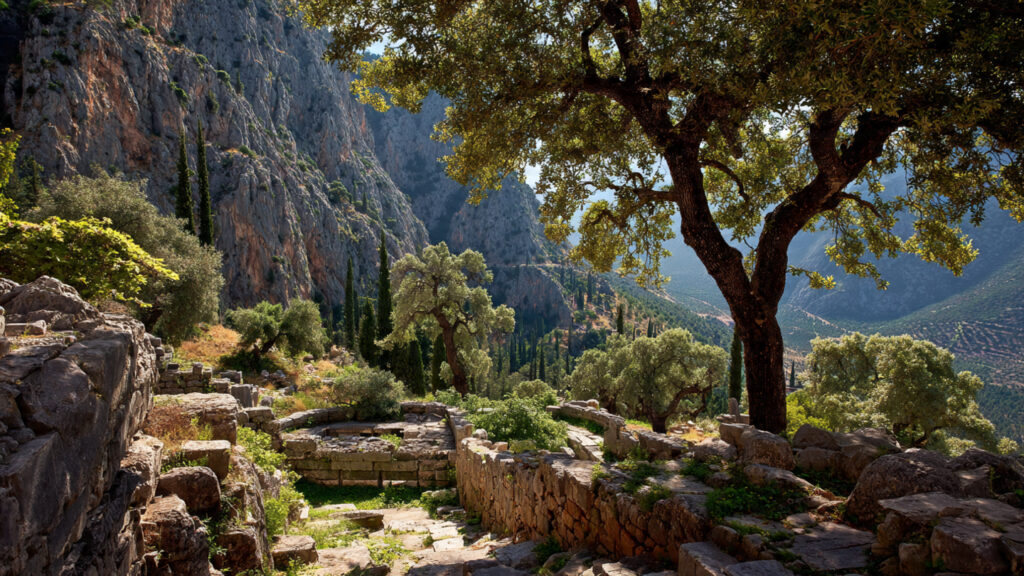
The glossy leaves of the laurel carry the weight of an ancient obsession. The story begins with Daphne, transformed into wood and leaf to escape the pursuit of a god. In Delphi, these trees still cling to the limestone cliffs of Mount Parnassus, their scent rising like a memory from the earth.
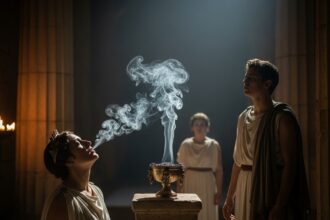
The laurel was not symbolic—it was functional. It purified, it thinned the veil, it prepared the Pythia for trance. Walking the Sacred Way today, the presence of the laurel provides a physical connection to the rituals that once governed the decisions of kings. It reminds us that in the presence of the divine, even the human form is subject to the wild laws of nature.
Narcissus of Helicon
The Flower at the Threshold of Worlds

The white and gold narcissus emerges in early spring, blanketing the slopes of Mount Helicon with a fragrance that signals the shifting of seasons. It is the flower of the youth who vanished into the earth while fixated on his own reflection—but it is also the lure that drew Persephone into the underworld.
This duality marks the narcissus as a boundary plant, a botanical threshold between the light of the upper world and the shadows below. In the high meadows where it blooms, the flower still carries the tension between beauty and descent. It stands as a pale sentinel over the meadows of the living and the paths of the dead.


Hyacinth of Sparta
The Flower Raised from Grief

The vibrant hyacinth is the floral record of a divine tragedy near Sparta. From the blood of Hyacinthus, a flower rose bearing the imprint of Apollo’s grief. It became the heart of the Hyacinthia festival, which balanced mourning with celebration—a ritual acknowledgment that death and renewal are inseparable.
The cycle of the hyacinth mirrors the agricultural rhythms that have sustained the Peloponnese since the Bronze Age. It links the modern observer to a calendar of growth and loss that has remained unchanged for millennia. The hyacinth teaches that even in the most brutal end, the earth translates blood into beauty.
Cypress of Mourning
The Vertical Architecture of Memory

The slender silhouette of the cypress defines the Mediterranean horizon. It honors the story of Cyparissus and his eternal devotion, rising like a dark flame against the sky. These trees dominate the sacred grounds of Olympia and the monastic enclosures of Crete, forming a vertical rhythm that gestures toward the heavens.
Because cypress wood resists decay, the ancients used it for temple doors and funerary vessels. It was a bridge to the immortal. The cypress does not shed its leaves; its grief is evergreen, a silent and enduring commitment to memory.
Olive of Athena
The Tree That Anchors a Civilization
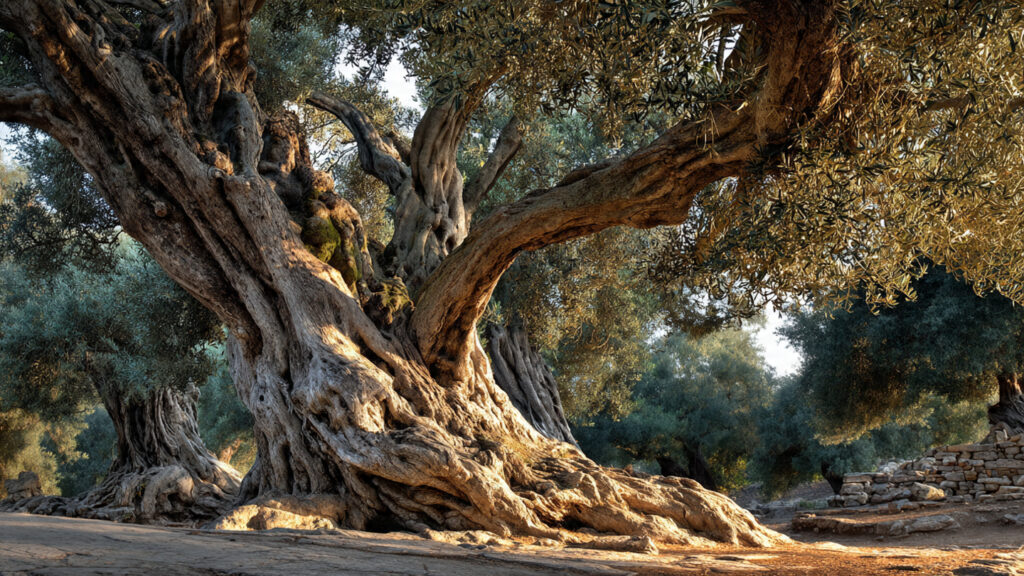
The olive tree is the central axis of Greek heritage. It stands as Athena’s gift, the reason she became the patron of Athens. Near the Erechtheion, a sacred descendant of the original tree still grows. Across the Cyclades, ancient giants—some over two thousand years old—continue to bear fruit.
These trees are living witnesses to Minoan and Mycenaean agricultural practices. Their twisted trunks mirror the rugged history of the land itself. The olive is not merely sustenance; it is continuity, identity, and survival.
For those who seek direct contact with this lineage, the Mana Elia in Kalamata stands as a natural monument, believed to be the ancestor of the region’s famed groves. In the village of Apidea in Laconia, another giant—estimated at over two millennia old—remains a protected monument of the revolution. These trees do not simply exist; they remember.
Modern Reflection: Walking Through a Living Archive
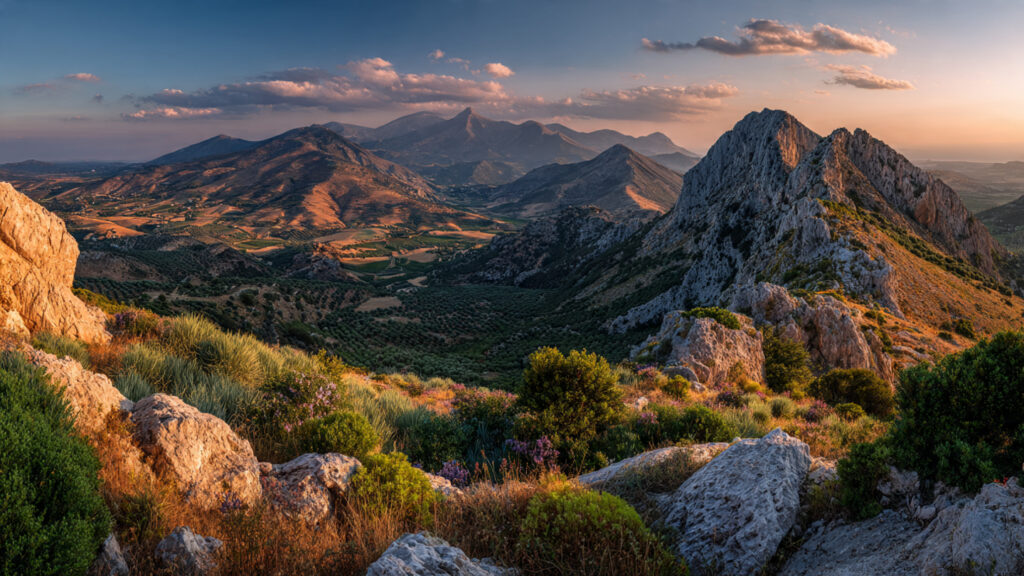
To travel through Greece today is to participate in a narrative still being written by the earth. Observing these plants requires no instruments—only the willingness to slow down and notice the way the light touches a laurel grove or the silver underside of an olive leaf in the wind.
The gods may have departed from the temples, but their gardens continue to bloom. The scents of wild herbs still fill the hillsides as they did in the time of heroes. As long as someone notices the flowering of spring, the past is never lost. The landscape holds the story, and the plants are the living evidence of a world still connected to its origins.
We are merely the latest guests in a garden tended by the gods since the beginning of time.